Showing posts with label Firewood. Show all posts

Sunday, February 3, 2013

Pruning the Fig Tree... wood for smoking and heat!

Our fig tree last summer - pre-pruned.

Yesterday, two men came to the house. After a phone call for translation (my Portuguese was about as good as their English!), I learned that the owners of the house we rent had sent these two men to prune the fig tree. Learning how to prune the fig tree was actually on my list of things to do... along with literally a few hundred other things! The tree was quite large and "leggy" in appearance with long, skinny branches and not many leaves except at the tips. I knew the tree needed to be pruned back, but I had no idea how to do it, so I was excited to see how it was done.

The fig tree post-pruning.

To be honest, I have no idea if these men were professional fig tree pruners, if they were professional or skilled tree trimmers of any kind, or if they were just a couple of guys who had some tree loppers and were available for hire. It did appear that they had at least done this before. They removed about half of the branches and really opened up the tree's framework. When I took the time to research pruning fig trees, it turns out that it is pretty simple. Figs will be produced on new shoots in the same year from even severe pruning.

The pile of pruned branches. 

There were five or six piles of branches left in the yard after the pruning was complete. This morning my boys and I, okay it was mostly me, moved all the branches onto the patio area. This was for a few reasons. I wanted to have a clear area to work. I wanted a place for wood to dry out, and that patio gets a lot of full sun. It gets hot in the summer since it is all white and walled in. Also, the patio was really close to the piles, so a close location minimized the work.

The (mostly) cut and trimmed pile of branches.

I ended up cutting up all the branches in to smaller lengths for kindling and firewood. There are many places in the world (Spain and Portugal included) where people think burning fig wood is hazardous; they think it releases deadly toxic fumes. However, this is not true. In Turkey, for instance, skewers are often made of fig wood to give a unique flavor to the meats. As it turns out, fig wood is used for smoking meats in some of the finest restaurants in the U.S. A New York Times article states that, "At Mercer Kitchen in SoHo, the chef, Chris Beischer, uses the wood to roast lobsters and make pizza. Chez Panisse in Berkeley, Calif., uses it for smoking meats. Oliveto, also in Berkeley, burns it for spit-roasting."

This whole process got me thinking about a few things...

  • First - trees produces a LOT of biomass. The fig tree looks like it got a trim, but it was not radical. We are left with a lot of cut branches... from just one small tree. The wood from trimmings and wind damage and die back from even a small forest garden will produce a lot of wood, likely all a small homestead will need. I can't wait to get mine started!
  • Second - this just reinforced Permaculture Principle Six: Produce No Waste. I can't help but think of growing up in the suburbs of South Florida. There would be so much "yard waste" picked up by the garbage trucks each week that, at a minimum, could be used for compost or chipping, but ended up in a landfill. Ughh!
  • Third - Experience is so important. I had never seen a fig tree pruned before in my life. Now that I have, I feel confident I could do it myself next time. Time will tell if this project was done correctly, but I will always have this as a reference point to go back to, either to repeat or to refine.
  • Fourth - It is important to challenge tradition. Don't do it just for the sake of doing it, but do so when you have reason to doubt. I am reminded of the Apostle Paul writing to the Thessalonians to "test all things; hold on to what is good." The context was a bit different, but I have applied this to my life in general, and it holds true. The local knowledge here says not to use this fig wood. I didn't heed or ignore that tradition blindly. I questioned it. I researched it... quite a bit, because I don't want to put my family or myself at risk, and I am now choosing to ignore it and not waste a valuable resource.
  • Fifth - Cutting this many branches was a lot of work, but it felt good to be working outside! It felt great to be working with branches and wood. It felt good to know that this work was going to be directly used for a purpose for my family. Many people in the modern world do not get to experience this anymore. It is just one of many things our modern culture has lost and needs desperately to gain again.
  • Sixth - It has been too long since I have smoked some meat. Now I have some good motivation to get smoking!


Sunday, January 27, 2013

Excellent Video on Axes

Bernie Weisgerber of the USDA Forest Service

The following video was sent to me by my good friend, Jake. This is a fantastic historical and educational video put out by the US Forest Service on the ax, hanging a new handle, sharpening, and working with the ax. There is also good information on the many styles of axes, broadaxes, hatchets, and adzes. This was a perfect video for me as I have been doing a lot more work with firewood, splitting, etc. The host is Bernie Weisgerber, who works for the USDA Forest Service as a historic preservationist. This guy is a genius when it comes to axes and handtools, and he is a great teacher on top of it. If you have any interest in lumberjacking, wood chopping, axes, or history, I would highly recommend watching this video.


Tuesday, January 22, 2013

Lessons Learned This Week About: Fireplaces, Reeds, and Tires

Over the last few days I learned a few valuable lessons. 

Antique Ash Bucket from 19th Century England

My Ash Bucket... the fact it says "Homer"on it should have been a clue!

Lesson 1: Never put ashes from a fireplace into anything other than a metal container or you may come really close to starting a house fire.
First, in my defense, I did not grow up in a rural area. I did not grow up in a cold area. I grew up in the sprawling suburbia of southern Florida. We did not have fireplaces. There were a few people who did, but these fireplaces were for show. Heck, there were only a few days a year you could actually light a fire in a fireplace, and then you probably had to open a window due to overheating. The last few months, living on a rainy, windblown island in the North Atlantic in a house with no central heat, we have relied on the fireplace to warm up our living room. And true to its name, this is the room where we have lived the most due to the fireplace and its warmth.

So, back to the lesson... I cleaned out the fireplace a few mornings ago, and just like every other time for the last few months, I placed the ashes into a plastic bucket. I typically carry it outside and dump it in the compost bin. This time, because it was raining and cold and windy, I didn't bring it out right away. In fact, I placed the bucket in a big box where I keep old packing paper that I use for kindling. Later that evening, about 10 hours later, I went upstairs and smelled something burning. It smelled a bit like wood and a bit like plastic. I wasn't really sure. My wife and I walked all around the room trying to locate the smell, but we couldn't locate it. Another hour passed, and I sat down to read, but the smell was stronger. I climbed around the room, smelling receptacles and light sockets. And then I came to the box with the bucket of ashes in it. The smell was really strong in there. I lifted the bucket up, and the entire bottom of the bucket fell off. Strands of melted plastic, like cheese on a pizza, dripped all over. In the center of it all was a big pile of ashes and a few dozen bright orange embers, still very much alive. In fact, my lifting the bucket gave those embers new oxygen and a new life. The paper in the box, now covered with hot embers started smoldering. I carried the box outside to the concrete porch just in time for some of the papers to ignite. Now I see why I always saw metal buckets for ashes in old movies and at historical sites.

House fire barely avoided. Lesson learned.


Giant Reed (Arundo donax) patch near my house.

Cleaned and partially dried reeds.

Lesson 2: You can find free gardening material all over the place if you take the time to observe, but if you are lazy you may come really close to missing out.
This is a perfect illustration of Permaculture Principle #: Observe and Interact. Within a one minute walk from my front door is a patch of giant reeds. The top photo was taken the past summer. I had been telling myself to go over there for months and get some. Well, fast forward about 6 months, and the patch is only about half green. The cold and wind has killed off most of the reeds. Unfortunately, about half of the dead reeds were blown to the ground and are mostly rotted. Luckily, there were still quite a few in good shape. I grabbed a bunch and brought them back to my house. I cleaned them, stacked them, and I am letting them dry out some more until I need stakes and supports for my Spring and Summer garden. It cost me all of twenty minutes! If I waited another few weeks until after the next big wind storm, I may have missed this opportunity. So the key here is to not just observe, but get off my butt and interact!


My stockpile of kindling, gathered and made.

Lesson 3: You can find uses for "waste" items if you really try, or if you have someone give you the idea first.
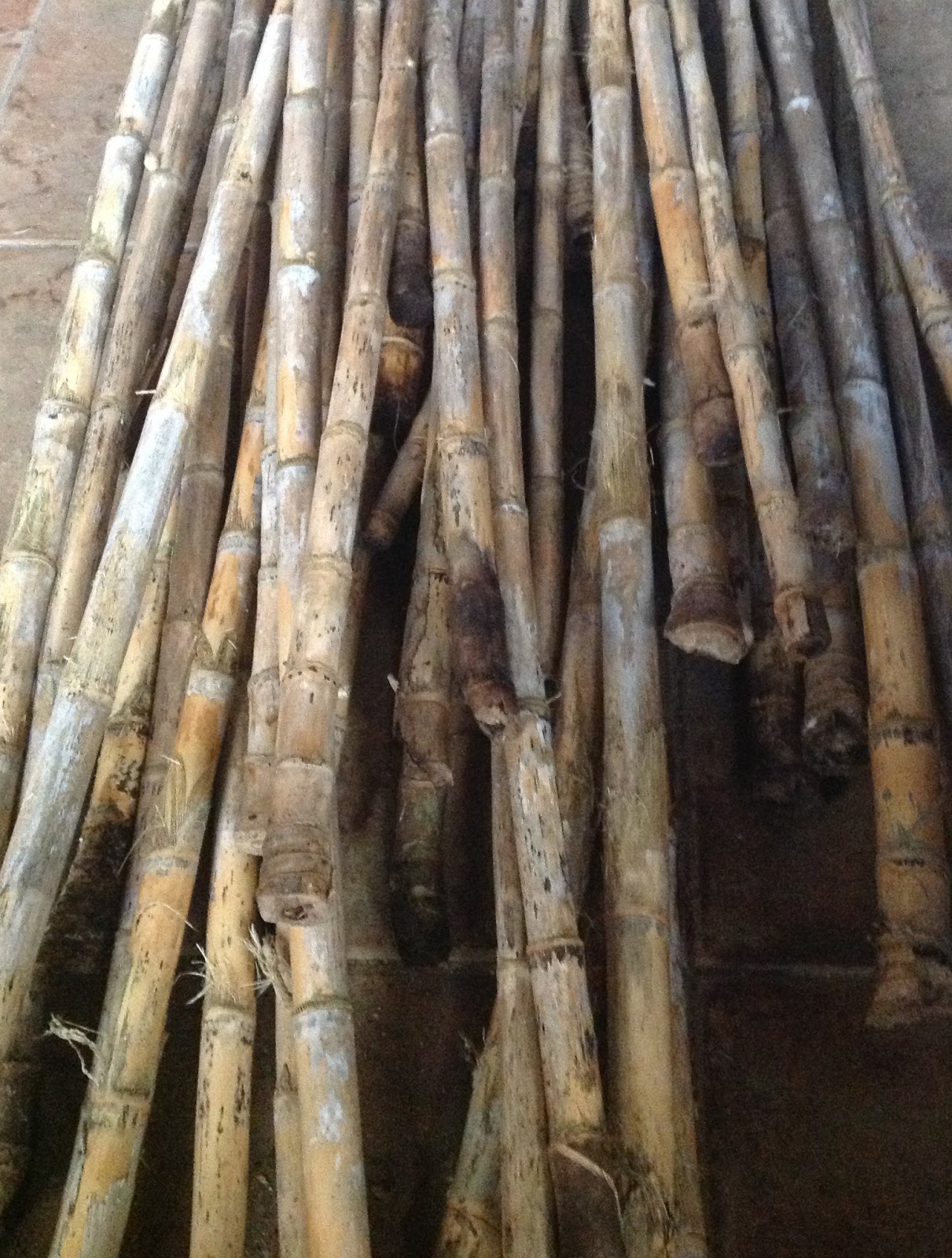
I have been running out of kindling for the past month. I had a few boxes of kindling that my father had prepared and saved for me this Summer when he visited, but I finally ran out a week ago. Again, I never used a fireplace on a regular basis until now. I had no idea how much kindling I was going to need. For the past week, I have been using all kinds of scraps of wood and cardboard. I have been getting pretty good at starting fires with less and less. In fact, I have been pretty proud of how good I have become at starting roaring fires with almost no kindling. But my meager supplies have been getting pretty thin. Finally, I spent half a day chopping firewood with a hatchet (no, I don't own an axe yet!) into smaller and smaller pieces for kindling. I rather enjoyed the work, but it took quite a while. Then my neighbor told me to use the dried reeds for kindling. "They burn great!" she said. This is what finally got me off my butt to go get the reeds mentioned in Lesson 2 above. Well, I kept all the trimmings from the reeds I cleaned. What I would have put in my compost bin is now perfect kindling. And it took me about ten minutes to get a full box. Perfect use of Permaculture Principle #6: Produce No Waste. Great ideas don't have to be your own!


My new stacks of firewood and my dog.


Lesson 4: Firewood has to be stacked right if you want it to get dry and stay dry, and moving a whole truckload of firewood twice is a lot of work.
This was something I knew if I would have thought about it for more than a few seconds, but I did not. I recently purchased a pick-up truck of firewood from a local family. It was very good quality wood for an excellent price (about $45 US Dollars). The three guys who delivered it dumped it in a relatively neat pile in my garage. They wouldn't let me help them unload it. I tried, but they kept waving me off as if this was part of the delivery price and I had better not try to help or I would greatly and deeply offend them. So I let them pile it in the garage. Unfortunately, the pile of logs did not allow good airflow. After finding a bunch of mold and fungus growing on some of the logs, I decided to restack the pile. This meant I had to move the whole pile away from the wall first and then restack it the right way in the same spot. That was just a little frustrating. However, within just a few days, the logs have already started to dry. Next time, I'll have this great family pile the wood outside. Then I will only have to stack the firewood once!


My bike pump is close to, but not nearly as nice, as this one.

Lesson 5: A bicycle pump will inflate a flat spare tire... eventually.
This was a beat-myself-over-the-head moment. My van got a flat tire. I jacked up the car and took off the flat. I easily put on the spare. My boys were hanging out in the driveway with me having fun and laughing that small spare tires are sometimes called "donuts". I lowered the jack and heard my oldest son, who is four years old say, "Daddy, the donut is flat too!" I have to be honest. I have been giving my friend a hard time for the last few months because his jeep got a flat tire after we had dropped him off at the airport, then his jack wasn't large enough for his jeep (I had to use the jack from my van), and then his spare was flat! How clueless? How unprepared? How... ironic! Fortunately, I had my trusty Power Box in the back of the van! (You can read about how I bragged on this machine in this article) Well, as it turns out, the Power Box is pretty lousy at inflating tires even if it is good at jumping dead batteries, but maybe I just have a bad pump in mine. Either way, it didn't work. Now what? Well, I thought I would give the bike pump a try. Note that I did keep the spare up on the jack while I inflated it, so I didn't have the weight of the car on the tire at the same time. As it turns out, this will work. It took me about 10 minutes, but it resulted in a fully inflated spare tire... and some really burning muscles. Another side lesson: check the air in your spare tire from time to time.


Monday, July 16, 2012

The Art of Stacking Firewood

My first attempt at stacking firewood

Yeah, it's the middle of summer, but I just had my first load of firewood (ever) delivered yesterday. I figured it would be cheaper in the off-season, and I want to do some smoking and barbecuing in the next few weeks, so now is a good time.

I hope in the future, when I have some land, to harvest my own trees and split my own firewood, but for now I have to get it delivered. I'm okay with that, as there are so many other things I want to spend time doing.

Just to remind anyone reading this, I grew up in South Florida. There were a few people there who had fireplaces, but it was mainly for show. There may be three days a year, where you could have a fire in a fireplace without needing to turn on the air conditioning as well. Cold days were not common at all where I was raised, so at age 36, I finally stacked my first tower of firewood.

Here are a few things I learned. There really is an art to stacking firewood. It's not like stacking bricks all the same size. Trees, and the subsequent splits, are rarely straight and flat. If not stacked right, the tower is very unstable. With three kids ages four and under running around my house, I really needed to do this right. Fortunately, it didn't take me too long to get the hang of it. But I will not say it was quick to build a stable tower of irregularly shaped firewood. Also, my tower is not tremendously tall. Even more attention to stable building would be required if I build a tower higher than I did.

It was also really refreshing to be working with my body and not just my brain. As a physician, I often go days without feeling as if I accomplished anything physically productive. I love being a doctor and taking care of those who are ill, but there really is something to using my whole body to complete a task. To be honest, I don't want to do hard labor full time, but after building this tower (and five other smaller ones under the brick wall posts on the side of the house) I realized how important it is for me to be "working" outside. I often recall my friend Justin reminding me that the physics definition of work is force miltiplied by distance, so if I wasn't moving something, I wasn't really working. There is something to this. I truly believe there is something innate to the human body that desires, and maybe requires, physical work to feel complete and at peace.

A few hours after I stacked the forewood, I decided to browse the internet to see if there was anything I should have known before I started stacking the wood. As it turns out, I did everything right. I am not sure if this was an instinctual thing... likely from seeing so many stacks of wood outside homes when I lived in Kentucky and Minnesota. Maybe it was from reading articles on homesteading that covered firewood. But it was gratifying to see I did it right.

Here's to a warm winter and slow-cooked, smokey-flavored meat!

Here are some of the articles I found online:
How to Stack Firewood - Popular Mechanics
The Science of Wood Stacking - Mother Earth News
Some Thoughts on Stacking Firewood - Woodheat.org