Tuesday, February 12, 2013

Permaculture Plants: Stinging Nettle


The Stinging Nettle - a beautiful plant with an attitude!
This photo is from my yard

Common Name: Stinging Nettle
Scientific Name: Urtica dioica
Family: Urticaceae (the Nettle family)

Perfect young shoot for harvesting

Description:
A harbinger of Spring, the Stinging Nettle has long been used as a food and medicinal plant. Yes, they do sting, but it is not that bad. I accidentally discovered them in my garden about a week ago when planting some garlic bulbs (see my prior article about using sprouted garlic). I was pushing some new growth back to clear a small patch of soil when I felt a sharp pain on the back of my hand. It felt like a fire ant sting, which I have had plenty of experience with growing up in south Florida. But there was no insect on my hand. I looked around and found a tiny Stinging Nettle plant a few inches tall. This meant two things... First, I needed to get some gloves. Second, it was foraging time!

I did a quick search around my neighborhood and discovered a large patch in my neighbor's yard. I harvested a large bag full and took them home. My neighbor was happy to have me cut some of his "weeds" back. He was a bit skeptical about their being edible. I explained that the "sting" is neutralized within about 30 seconds when exposed to heat. I also showed him how you can even eat them raw, if done the right way, but he wasn't about to try it. I took my new picked treasure home and made some Stinging Nettle and Pork Belly soup with a homemade duck stock... delicious! That same neighbor came over and tentatively tasted the soup, then proceeded to devour it, raving about how good it was. Another convert!

Another photo from my yard - you can just barely see the hairs on the leaf

Now, most people would not plant these on purpose, but they often will pop up in yards, typically in rich, moist soils. If you have a larger property, you can "cultivate" them in an out of the way corner. If you have some real land, then you likely already have them growing somewhere. It is just a matter of locating them. This is when I would consider Nature Tending.

Stinging Nettle can be eaten, used for tea, used medicinally, and used to make a fiber similar to linen. They are also attractors of beneficial insects. The plants accumulate large amounts of nutrients, and if composted can be a valuable fertilizer to your garden. These are resilient and useful plants that have a poor disposition, but are worth the trouble in my opinion.

Urtica dioica

History:
Native to the Northern Hemisphere, Stinging Nettle has long been used for medicine and food. It has been introduced around the world, and is now seen more as a weed than a beneficial plant.

A real close up view of the stinging hairs (large) and non-stinging hairs (small)

Trivia:

  • The sting from Stinging Nettles comes from their stinging hairs, called trichomes. Stinging Nettles are covered with hairs, but not many are actually the stinging hairs. These stinging hairs are on the underside of the leaves and on the stems. When touched, the tip of the hair is displaced, and what is left resembles a hypodermic needle. This needle will inject chemicals that cause itching, irritation, and pain.
  • Stinging Nettles inject histamine, acetylcholine, serotonin, morodin, leukotrienes, and formic acid (formic acid give fire ants their "fire").
  • Stinging Nettle leaves can be eaten raw... just hold the leaf only on the top side, fold it over on itself to cover the stinging hairs on the underside of the leaf, roll it up, squeeze it a bit to make sure the stinging hairs are all crushed, then take a bite. Yes, I have done this. No, I did not get stung. Yes, it tastes good!
  • Exposing Stinging Nettle to heat for about 30 seconds (like boiling water for tea or soup) neutralizes the sting, as does drying the leaves
  • There are many species in the genus Urtica that are likely all edible, but check with local experts before you start foraging for other species.


Stinging Nettle Soup is delicious!
Here is a link to one recipe... I'll share mine soon.

Stinging Nettle leaves dry very well... and the sting is gone!


USING THIS PLANT
Primary Uses:

  • Edible Leaves - used fresh and cooked briefly; leaves dry well and can be stored for later use
  • Tea Plant - fresh or dried leaves are used


Secondary Uses:

  • Dynamic Accumulator (Potassium, Calcium, Sulfur, Copper, Iron, and Sodium) - excellent addition to compost
  • Manure Tea Plant - high in Nitrogen
  • Lacewings prefer to lay eggs on Stinging Nettle leaves
  • Ladybugs prefer Stinging Nettle foliage
  • Fiber Plant - obtained from the stems. Makes a strong fiber similar to flax which can be used to make cloth similar to linen. The fiber can also be used to make paper
  • The seeds can be pressed to produce an oil that can be used in lamps
  • Dye (green) from the leaves and stems
  • Extensive medicinal use
  • Juice from the leaves have been used for hundreds of years to curdle milk for cheese making if rennet is not available
  • Drinks can be made from the young shoots - non-alcoholic drinks similar to ginger-beer and alcoholic drinks like beer and wine


Harvesting: Spring. Leaves are best when the plant is less than 3 feet tall, before flowering has occurred. Ideal is when they are under a foot tall. Use gloves to avoid the stinging hairs on the underside of the leaves and stems.
Storage: Can be dried and used as needed. Many people will just keep the fresh leaves in a brown paper bag, shaking occasionally, until dried.

An out of the way corner of a larger property is great for Stinging Nettle

DESIGNING WITH THIS PLANT
USDA Hardiness Zone: 4-8
AHS Heat Zone: No reliable information available.
Chill Requirement: No reliable information available.

Plant Type: Herbaceous Perennial
Leaf Type: Deciduous, but can be "evergreen" in areas with mild winters
Forest Garden Use: Herbaceous Layer, Ground Cover Layer
Cultivars/Varieties: Many subspecies and varieties, but no significant development

Pollination: Plants are dioecious, meaning they have either male or female flowers (hence the scientific name: dioica). Both male and female plants (typically a 1:8 ratio) are needed to produce seeds.
Flowering: Summer

Life Span:
No reliable information available, but not really needed. These plants spread so easily with runners and seed, that as soon as one plant dies, another will take its place.

The spreading nature of the Stinging Nettle makes it a pretty good ground cover...
...but also tricky to eradicate.

PHYSICAL CHARACTERISTICS OF THIS PLANT
Size: 1-6.5 feet (30-200 centimeters) tall, usually about 3 feet (100 cm) tall, and indefinitely wide
Roots: Fibrous roots which have stolons (aka "runners" - stems right at ground level that form roots) and rhizomes (roots that spread along ground level), both of which can form new plants
Growth Rate: Fast

The flowers of the Stinging Nettle are tiny, but develop many seeds.

GROWING CONDITIONS FOR THIS PLANT
Light: Full sun to partial shade
Shade: Tolerates medium shade
Moisture: Medium, but can tolerate fairly wet soils
pH: tolerates a fairly wide range of soils (5.5 - 7.5)

Special Considerations for Growing:
Tolerates juglone (natural growth inhibitor produced by Black Walnut and its relatives). Consider using this tree as a buffer between your walnuts and other plantings.

Propagation: Few people propagate this plant on purpose, but transplanting young plants from stolons or rhizomes is easy. Seeds easily - just rub the mature seed heads, releasing the seeds, over where you want the Stinging Nettle to grow.

Maintenance:
None required.
To control growth and spread try these methods, and always protect your hands and arms:

  • Cut off the flowering heads to reduce seed production - typically done in late Summer when the plants are tall. A scythe is a great tool for this job.
  • At least once a season, and maybe a few times, pull up any plant that is growing outside of where you want the Stinging Nettles to grow. 


Concerns:

  • Stinging Nettle can spread fast through runners and easily through seed.
  • Stinging Nettle can... well, sting! Some people have a very small reaction, and others will have a more significant local reaction.
  • Consuming too much nettle and especially from older leaves can cause a laxative effect - which is one of the medicinal uses
  • Older leaves contain cystoliths which can irritate the kidneys - another reason to use just the tender, young leaves which taste better anyway!


Sunday, February 10, 2013

Nut Wizard

The Nut Wizard

I have recently written about growing oak trees and using acorns as food. I have also written in the past about chestnuts, hazelnuts/filberts, and walnuts. My only complaint with nut trees is actually having to harvest the nuts themselves. There have been a number of techniques developed to help harvest nuts, but I don't think I have come across anything as simple and effective as the Nut Wizard. I must be honest and state that I have never tried the Nut Wizard myself... yet. The moment I am able to harvest nuts on more than an occasional basis, then I will be buying one (or more). But when an icon in forest gardening, like Martin Crawford, endorses the Nut Wizard, then I have to believe it is a good product.


The Nut Wizard was invented by Cecil Holt who said that the idea for this nut collector came to him in a dream. He created it initially for pecans, but in a short time the Nut Wizard was being used for all types of nuts as well as other items like golf and tennis balls. There are a number of sizes available for the desired nut to be harvested.

You can order the Nut Wizard from Holt's website: http://www.holtsnutwizard.biz/  This is not a great website, but it is functional. I have also put links up to Amazon to make it easier:
  • Nut Wizard - 11", Extra Small: Acorns (small) from most Oaks, or other nuts 3/8 inch (9.5 mm) to 1 inch (25 mm) in diameter.
  • Nut Wizard - 12", Small: Pecans (small to large), Acorns from White Oak, or other nuts 1/2 inch (12.7 mm) to 1.5 inches (38 mm) in diameter, will also work for many crabapple varieties.
  • Nut Wizard - 14", Medium: Pecans (very large), English Walnuts, Hazelnuts/Filberts, Acorns from Red Oak, Chestnut Oak, Hickory Nuts, Chestnuts, or other nuts 1 inch (25 mm) to 2 inches (50 mm) in diameter, will also work with medium-sized fruits.
  • Nut Wizard - 17", Large: Black Walnuts, Sweet Gum Balls (ouch!), Apples, Citrus, Osage Orange, or other fruits and nuts 1.5 inches (38 mm) to 4 inches (100 mm) in diameter.

Thursday, February 7, 2013

How to Eat Acorns

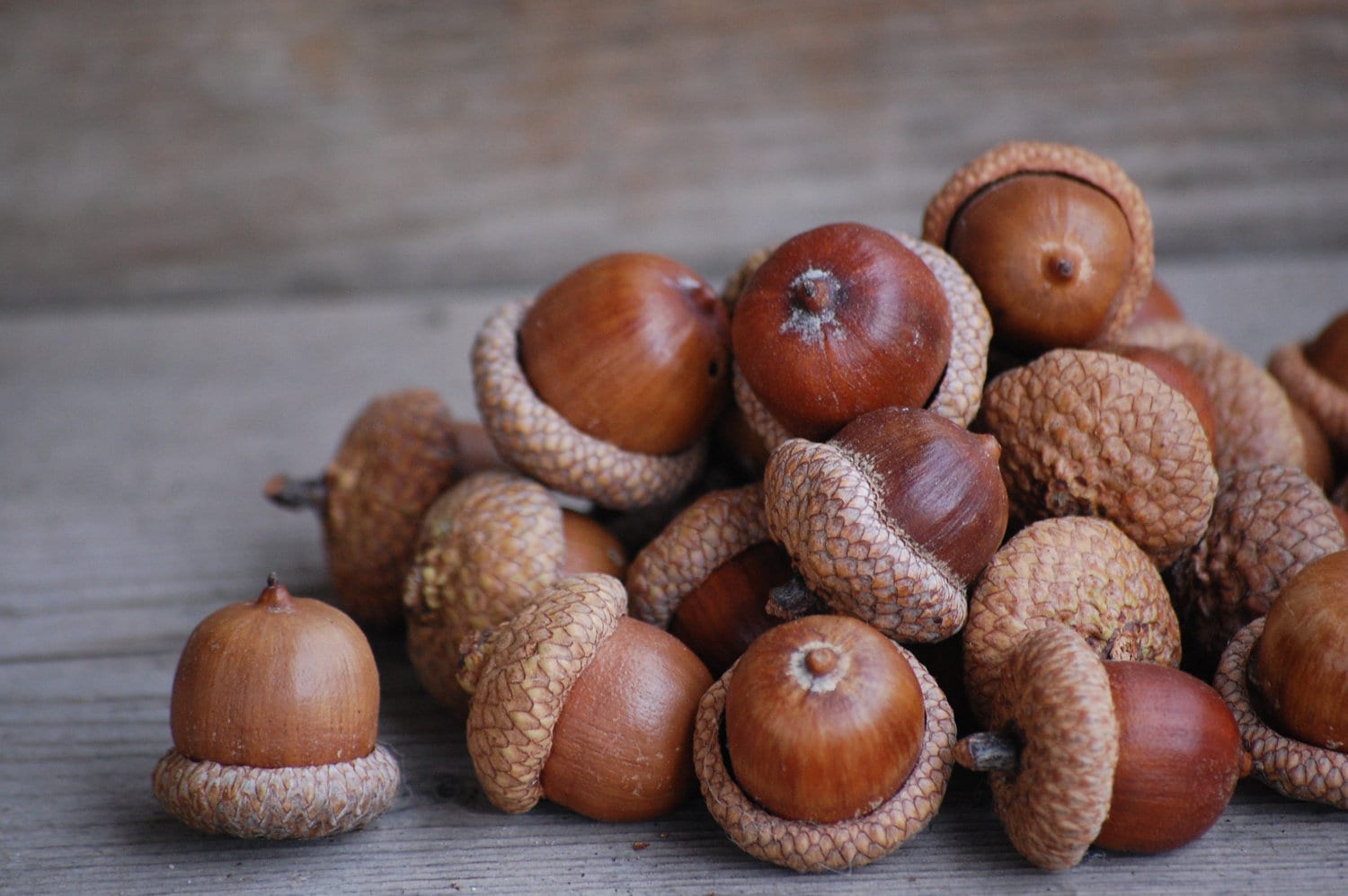
Acorns can be great food
Red Oak (Quercus rubra

Acorns are the nut (fruit) of the Oak (Quercus species). I wrote a more extensive article on Oak trees yesterday. Acorns are very high in carbohydrates and good fats, but very few Oaks have nuts that taste very good without processing. So which ones taste good? How do you process acorns? Is it easy, hard, time-consuming? Is it worth the trouble?

I will answer some of these questions myself, but I am going to provide a lot of links to really good articles on the subject. There are others who have a lot more experience that have written a lot on the subject. So instead of re-inventing the wheel, I will just give links to some reallygood articles.

Every tree is different. Every location produces different flavors and nuances (this is the Terrior of Food). One White Oak may produce acorns that are bitter and need to be processed, while another White Oak a quarter mile (0.4 km) away may be "sweet" enough to be eaten raw. Local growing
conditions and varieties play a large role. So experiment and see what is out there!

With that said, here is a list of the best tasting acorns:
  • White Oak (Quercus alba
  • Boz-Pimal Oak (Quercus aucheri)
  • Swamp White Oak (Quercus bicolor)
  • Emory or Black or Bellota Oak (Quercus emoryi
  • Pin Oak (Quercus palustris
  • Holly Oak (Quercus ilex)
  • Holm Oak (Quercus ilex ballota)
  • Chestnut Oak (Quercus prinus)
  • Blue Oak (Quercus douglasii
  • Burr Oak (Quercus macrocarpa
  • Cork Oak (Quercus suber
  • English or Pedunculate Oak (Quercus robur)

If you read these articles, you will see that there are a number of ways to process the acorns. The big decision is hot vs. cold water leaching of tannins. If you want to use acorn flour for cooking anything that requires the flour to stick together (i.e. breads) then you need to use the cold water method or mix the acorn flour with another flour, like wheat. This was Hank Shaw's mistake when trying to make an acorn flour flatbread.

Three articles on acorns written by Hank Shaw author of Hunt, Gather, Cook:

A fantastic, detailed article on using acorns by Green Deane, of the Eat the Weeds website:

A great overview of harvesting, processing, and cooking with acorns from Jackie Clay, a well known homesteader and writer for Backwoods Home Magazine:

Wednesday, February 6, 2013

Permaculture Plants: Oak


The majestic Oak.

Common Name: Oak
Scientific Name: Quercus species
Family: Fagaceae (the Beech family)

Ariundle Oakwood, Scotland.
One of the last surviving old-growth oak forests in the Scottish Highlands.

Common Species:

  • Sawtooth/Sawthorn Oak (Quercus acutissima) - medium-sized tree
  • Encina or California Live Oak (Quercus agrifolia) - medium-sized evergreen tree
  • White Oak (Quercus alba) - large tree
  • Boz-Pimal Oak (Quercus aucheri) - large evergreen shrub
  • Swamp White Oak (Quercus bicolor) - large tree
  • Turkey Oak (Quercus cerris) - large tree
  • Kermes Oak (Quercus coccifera) - medium-sized evergreen shrub
  • Scarlet Oak (Quercus coccinea) - large tree
  • Blue Oak (Quercus douglasii) - medium-sized tree
  • Black Oak (Quercus emoryi) - medium-sized tree
  • Hungarian Oak (Quercus frainetto) - large tree
  • Gambel or Shin Oak (Quercus gambelii) - large shrub
  • Glaucous-Leaf Oak or Japanese Blue Oak (Quercus glauca) - medium-sized evergreen tree
  • Holly Oak (Quercus ilex) - large evergreen tree
  • Holm Oak (Quercus ilex ballota) - large evergreen tree
  • Valonia Oak (Quercus ithaburensis macrolepis) - medium-sized tree
  • Californian Black Oak (Quercus kelloggii) - large tree
  • Bull Oak (Quercus lamellose) - very large evergreen tree
  • Overcup Oak (Quercus lyrata) - large tree
  • Burr Oak (Quercus macrocarpa) - large tree
  • Chinkapin Oak or Yellow Chestnut Oak (Quercus meuhlenbergii) - medium-sized tree
  • Swamp Chestnut Oak (Quercus michauxii) - large tree
  • Mexican Blue Oak (Quercus oblongifolia) - medium-sized evergreen tree
  • Pin Oak (Quercus palustris) - large tree
  • Dwarf Chinkapin Oak (Quercus prinoides) - large shrub
  • Chestnut Oak (Quercus prinus) - large tree
  • English or Pedunculate Oak (Quercus robur) - large tree
  • Red Oak (Quercus rubra) - large tree
  • Post Oak (Quercus stellata) - large tree
  • Cork Oak (Quercus suber) - large tree
  • Live Oak (Quercus virginiana) - large evergreen tree
  • Sierra Live Oak (Quercus wislizeni) - large evergreen tree
  • Compton's Oak (Quercus x hybrid) - large tree
  • Schuette's Oak (Quercus x schuettei) - large tree


Angel Oak Tree, outside of Charleston, South Carolina, is over 1,500 years old.
Live Oak (Quercus virginiana

Description:
The Oaks are a large family of shrubs and trees, about 600 species, which produce acorns. Oak wood is highly valued for everything from timber buildings and furniture to wine/whiskey barrels and shitake mushroom logs. Acorns can be used for making flour or a coffee/tea substitute. The trees themselves are beautiful, large, and long-lived and work great as windbreaks. If you enough space, oaks are a great addition to a Forest Garden.

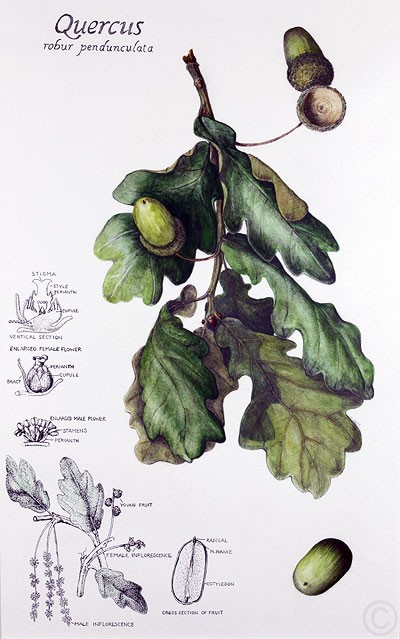
English or Pedunculate Oak (Quercus robur
Watercolor by Ruth de Monchaux

History:
Native to the northern hemisphere, oaks are found from tropical to cold climates. Oaks have been used for wood and food for thousands of years. Craftsman around the world have used oak wood for centuries. Because of their long lives and strong wood, oaks have been used as national and political symbols, and because of their use is no many areas of life, oaks have been used as religious symbols as well. In more recent times, a number of hybrids and cultivars have been developed for landscaping purposes. Unfortunately, there has not been much development in producing acorns with less tannin.

Trivia:

  • Oak trees can be deciduous or evergreen (a.k.a. "Live Oaks")
  • Oaks produce fruit as a nut called an acorn. The nut contains the seed. The "cap" of the acorn is called a "cupule".
  • The fruit of nut trees, like acorns, are generally referred to a "mast".
  • Most acorns have high amounts of tannin, which eaten in large doses, can be toxic to certain animals, namely horses, cattle, and sheep. Pigs, which in certain locations feed on large amounts of Autumn acorns, can have some issues with the toxins, but this is much less common.
  • The primary source of corks for wine bottles and other uses comes from the
  • Cork Oak (Quercus suber). Cork is considered a renewable resource, since
  • harvesting the cork (bark) is done in a way which does not harm the tree.


Acorns can feed wildlife, domesticated life, and human life alike.
Red Oak (Quercus rubra
http://img3.etsystatic.com/004/1/6586066/il_fullxfull.382876059_g0w8.jpg

Oak leaf and acorn variety.
5 oak leaves and 6 acorns found by Coniston Water by Eileen Postlethwaite


USING THIS PLANT
Primary Uses:

  • Nut - the "acorn" is typically dried and ground as "meal" or "flour". Only a few species or improved hybrids have seeds that can be eaten raw (Quercus ilex)
  • Oil - only a few species have seeds that can be pressed to expel edible oil (Quercus ilex)
  • Young Leaves - cooked. Only a few oaks (Quercus acutissima) have edible leaves.
  • Coffee - The seed can be roasted and used as a coffee substitute.


Secondary Uses:

  • General insect nectar and pollen plant
  • Wildlife food
  • Wildlife shelter
  • Windbreak
  • Most species can be coppiced - every 7-30 years depending on the size wood desired.
  • Wood is highly prized for finish carpentry, furniture, tools, barrels, crafts, baskets, as well as posts, fencing, stakes, wedges, roof shingles, firewood, and charcoal.
  • Wood and acorn shells can be used for tanning.
  • Wood can be used for mushrooms (shiitake!)


Yield: highly variable on species and size of the tree. For example, Q. acutissima can produce up to 125 lbs (56 kg) of acorns per year.

Harvesting: Autumn (October-November). Acorns are harvested after they have fallen from the tree.
Storage: Can be used right away, but can be stored for months if kept dry.

Beautiful photo of Oak leaves in Autumn
White Oak (Quercus alba)
(http://stillblog.net/?p=1417 ... this is a beautiful blog!)

Oaks are just impressive trees!

DESIGNING WITH THIS PLANT
USDA Hardiness Zone:

  • Sawtooth/Sawthorn Oak (Quercus acutissima) - Zone 5
  • Encina or California Live Oak (Quercus agrifolia) - Zone 8
  • White Oak (Quercus alba) - Zone 4
  • Boz-Pimal Oak (Quercus aucheri) - Zone 8
  • Swamp White Oak (Quercus bicolor) - Zone 4
  • Turkey Oak (Quercus cerris) - Zone 7-9
  • Kermes Oak (Quercus coccifera) - Zone 6
  • Scarlet Oak (Quercus coccinea) - Zone 4
  • Blue Oak (Quercus douglasii) - Zone 7
  • Black Oak (Quercus emoryi) - Zone 7 
  • Hungarian Oak (Quercus frainetto) - Zone 6
  • Gambel or Shin Oak (Quercus gambelii) - Zone 4
  • Glaucous-Leaf Oak or Japanese Blue Oak (Quercus glauca) - Zone 7
  • Holly Oak (Quercus ilex) - Zone 7
  • Holm Oak (Quercus ilex ballota) - Zone 7
  • Valonia Oak (Quercus ithaburensis macrolepis) -Zone 7
  • Californian Black Oak (Quercus kelloggii) - Zone 7-9
  • Bull Oak (Quercus lamellose) - Zone 8
  • Overcup Oak (Quercus lyrata) - Zone 5
  • Burr Oak (Quercus macrocarpa) - Zone 2-8
  • Chinkapin Oak (Quercus meuhlenbergii) - Zone 4
  • Swamp Chestnut Oak (Quercus michauxii) - Zone 6
  • Mexican Blue Oak (Quercus oblongifolia) - Zone 7
  • Pin Oak (Quercus palustris) - Zone 5-8
  • Dwarf Chinkapin Oak (Quercus prinoides) - Zone 5
  • Chestnut Oak (Quercus prinus) - Zone 5
  • English or Pedunculate Oak (Quercus robur) - Zone 4
  • Red Oak (Quercus rubra) - Zone 3
  • Post Oak (Quercus stellata) - Zone 5
  • Cork Oak (Quercus suber) - Zone 7
  • Live Oak (Quercus virginiana) - Zone 7
  • Sierra Live Oak (Quercus wislizeni) - Zone 8


AHS Heat Zone:

  • Sawtooth/Sawthorn Oak (Quercus acutissima) - Zone 8-3
  • Encina or California Live Oak (Quercus agrifolia) - Zone 12-9
  • White Oak (Quercus alba) - Zone 8-1
  • Swamp White Oak (Quercus bicolor) - Zone 8-1
  • Turkey Oak (Quercus cerris) - Zone 8-1
  • Scarlet Oak (Quercus coccinea) - 9-4
  • Blue Oak (Quercus douglasii) - Zone 9-1
  • Glaucous-Leaf Oak or Japanese Blue Oak (Quercus glauca) - Zone 9-4
  • Holly Oak (Quercus ilex) - Zone 9-2
  • Californian Black Oak (Quercus kelloggii) - Zone 9-5
  • Bull Oak (Quercus lamellose) - Zone 8
  • Overcup Oak (Quercus lyrata) - Zone 8-4
  • Burr Oak (Quercus macrocarpa) - Zone 9-1
  • Chinkapin Oak (Quercus meuhlenbergii) - Zone 8-2
  • Swamp Chestnut Oak (Quercus michauxii) - Zone 9-3
  • Pin Oak (Quercus palustris) - Zone 7-3
  • Dwarf Chinkapin Oak (Quercus prinoides) - Zone 8-1
  • Chestnut Oak (Quercus prinus) - Zone 8-1
  • English or Pedunculate Oak (Quercus robur) - Zone 8-3
  • Red Oak (Quercus rubra) - Zone 9-5
  • Post Oak (Quercus stellata) - Zone 9-4
  • Cork Oak (Quercus suber) - Zone 12-3
  • Live Oak (Quercus virginiana) - Zone 11-6
  • Sierra Live Oak (Quercus wislizeni) - 10-6


Chill Requirement: likely, but no reliable information can be found

Plant Type: Medium to large-sized Shrubs; medium to large-sized Trees
Leaf Type: Evergreen or Deciduous depending on the species
Forest Garden Use: Canopy Layer, Sub-Canopy (Understory) Layer, Shrub Layer
Cultivars/Varieties: Many species, hybrids, and varieties available.

Pollination: Oaks require cross-pollination. This can come from just about any other species of oak. Pollinated by the wind.
Flowering: late Spring to mid-Summer

Life Span:
Years to Begin Bearing: 5-35 years depending on the species
Years Between Major Cropping: 1-10 years depending on the species.
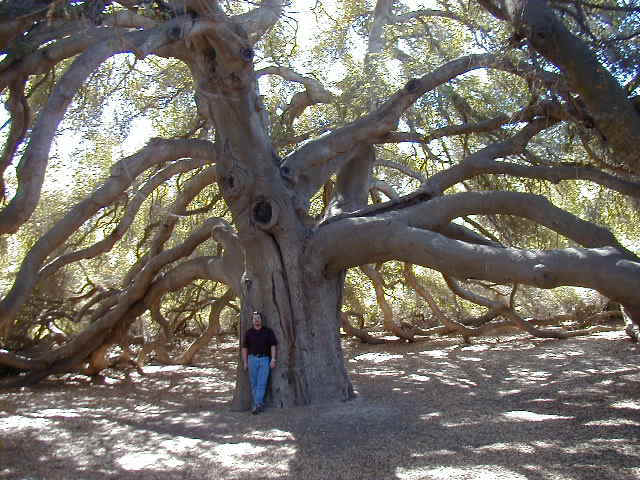
Years of Useful Life: 200 years is considered young for most species. Oaks can live to 400 years if not cut down. There is an oak over 2,000 years old in California.

The Pechanga Great Oak, outside of Temecula, California, is over 2,000 years old.
Encina or California Live Oak (Quercus agrifolia)

Oak leaves can be extremely variable. Each species is different.
http://www.hearth.com/talk/threads/oak-tree-down-church-need-id.87993/

PHYSICAL CHARACTERISTICS OF THIS PLANT
Size:

  • Sawtooth/Sawthorn Oak (Quercus acutissima) - 16 feet (5 meters) tall and 49 feet (15 meters) wide
  • Encina or California Live Oak (Quercus agrifolia) - 49 feet (15 meters) tall and 26 feet (8 meters) wide
  • White Oak (Quercus alba) - 65 feet (20 meters) tall and 32 feet (10 meters) wide
  • Boz-Pimal Oak (Quercus aucheri) - 16 feet (5 meters) tall and 13 feet (4 meters) wide
  • Swamp White Oak (Quercus bicolor) - 82 feet (25 meters) tall
  • Turkey Oak (Quercus cerris) - 114 feet tall (35 meters) tall and 82 feet (25 meters) wide
  • Kermes Oak (Quercus coccifera) - 13 feet (4 meters) tall and wide
  • Scarlet Oak (Quercus coccinea) - 82 feet (25 meters) tall and 49 feet (15 meters) wide
  • Blue Oak (Quercus douglasii) - 39 feet (12 meters) tall
  • Black Oak (Quercus emoryi) - 39 feet (12 meters) tall
  • Hungarian Oak (Quercus frainetto) - 98 feet (30 meters) tall
  • Gambel or Shin Oak (Quercus gambelii) - 14 feet (4 meters) tall
  • Glaucous-Leaf Oak or Japanese Blue Oak Oak (Quercus glauca) - 49 feet (15meters) tall
  • Holly Oak (Quercus ilex) - 82 feet (25 meters) tall and 65 feet (20 meters) wide
  • Holm Oak (Quercus ilex ballota) - 82 feet (25 meters) tall and 65 feet (20 meters) wide
  • Valonia Oak (Quercus ithaburensis macrolepis) - 49 feet (15 meters) tall and 42 feet (13 meters) wide
  • Californian Black Oak (Quercus kelloggii) - 82 feet (25 meters) tall
  • Bull Oak (Quercus lamellose) - 115 feet (35 meters) tall
  • Overcup Oak (Quercus lyrata) - 98 feet (30 meters) tall
  • Burr Oak (Quercus macrocarpa) - 75-100 feet (22-30 meters) tall and wide
  • Chinkapin Oak (Quercus meuhlenbergii) - 35-50 feet (10-15 meters) tall and wide
  • Swamp Chestnut Oak (Quercus michauxii) - 75-100 feet (22-30 meters) tall and wide
  • Mexican Blue Oak (Quercus oblongifolia) - 26 feet (8 meters) tall
  • Pin Oak (Quercus palustris) - 82 feet (25 meters) tall
  • Dwarf Chinkapin Oak (Quercus prinoides) - 12 feet (3.5 meters) tall and 12-20 (3.5-6 meters) feet wide
  • Chestnut Oak (Quercus prinus) - 49 feet (15 meters) tall and 75-100 feet(22-30 meters) wide
  • English or Pedunculate Oak (Quercus robur) - 98 feet (30 meters) tall and wide 
  • Red Oak (Quercus rubra) - 82 feet (25 meters) tall and 59 feet (18 meters) wide
  • Post Oak (Quercus stellata) - 65 feet (20 meters) tall and wide
  • Cork Oak (Quercus suber) - 65 feet (20 meters) tall and 49 feet (15 meters) wide
  • Live Oak (Quercus virginiana) - 65 feet (20 meters) tall and wide
  • Sierra Live Oak (Quercus wislizeni) - 65 feet (20 meters) tall and 98 feet (30 meters) wide


Roots: Extremely variable based on the species. Many have taproots, some are heart-shaped root masses, and some are a diffuse, fibrous network.
Growth Rate: Most species grow at a Slow to Medium rate; however, a few species are known to grow fast. Also, many of the hybrids grow at a much faster rate.

Shiitake Mushrooms prefer Oak wood over any other wood.

Oak wood has so many uses!

GROWING CONDITIONS FOR THIS PLANT
Light: Prefers full sun
Shade: Some species tolerate light shade
Moisture: Medium soil moisture preferred, but the "swamp" species (Q. bicolor, Q. michauxii) can handle pretty wet soils as can Q. robur
pH: most species prefer fairly neutral soil (6.0-7.0), and some species (notably Q. macrocarpa) is tolerant of very acidic to very alkaline soils.

Special Considerations for Growing: 
It is likely that all species tolerates juglone (natural growth inhibitor produced by Black Walnut and its relatives). Consider using this tree as a buffer between your walnuts and other plantings.

Propagation: 
Easily from seed. Sow immediately in Autumn after the seeds have fallen from the tree.

Maintenance:
Not much maintenance is needed.

Concerns:
Some people can have seasonal allergies to the pollen.

Tuesday, February 5, 2013

Fantastic Video: Green Gold

John D. Liu, ecological film maker and world-changer!
http://static.guim.co.uk/sys-images/Guardian/Pix/pictures/2010/04/20/John-d-liu.jpg


I have shared the videos by John D. Liu (Hope in a Changing Climate) and Geoff Lawton (Greening the Desert). In this video, which does borrow a lot of footage from Hope in a Changing Climate, both of these Permaculture superstars come together to discuss the future of Permaculture in the world. This is a fantastic video!

Monday, February 4, 2013

Permaculture Tip: Seed Saving in Tic Tac Containers

A great re-use for Tic Tac containers!

This image has been bouncing around the internet for a while now. I most recently saw it on Missouri Permaculture's FB page, so I thought I would share it. I tried to track down where this originated. Everything eventually pointed to a great Tumblr page: Think Outside the Bin, Earth 911. I couldn't get any further than that, so if you know who this image belongs to, let me know. I want to give them credit, thank them for it, and see what other great ideas they may have!

Permaculture Tip is an idea that is derived from observing and interacting with nature.  It is simple.  It is safe.  It is effective.  It helps build a sustainable system of agriculture and life in general.  If you have any Permaculture Tips you would like to share, please let me know.  I will post it here, give you the credit, and post a link to your blog or website if you have one.  Email me here: kitsteiner@hotmail.com

Sunday, February 3, 2013

Pruning the Fig Tree... wood for smoking and heat!

Our fig tree last summer - pre-pruned.

Yesterday, two men came to the house. After a phone call for translation (my Portuguese was about as good as their English!), I learned that the owners of the house we rent had sent these two men to prune the fig tree. Learning how to prune the fig tree was actually on my list of things to do... along with literally a few hundred other things! The tree was quite large and "leggy" in appearance with long, skinny branches and not many leaves except at the tips. I knew the tree needed to be pruned back, but I had no idea how to do it, so I was excited to see how it was done.

The fig tree post-pruning.

To be honest, I have no idea if these men were professional fig tree pruners, if they were professional or skilled tree trimmers of any kind, or if they were just a couple of guys who had some tree loppers and were available for hire. It did appear that they had at least done this before. They removed about half of the branches and really opened up the tree's framework. When I took the time to research pruning fig trees, it turns out that it is pretty simple. Figs will be produced on new shoots in the same year from even severe pruning.

The pile of pruned branches. 

There were five or six piles of branches left in the yard after the pruning was complete. This morning my boys and I, okay it was mostly me, moved all the branches onto the patio area. This was for a few reasons. I wanted to have a clear area to work. I wanted a place for wood to dry out, and that patio gets a lot of full sun. It gets hot in the summer since it is all white and walled in. Also, the patio was really close to the piles, so a close location minimized the work.

The (mostly) cut and trimmed pile of branches.

I ended up cutting up all the branches in to smaller lengths for kindling and firewood. There are many places in the world (Spain and Portugal included) where people think burning fig wood is hazardous; they think it releases deadly toxic fumes. However, this is not true. In Turkey, for instance, skewers are often made of fig wood to give a unique flavor to the meats. As it turns out, fig wood is used for smoking meats in some of the finest restaurants in the U.S. A New York Times article states that, "At Mercer Kitchen in SoHo, the chef, Chris Beischer, uses the wood to roast lobsters and make pizza. Chez Panisse in Berkeley, Calif., uses it for smoking meats. Oliveto, also in Berkeley, burns it for spit-roasting."

This whole process got me thinking about a few things...

  • First - trees produces a LOT of biomass. The fig tree looks like it got a trim, but it was not radical. We are left with a lot of cut branches... from just one small tree. The wood from trimmings and wind damage and die back from even a small forest garden will produce a lot of wood, likely all a small homestead will need. I can't wait to get mine started!
  • Second - this just reinforced Permaculture Principle Six: Produce No Waste. I can't help but think of growing up in the suburbs of South Florida. There would be so much "yard waste" picked up by the garbage trucks each week that, at a minimum, could be used for compost or chipping, but ended up in a landfill. Ughh!
  • Third - Experience is so important. I had never seen a fig tree pruned before in my life. Now that I have, I feel confident I could do it myself next time. Time will tell if this project was done correctly, but I will always have this as a reference point to go back to, either to repeat or to refine.
  • Fourth - It is important to challenge tradition. Don't do it just for the sake of doing it, but do so when you have reason to doubt. I am reminded of the Apostle Paul writing to the Thessalonians to "test all things; hold on to what is good." The context was a bit different, but I have applied this to my life in general, and it holds true. The local knowledge here says not to use this fig wood. I didn't heed or ignore that tradition blindly. I questioned it. I researched it... quite a bit, because I don't want to put my family or myself at risk, and I am now choosing to ignore it and not waste a valuable resource.
  • Fifth - Cutting this many branches was a lot of work, but it felt good to be working outside! It felt great to be working with branches and wood. It felt good to know that this work was going to be directly used for a purpose for my family. Many people in the modern world do not get to experience this anymore. It is just one of many things our modern culture has lost and needs desperately to gain again.
  • Sixth - It has been too long since I have smoked some meat. Now I have some good motivation to get smoking!