Wednesday, March 13, 2013

Video: Sorrel featured on Eat The Weeds

Common Sorrel (Rumex acetosa)


I recently wrote an article on Sorrel. For a follow-up, I am sharing this video by Green Dean from Eat The Weeds. It is great for helping you identify these plants in the wild, and it give a bit more information on the Rumex species.


Monday, March 11, 2013

Permaculture Plants: Sorrel


A patch of wild Common Sorrel (Rumex acetosa) 

Common Name: Sorrel
Scientific Name: Rumex species
Family: Polygonaceae (the Buckwheat or Smartweed family)

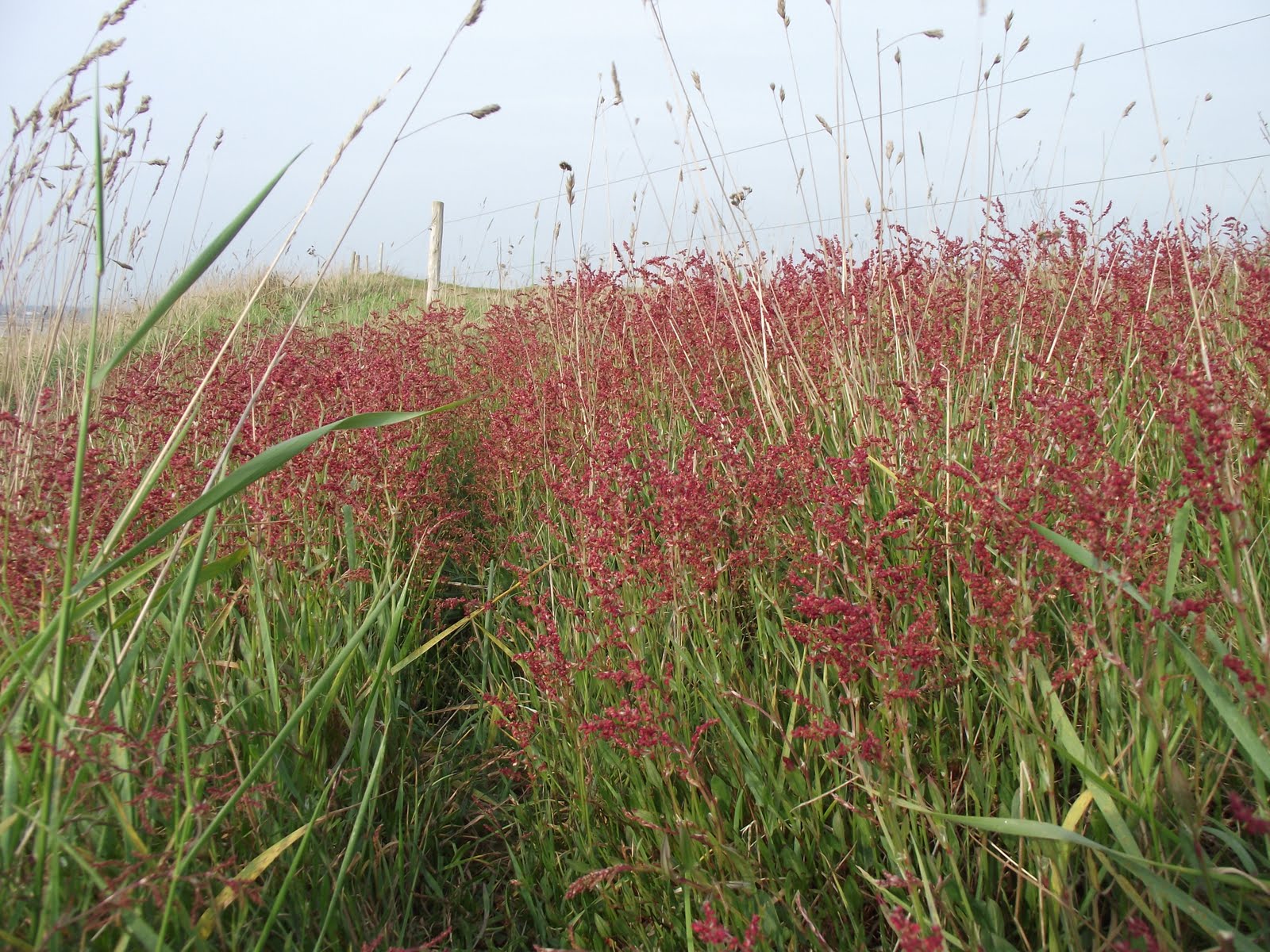
It is easy to see why Sheep's Sorrel (Rumex acetosella) is also called Red Sorrel

Common Species:
  • French or Common Sorrel (Rumex acetosa) 
  • Sheep's, Red, or Field Sorrel (Rumex acetosella)
  • Monk's Rhubarb (Rumex alpinus)
  • Herb Patience (Rumex patientia)
  • Buckler-Leaved or French Sorrel (Rumex scutatus)


Buckler-Leaved Sorrel (Rumex scutatus) has a more spade-shaped leaf.

Description:
Docks and Sorrels are closely related species belonging to the Rumex genus. Most species are considered "weeds", but the ones listed here have a fantastically refreshing and bright flavor - think lemony lettuce! The flowers, seeds, and even roots are edible as well. They attract beneficial insects, mine for minerals in the soil, and are drought-tolerant to name but a few of their traits. An easy to maintain addition in the Forest Garden.

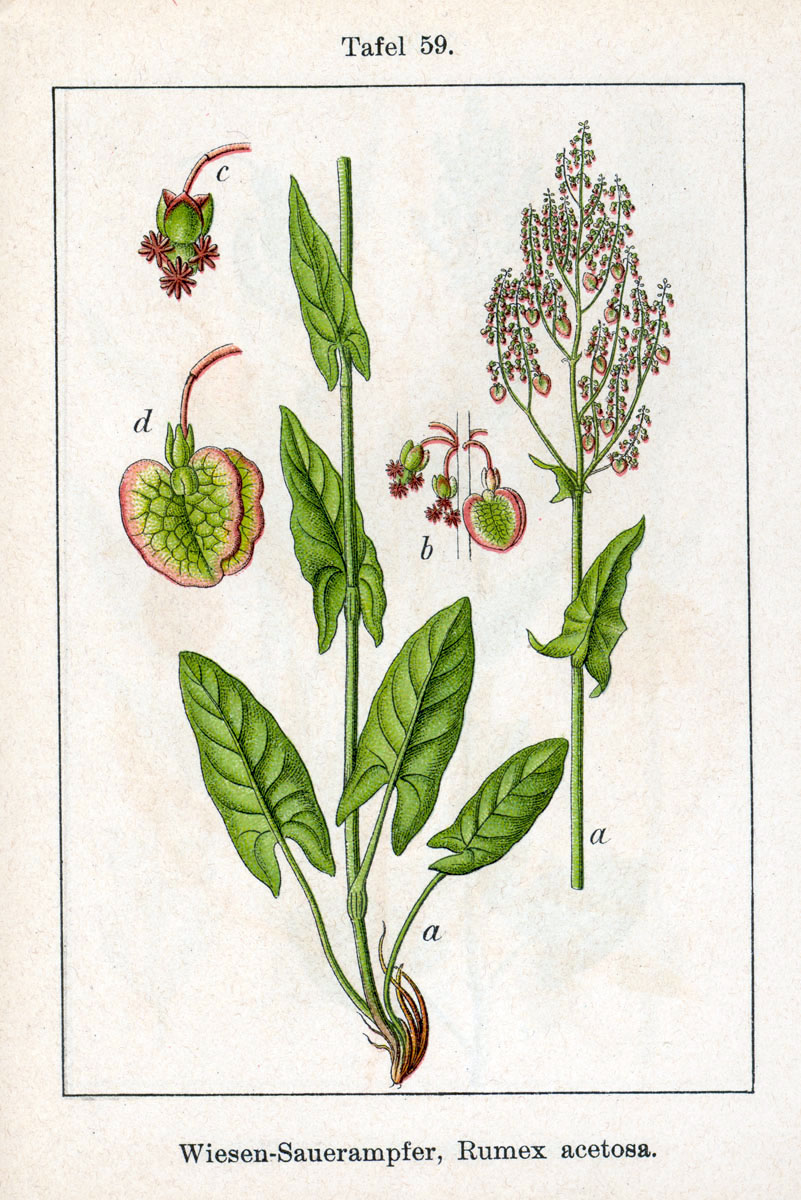
Common Sorrel (Rumex acetosa) 

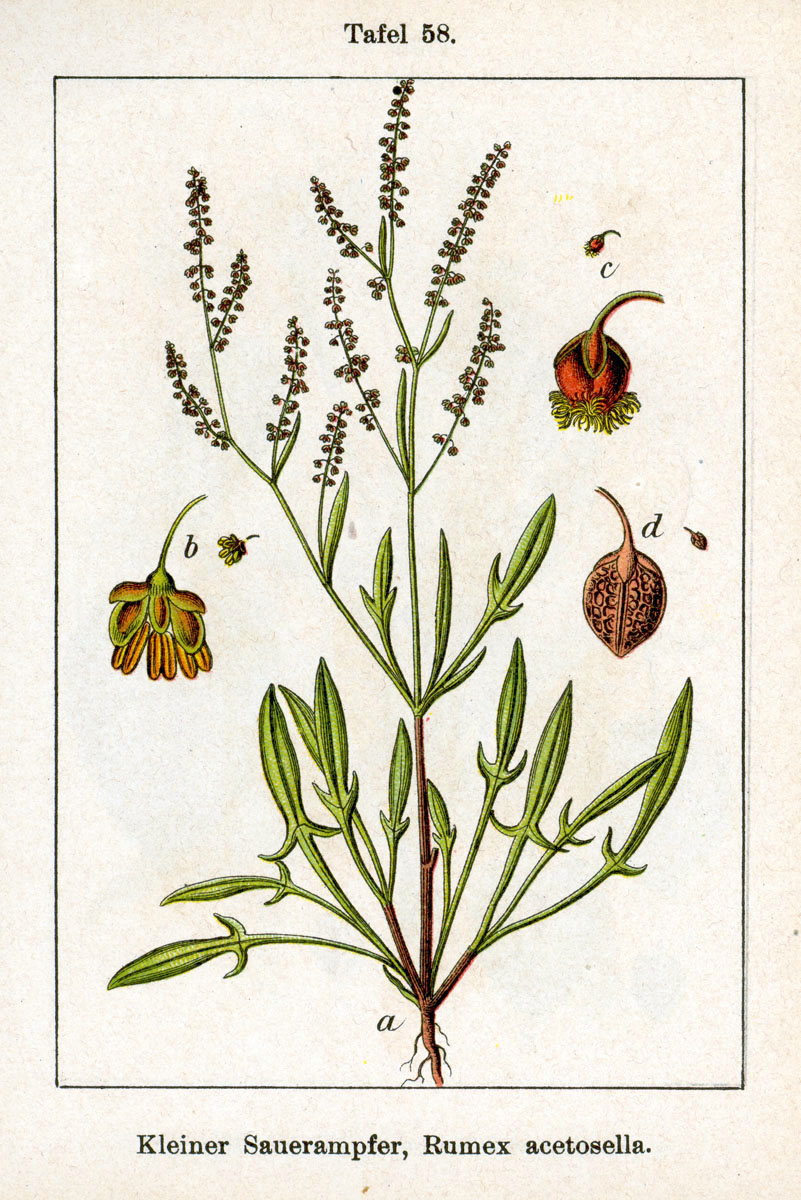
Sheep, Red, or Field Sorrel (Rumex acetosella)

History:
There are over 200 species in the Rumex genus. Where these plants were not native, they were introduced on purpose or on accident, and they can now be found the world over. Only a few species of Sorrel have had much interest by plant breeders, so the wild plants are what we have.

Trivia:
  • "Sorrel" is also used to describe parts or tea from the Hibiscus which is popular around the Equator, but has no relation to the Rumex species
  • Sorrel is used fresh and cooked around the world in traditional cuisine most commonly in Europe, but also Africa and Asia
  • Sheep Sorrel was used to revegetate overgrazed fields in Australia

Sorrel is best picked when leaves are young and tender.

Common Sorrel (Rumex acetosa) - here's a recipe for soup:

USING THIS PLANT
Primary Uses:
  • Edible Leaves - unique fruity, sour (lemony) taste. Can be used raw (salads, on sandwiches, etc.) or cooked like spinach (soups, sauces, stews, pastries, spanakopita, quiches, etc.). The leaves may even be boiled to impart a lemony flavor to the water which is cooled and sweetened and used like lemonade.
  • Edible Flowers - typically used as a garnish for salads, but may be cooked as well.
  • Edible Roots - Some species have a large taproot which can be dried, ground, and used as a flour adjunct
  • Edible Seeds - May be eaten raw or cooked. May be dried, ground, and used as a flour adjunct

Secondary Uses:
  • General insect nectar plant
  • Dynamic Accumulator Plant - Excellent! (Potassium, Phosphorus, Calcium, Iron, Sodium)
  • Groundcover Plant
  • Pioneer Species - the deep roots can help break up hardened soils
  • Drought Tolerant Species
  • Juice from the leaves can be used to curdle milk
  • Juice from the leaves can be used to clean stains in clothing
  • Dye Plant - roots, leaves, and stems
  • Likely a decent feed plant for most domestic animals - chickens will eat the seeds (let them harvest themselves!) and greens sparingly

Harvesting: Spring harvest for leaves. Pick when young as older leaves are more fibrous.
Storage: Used fresh most commonly, but the leaves can be dried and used later.

Monk's Rhubarb is tolerant of cold climates, like alpine regions, hence its scientific name.
(Rumex alpinus) 

DESIGNING WITH THIS PLANT
USDA Hardiness Zone:
  • French or Common Sorrel (Rumex acetosa) - Zone 3-9
  • Sheep's Sorrel (Rumex acetosella) - Zone 1-9 
  • Buckler-Leaved Sorrel (Rumex scutatus) - Zone 3-9

AHS Heat Zone: 
  • French or Common Sorrel (Rumex acetosa) - Zone 6-1 
  • Sheep's Sorrel (Rumex acetosella): 10-1 
  • Buckler-Leaved Sorrel (Rumex scutatus) - Zone 6-1

Chill Requirement: No reliable information can be found

Plant Type: Herbaceous perennial
Leaf Type: Deciduous (some varieties are evergreen)
Forest Garden Use: Herbaceous Layer, Groundcover Layer
Cultivars/Varieties: Many species available. Some few have been improved.

Pollination: May be Self-Pollinating/Self-Fertile or Dioecious (male and female plants) depending on the species. Pollinated by wind.
Flowering: May-September

Life Span: No reliable information can be found, but as these plants reseed so easily, it is almost a moot question.

Sorrel's have small flowers that attract small, beneficial insects.
Sheep's Sorrel (Rumex acetosella)

While many species have taproots, all species have deep-growing roots.
Sheep's Sorrel (Rumex acetosella)

PHYSICAL CHARACTERISTICS OF THIS PLANT
Size: 
  • French or Common Sorrel (Rumex acetosa) - 12-36 inches tall and 12 inches wide
  • Sheep's Sorrel (Rumex acetosella) - 6 inches tall and indefinitely wide
  • Buckler-Leaved Sorrel (Rumex scutatus) - 12 inches tall and 12-24 inches wide

Roots: Deep and fibrous, some species have a taproot; Sheep Sorrel (Rumex acetosella) has stolons (stems called "runners" that grow along the ground and produce roots, and then new plants)
Growth Rate: Medium to Fast

While not its main use, Sorrels can produce a decent amount of seed.
Herb Patience (Rumex patientia)

GROWING CONDITIONS FOR THIS PLANT
Light: Prefers full sun
Shade: Most species tolerate light shade, although some can tolerate moderate shade
Moisture: Dry to medium-moisture soils
pH: can tolerate a very wide range of soils (3.5-8.5)

Special Considerations for Growing: None

Propagation: 
Typically, and easily, by seed - direct sow in Spring. Can transplant "wild" specimens. Can divide plants in Spring.

Maintenance:
None. Flowering will stop new leaf growth, so you can encourage young leaf growth by cutting off the flowering stem.

Concerns:
  • Poisonous - Leaves and contain oxalic acid. Large amounts need to be eaten for this to be toxic. When cooked, much of the oxalic acid is reduced.
  • Running types can be expansive - they can grow all over the place.
  • Many varieties of Sorrel reseed very easily, so some consider them a bit invasive... I see this as a great trait!


Sunday, March 10, 2013

A Mini Guild: Beans, Cucumbers, Bougainvillea, Stinging Nettle


Seedlings of Purple Podded Pole Bean (left) and Japanese Climbing Cucumber (right)

My boys (age 4 years and almost 5 years old) wanted to help me in the garden this weekend.  I decided to try a small experiment. I have a spot that gets a few hours of morning sun, and that is it. It is not an ideal location for typical garden vegetables, but I only have a couple of seedlings to lose if it doesn't work.

There was a mixed variety of plants growing under a rather old Bougainvillea: some perennial flowering bulbs that the landlord (or their gardener) planted years ago, a low-growing mat of wispy little-leaved plants, a few shoots of ferns, and a single, small Stinging Nettle. I cleared a spot, and my boys and I planted the seedlings. I left the bulbs and Stinging Nettle. I shredded the other unknown plant and used it as a mulch for the seedlings.

My thought is that if there is enough light there for these plants to survive, then we just created a mini-Permaculture Guild. The bean is a legume and is a nitrogen-fixing plant... it will provide nitrogen (not a lot, but some) for the fast growing cucumber. The cucumber and bean are both climbing plants. They can be trained to grow up the tall Bougainvillea, which will be putting out beautiful blooms later in the Summer close to when the cucumber and beans will be ready to harvest. The flowering bulbs are pretty and will provide a bit of ground cover until the seedlings are taller. The Stinging Nettle is small, but by cutting out the competing ground cover around it, I have given it room to grow. As it does, it will become a ground cover of its own with edible leaves. When the Stinging Nettle gets a bit too big, which they usually do in places you don't specifically want them, I will cut it back and use its leaves... young leaves to eat and old leaves as mulch. Since Stinging Nettle is a Dynamic Accumulator, its mulch is rich in nutrients, specifically potassium, calcium, sulfur, copper, iron, and sodium. 

Seedlings (left), Bougainvillea (back), Stinging Nettle (lower right)

This small patch of soil is now home to a small Permaculture Guild. Our yard is full of very pretty, but not very useful plants. However, this spot with a big, old Bougainvillea with its understory of flowering bulbs, when neglected for a few years so that a few "weeds" spring up, and with the addition of a few annual vegetables, now becomes a very productive spot that requires minimal maintenance. 

This is a tiny glimpse of home-scale Permaculture!

Friday, March 8, 2013

Rocket Stove Kickstarter by Paul Wheaton of Permies.com

Paul Wheaton (big) and Toby Hemenway (little)

Here is a Kickstarter project for Rocket Stoves that I would highly recommend examining.  I have written about Rocket Mass Heaters, and the Rocket Stoves are where the mass heater originated. Take a look and contribute if you feel like it is worthwhile... I do.


Wednesday, March 6, 2013

Video: Toby Hemenway - Redesigning Civilization

Toby Hemenway is one of the world's most prominent voices in Permaculture today.

Toby Hemenway is the author of Gaia's Garden. This book about homescale Permaculture has been the number one selling Permaculture book for the last five years (I believe). It really is a great book if you have not read it yet.

This video is also a great look at civilization and agriculture and the contrast with Permaculture.

While I do not agree with everything that Toby says here in this lecture, and I may write some articles on that in the future, I really do agree with the overall message.

If you have the time, I highly recommend watching this video.


Tuesday, March 5, 2013

Permaculture Tip: Perennializing Annual Vegetables - Leeks

The leek is an "annual" vegetable that we may be able to make perennial.

Leeks are one of my favorite vegetables. They are kind of like a mix between an onion and garlic in flavor, a mix of onion and scallion and shallot in use, and a mix of scallion and maybe cabbage in texture. They offer a great flavor addition to many dishes, and I use them quite a bit.

Leeks are biennial plants. This means that they will grow for a full season, winter over, and then flower the next season. Leeks can be harvested whenever you want them. When younger, they are more tender and can be used a bit more like a shallot. When they are older, the leaves are a bit tougher, and they can be used like large onions or almost like cabbage.

I have bought leeks from the grocery store that still had a bit of the roots left on them. I chopped the lower 2-3 inches off (10-15 cm) and let it sit in a jar of water for a few days, then I planted them in the garden. Be warned that this water starts to stink very quickly. I actually do not think this step is necessary, but I have always been too busy to plant them right away. I know it will be a day or two before I will go outside and take the time (okay, it is about one minute!) to plant them, so I stick them in the water. I have left the leek "bulbs" in the water for up to a week. Within a few weeks of planting them in the soil, there are new shoots growing from the center.

This is also a great way to short-cut planting leeks from seeds.

My thought was that this technique could be indefinitely perpetuated. However, I have not lived in a place long enough to test this theory more than a two seasons. But then I listened to an old Permaculture course taught by Bill Mollison, the founder of Permaculture. He had a recommendation that cut out a few of my steps. When a leek is ready to be harvested, instead of pulling the whole plant out, just cut it off at ground level. Then let the plant keep on growing... just as if you harvested it and then replanted the root end.

Perennial Leeks! Fantastic!

If you live in an area that freezes, you can overwinter the leeks by covering them with straw or grass clippings, then in Spring just uncover the mulch. The only concern is that after overwintering, the leek may bolt sooner, but you may be able to stop it by cutting off the flower stalk before it grows too large. I need to experiment with this. I will let you know what I find. If you have done this, please let us know!

A Permaculture Tip is an idea that is derived from observing and interacting with nature.  It is simple.  It is safe.  It is effective.  It helps build a sustainable system of agriculture and life in general.  If you have any Permaculture Tips you would like to share, please let me know.  I will post it here, give you the credit, and post a link to your blog or website if you have one.  Email me here: kitsteiner@hotmail.com


Monday, March 4, 2013

Permaculture Plants: Pecans and Hickory


Pecans... a favorite nut!

Common Name: Pecan and Hickory
Scientific Name: Carya species
Family: Juglandaceae (the Walnut family)

Hickory Nuts

Common Species:
  • Pecan (Carya illinoinensis) – large to very large tree
  • Shellbark Hickory (Carya laciniosa) – large tree
  • Shagbark Hickory (Carya ovata) – large tree
  • Hican (Carya x hybrids) – large to very large tree

Shagbark Hickory (Carya ovata)... Stunning!

Less Common Species:
  • Water Hickory (Carya aquatica) - large tree, used mainly for wood and fuel
  • Chinese Hickory (Carya cathayensis) - large tree, used for nuts, oil (nut), and wood
  • Bitternut Hickory (Carya cordiformis) - large tree, used mainly for wood and fuel
  • Pignut Hickory (Carya glabra) - very large tree, variable flavored nut, used mainly for wood and fuel
  • Mockernut Hickory (Carya tomentosa) - very large tree, good flavored nut but very tough shell, used mainly for wood and fuel 

A majestic Pecan tree

Description:
The Hickories and Pecans are large, slow-growing trees that can take many years to begin bearing. These majestic trees which give us some of the best tasting nuts, fantastic wood wood for smoking meat, and wood that can be used in a variety of ways, should be considered an investment for the future. I hope to enjoy, literally, the fruits of my labor, but I know my children, grandchildren, and maybe even my great-grandchildren will enjoy it as well.

Pecan (Carya illinoinensis) by Charles Sprague Sargent

History:
Native to Asia and North America, Hickories and Pecans have been used for food, wood, and fuel since people have been around to use them. These trees have been developed for larger and sweeter nuts, and the Pecans have had the most development so far.

Trivia:
  • The name “Hickory” comes from the Algonquian Indian (Native American people group) word pawcohiccora, meaning the nut from the Hickory tree.
  • Pecan and Hickory Nuts are not technically nuts… they are considered “drupes” or even "tryma". A drupe is a fruit with a single seed inside. So the “nut” of these plants have a soft fruit that dries and splits to reveal the seed… what we call the nut. A true nut is a fruit which forms a hard shell to cover the seed, and this hard shell (the fruit) does not split open on its own. Confused yet? It may be easiest to call it a nut!
  • “Papershell Pecans” are pecans that have such thin shells that the shell can be cracked by just squeezing together two nuts in your hand… some are so thin, that the shells can be cracked by just squuezing one nut between two fingers. However, these nuts are much more prone to cracking on the tree when the nut swells during heavy rains.
  • Pecans have nuts
  • Shagbark Hickory have nuts about 1.5 inches (4 cm) long
  • Shellbark Hickory have nuts about 2.5 inches (6 cm) long
  • The Hican is a cross between a Pecan (C. illinoinensis) and another Hickory species (Carya species)… so in reality, there are a wide variety of trees appropriately named Hican. Most hybrids have poor nuts, but the named Hicans typically produce very large and tasty nuts; although, they usually produce less nuts than either of its parents.
Pecan Pies would be reason enough to plant these trees.

USING THIS PLANT
Primary Uses:
  • Nut – Raw. Excellent taste in both Pecans and selected Hickories.
  • Nut – Cooked. Used in desserts, breads, baking, etc.
  • Nut – “Milk” can be made from Pecan nuts
  • Nut – Oil. An edible oil can be pressed from Pecans

Secondary Uses:
  • General insect pollen plant – attracts beneficial insects which feed on the pollen of these trees
  • Wildlife food
  • Wildlife shelter
  • Windbreak plant
  • Sap is edible (Hickories) – can be tapped like Maples and reduced (with heat) to make syrup. I have yet to try this syrup, but the reports on flavor I have found range from very good to fair and slightly bitter. Interesting.
  • Coppice Plant
  • Wood used for poles, posts, fence posts, stakes, tool handles (axes!).
  • Wood used for fuel (firewood), charcoal.
  • Wood is a great wood for smoking meats.
  • Dynamic Accumulator – Potassium and Calcium for all species; Phosphorus in Shagbark Hickory (C. ovata)
  • Biomass Plant – large tree with lots of leaf-fall every Autumn that can be left to decompose and build the forest soil, or it can be moved and used in other places or composted.

Yield: 
Highly variable on species and size of the tree. Hickories produce less than Pecans; Improved varieties often produce more than unimproved and wild species, although the hybrid Hican will produce less (but larger) nuts than the Pecan. 50 lbs (23 kg) is not uncommon for a 10-20 year old tree. Pecans can produce up to 100 lbs (46 kg) when they are 20-25 years old. A mature Pecan that is 75 years old or older can produce close to 500 lbs (225 kg) of nuts. There are some Pecans that have yielded over 1,000 lbs (450 kg) of nuts in a season!

Harvesting: Autumn. Although if you have Pecans in more warm locations, you may harvest all the way through January. Pecans and Hickory are typically harvested after they have fallen from the tree; however, some people (and commercial operations) use nets to catch the nuts during harvest season.
Storage: Can be used right away, but if the nuts are dried, they can store for a few years.

The long, thin, green flower clusters ("catkins") of a Pecan tree

DESIGNING WITH THIS PLANT
USDA Hardiness Zone:
  • Pecan (Carya illinoinensis) – Zone 6-9
  • Shellbark Hickory (Carya laciniosa) – Zone 6
  • Shagbark Hickory (Carya ovata) – Zone 4-7
  • Hican (Carya x hybrids) – Zone 5

AHS Heat Zone:
  • Pecan (Carya illinoinensis) – Zone 9-1
  • Shellbark Hickory (Carya laciniosa) – Zone 8-1
  • Shagbark Hickory (Carya ovata) – Zone 8-1

Chill Requirement: 650-1,550 hours/units depending on the species/variety.


Plant Type: Large to very-large Trees
Leaf Type: Deciduous
Forest Garden Use: Canopy Layer
Cultivars/Varieties: A few very worthwhile species. There are quite a few cultivars and hybrids available.

Pollination: Self-Sterile (although a few varieties are self-fertile). Requires cross-pollination by other cultivars for the nuts to be produced. Pollinated by the wind. Trees can be pollinated by the wind carrying pollen from other trees up to 10 miles away!
Flowering: Late Spring to Early Summer.

Life Span:
Years to Begin Bearing: 3-10 years for Pecans (sooner in the south); 40 years for wild Hickories (only 3-7 years if the tree was grafted)
Years Between Major Cropping: 1-2 years
Years of Useful Life: minimim of 100 years, but most will be productive for at least 200 years. It is not uncommon for trees over 400 years old to still produce large yields.

Shagbark Hickory Nuts

How the Shagbark Hickory got its name...

PHYSICAL CHARACTERISTICS OF THIS PLANT
Size:
  • Pecan (Carya illinoinensis) – 75-120 feet (22-36 meters) tall and wide
  • Shellbark Hickory (Carya laciniosa) – 70-85 feet (21-25 meters) tall and 30-50 feet (9-15 meters) wide
  • Shagbark Hickory (Carya ovata) – 70-85 feet (21-25 meters) tall and 30-50 feet (9-15 meters) wide
  • Hican (Carya x hybrids) – 75 feet (22 meters) tall and 50 feet (15 meters) wide

Roots: Single, large taproot
Growth Rate: Slow. Some improved varieties grow at a bit faster rate than the wild species.

Shellbark Hickory (Carya laciniosa)
Check out this site for a great photo resource on Carya species: 

GROWING CONDITIONS FOR THIS PLANT
Light: Full sun
Shade: Some species tolerate light shade; the Shagbark Hickory (C. ovata) can tolerate a bit more shade than the other species. The Pecan (C. illinoinensis) doesn’t like any shade.
Moisture: Medium soil moisture preferred. The Shellbark Hickory (C. laciniosa) can tolerate more wet soils. The Shagbark Hickory (C. ovata) can tolerate some fairly dry periods and doesn’t like wet soils or flooding.
pH: most species prefer fairly neutral to alkaline soil (6.5-8.0)

Special Considerations for Growing:
  • Almost all of these trees are slow growing during their first few years.
  • Most species/varieties require a hot summer to thrive.
  • All species tolerate juglone (natural growth inhibitor produced by Black Walnut and its close relatives… Pecans and Hickories are more distant relatives of the Walnut). Consider using this tree as a buffer between your walnuts and other plantings.

Propagation:
From seed – needs at least 3 months cold stratification to germinate. If starting from seed, make sure to use deep pots to give room for the taproot. Get the seedlings into their permanent spots as soon as possible to avoid damaging or stunting that taproot. Ideally, if you can protect the seeds from mice, the seeds would be planted where you want the trees to grow. Named varieties are available from grafting.

Maintenance:
Very little. Once established, almost none.

Concerns:
Truly none. However, I have my own personal concerns about the grafted varieties. The majority of Pecans are grafted onto only a few rootstocks. Granted, these rootstocks are very hardy and resistant to many diseases, but I don’t like the idea of putting all my eggs in one basket. What if a disease came along that knocked out those few rootstocks? It is highly unlikely, but what if? My goal with my (future) forest garden is not to be a commercial producer of one thing (in this case, Pecans or Hickory Nuts). My goal is to create a bountiful and resiliant ecosystem. So what will that mean in practice? Well, I will certainly have a number of named varieties of Pecans on the standard rootstocks, but I will also likely grow some of my own trees from seed. This may delay the onset of nut production for many years, but I think it is a great legacy to leave. To know I planted something that my children and grandchildren will enjoy, even when I did not, sounds pretty great to me.