Tuesday, October 9, 2012

My New Garden Beds


My new garden beds about ready for planting! I used free, local, volcanic rock.
In the background, you can see the recycled shipping palett compost bin my father built during his recent trip
 
I thought I would share one of the projects is my garden. I just finished (almost) setting up my garden beds. I just need to plant seeds and seedlings. Very exciting!
 
Those of you in cooler climates may be thinking I am just a bit too late, or way too late, for a Fall garden, but in the Azores, it is perfect planting weather. We are in a maritime subtropical temperate climate. The Winter temperatures never drop below freezing. It is actually a more mild Winter, though more windy, than my previous garden in Turkey (a Mediterranean subtropical temperate climate).  So, I figure I'll be planting all my cool weather crops within the next few weeks, and be enjoying fresh greens and veg through the Winter.

My "Lower Garden". The spot I chose for the first garden beds.
 

I also thought I would share all the reasons I set up the garden beds where and how I did. It may be obvious for those with a lot of gardening experience, but not so for those with minimal time in their own garden. The first decision was location. As I am located just about 100 yards (90 meters) from the rocky, exposed beach, I get a lot of wind. The bougainvillea lining the wall in the photo above were almost decimated from Tropical Storm Nadine during her first and second visit to our island. Fortunately, the patch of earth I call the Lower Garden has pretty good wind protection from the surrounding walls and hedge. It literally sits about 5 feet (1.5 meters) below the rest of the garden, but it has great drainage. Even with the prolonged rain from Nadine, there was no puddling.
 
The next decision to be made was orientation. In the photo above of the Lower Garden, south is to the top of the photo, east is to the left, west is to the right, and I am on the north side taking the photo. This means the sun will progress from left to right (east to west) through the day. By orienting the beds on the north-south axis, the sun will hit both sides of each bed. Taller plants will be planted on the north end so that the southern sun (shining to the north) will hit more leaves, and the taller plants will not shade out shorter plants. Other gardeners run their beds east-west and plant all their taller crops on the north side as well; this is just another way of doing it. Of course, if you are in the Southern Hemisphere, then just switch north and south.
 
Rock walls and grass barrier in place. My Dalmation overseeing the project.

My last decision was how to make the beds. I am a huge fan of raised beds. Do I think they are the only way? By no means, but I think they will work great for my situation. I had a large pile of local volcanic rock piled up in a corner of the garden, and I decided to use these to make the sides of the raised beds. There were a number of reasons for this. First, they were free. Second, they were natural; chemically treated wood is commonly used, but I am not a fan for a lot of reasons. Third, the dark rocks would heat up in the sun which heats up the soil faster and improves the microclimate of the beds. The rocks will also radiate heat at night. I live in a cooler area even though it is not cold, so the additional heat will be nice.

I earned a greater appreciation for the builders of stone walls, because stacking rocks on top of each other in a linear fashion is not nearly as easy as it looks. There was a lot of rearranging and restacking and checking balance and stability. It was actually quite fun, but building a wall more than two layers would require a lot more time and skill.

I chose to line the beds with a number of layers of brown packing paper from our move. I saved as much of it as I could for just this reason, but I also have used it as kindling for fire starting. This will smother the underlying grass, slowly break down over time, and allow the bed plant roots to burrow through this layer and deeper into the soil.

That's it for now. A glimpse into my thinking and creation of my new garden beds.

Oh - these beds are about 4 feet x 12 feet. That's 48 square feet (4.5 square meters) per bed or 96 square feet (9 square meters) total. Not to bad!


Monday, October 8, 2012

Permaculture Plants: Cherry, Tart or Sour

The Tart or Sour Cherry should be required for every home.

Common Name: Tart Cherry, Sour Cherry
Scientific Name: Prunus cerasus
Family: Rosaceae

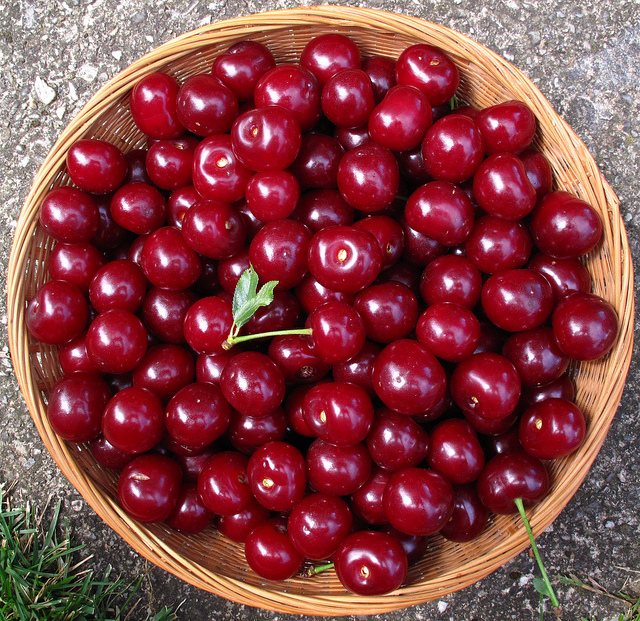
A bowl of Tart Cherries... life doesn't get much better!
 
Description:
The Tart Cherry (a.k.a. Sour Cherry) is closely related to the Sweet Cherry, but as the name implies, it is significantly tarter than its cousin. Tart Cherries can be eaten fresh when perfectly ripe, but are most widely used for baking and cooking. The fruit alone is enough reason to grow this small tree, and if space is an issue consider dwarfing varieties at only 3-6 foot (1-2 meter) tall "trees". Tart Cherries are beautiful in the Spring, provide nectar and pollen to beneficial insects, and its wood has a number of uses. It is significantly more hardy of cold, heat, drought, pests, and disease than the Sweet Cherry, and there are plenty of varieties to choose for your home or Forest Garden.
History:
It is believed that the Tart Cherry (Prunus cerasus) was a wild cross between the European Dwarf/Mongolian Cherry (Prunus fruticosa) and the Sweet Cherry (Prunus avium) somewhere in what is now modern day Turkey. It was prized by the Greeks and Romans, the later who introduced it to Britain. The 'Kentish Red' Tart Cherry was the first Tart Cherry planted in North America by British colonists in Massachusetts. There have been many cultivars/varieties developed around the world, and it still remains popular today mainly for baking, cooking, and juicing.

Amarelle (left) and Morello (right) are the two classes of Tart Cherries
 
Trivia:
  • Tart Cherries flower later in the year than Sweet Cherries, so they are less susceptible to late frosts
  • Tart Cherries can tolerate more shade than Sweet Cherries
  • Tart Cherries are less susceptible to pests and disease than Sweet Cherries
  • Amarelle are Tart Cherries with lighter red fruit, light red juice, and light flesh
  • Morello are Tart Cherries with dark red fruits, dark red juice, and dark red flesh
  • Marasca cherries are a type of Morello Tart Cherry which were traditionally used to make Maraschino Liquer; modern Maraschino cherries are made with a number of cherry varieties which are bleached, dyed with red food coloring, and then soaked in sugar water and almond extract.
  • Kriek Lambic is a style of open (wild) fermented Belgian beer that uses Tart Cherries for flavoring, traditionally instead of hops
  • Common dwarfing rootstocks are Colt (12 feet/3.5 meters tall) and Gisela (6.5 feet/2 meters tall)

I love unexpected flavor combinations: Tart Cherries in Meatballs
recipe here on Healthy Jewish Cooking

A more traditional Tart Cherry Recipe
Croatian Sour Cherry Strudel Recipe (Fil za Strudlu s Tresnjama ili Visnjama)


USING THIS PLANT
Primary Uses:
  • Baking - pies, tarts, turnovers, etc.
  • Cooking - used in savory dishes commonly with meats
  • Preserves, jams, jellies, etc.
  • Juice - often combined with other sweeter fruit juices or sweeteners (sugar, honey, etc.)
  • Fresh eating – Many varieties can be eaten this way, but typically they are only eaten fresh when fully ripened on the tree. When not perfectly ripe... well, there is a reason they are named "tart".
  • Dried
  • Fruit Leather
  • Flavoring component to beers, wines, and liquers

Secondary Uses:
  • General insect (especially bees) nectar plant
  • Wildlife food source, especially birds (Summer)
  • Specimen plant (i.e. decorative)
  • Living Fence/Hedge plant
  • Larger varieties may be coppiced for wood used in woodworking, fuel, etc. (will delay fruit production for a few years after each coppicing)
  • Wood
 

Yield: 1-2 bushels/35-70 liters/50-100 lbs (22.5-45 kg) per tree
Harvesting: Summer (July-August). Pick when the fruit is ripe... when the fruit is in full color and the fruit stalk (stem connecting the fruit to the tree) separates easily from  the tree
Storage: Fresh Tart Cherries should be used within a few days. Tart Cherries typically freeze well.

DESIGNING WITH THIS PLANT
Chill Requirement: 600-1,500 hours/units depending on the variety

Plant Type: Very Small to Medium Tree
Leaf Type: Deciduous
Forest Garden Use: Canopy Tree Layer, Sub-Canopy (Understory) Layer, Shrub Layer
Cultivars/Varieties: Many varieties available.

Pollination: Self-Fertile
Flowering: Spring. April-June depending on the variety and USDA Zone where it is planted

Life Span:
Years to Begin Bearing: 4-5 years,
Years to Maximum Bearing: 10-20 years
Years of Useful Life: 15-25

Tart Cherry trees can be stand alone specimen trees or incorporated into a Forest Garden.
 
PHYSICAL CHARACTERISTICS OF THIS PLANT
Size: Standard (full-sized trees): 15-30 feet (4.5-9 meters) tall and wide depending on the variety/cultivar, and most do not reach max height.
A variety of rootstocks are available that will produce Standard, Semi-Dwarfing (Semi-Vigorous), Dwarfing, and Bush types resulting in various sizes. Largest is probably the Kentish Red Cherry (Prunus cerasus caproniana) at 30 feet (9 meters) tall. Shortest is probably the Bush/Dwarf Sour Cherry (Prunus cerasus frutescens) at 3 feet (1 meter) tall.
Roots: Fibrous, may sucker
Growth Rate: Medium

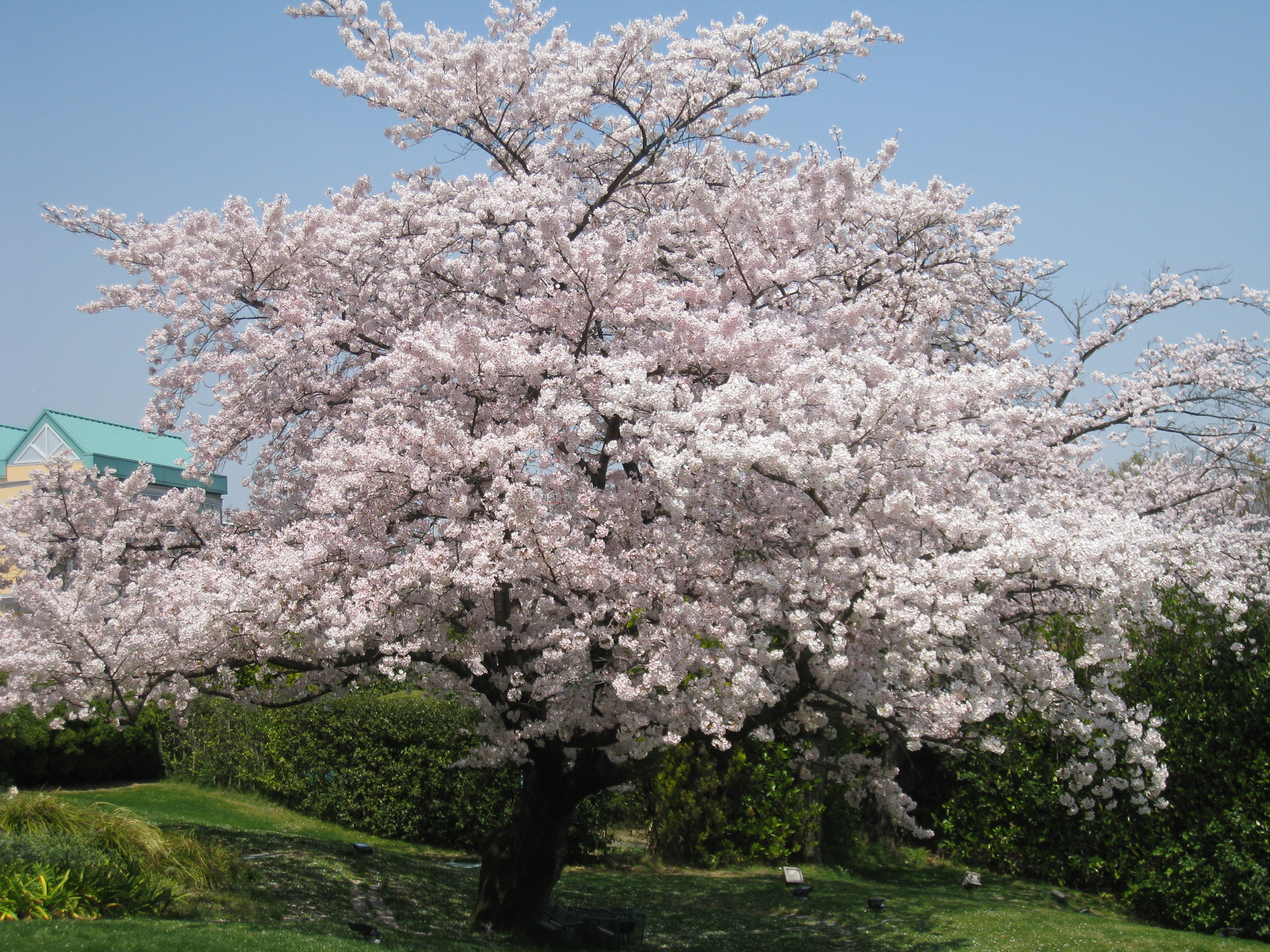
Beautiful flowers that attract beneficial insects... perfect!

GROWING CONDITIONS FOR THIS PLANT
Light: Prefers full sun
Shade: Tolerates moderate shade (needs at least a few hours of direct sun per day)
Moisture: Medium soil moisture
pH: most species prefer fairly neutral soil (6.1 - 7.0)

Special Considerations for Growing:
  • Many edible cherries tolerate juglone (natural growth inhibitor produced by Black Walnut and its relatives). If not sure, then consider using other trees as a buffer between your walnuts and other plantings.
  • Consider netting to protect fruit crop from the birds.

Propagation:
Usually grafted.  Seeds need at least 13-16 weeks cold stratification for germination and can take up to 18 months to germinate. Cuttings can be taken from Early Spring through Summer. Suckers can be divided in dormancy, but only consider this if the tree is not grafted.

Maintenance:
Minimal.  Prune out live wood for training as desired and dead or diseased wood in late Summer and Autumn - not when dormant.

Concerns:
Poisonous – Leaves and seeds contain a precursor to cyanide (large amounts need to be eaten for this to be toxic).


Wednesday, October 3, 2012

Organic Fertilizers: Seaweed

Seaweed is a fantastic soil or compost ammendment
 
What is it?
Seaweed is a general term for any of the multi-celled ocean algae.

What is the primary benefit?
Seaweed is a great source of organic matter for our compost and our soil. It is full of beneficial trace minerals, plant growth hormones, and fully-chelated (that means readily absorbed) micro-nutrients. Depending on where we live, we may have access to large amounts of seaweed. Currently, we are just a hundred yards (90 meters) from the rocky Azorean beach. The recent storm deposited literal tons of seaweed on the shoreline (read this article I wrote about it).


Here I am harvesting seaweed from my local beach... with some help from my boys and dog.


How is it used?
Seaweed can be used directly as a mulch. It provides all the benefits listed above, but it also repells snails and slugs - natural salt content and dries out with tiny jagged edges that they despise. Just keep in mind that there will be a fishy odor from the seaweed as it breaks down, some are have a stronger odor than others. The salt content is usually not enough to cause too much issues with your soil, especially if you live where there is a decent amount of rainfall; most places with plentiful access to seaweed have sufficient rain. However, if you are concerned, you can rinse the seaweed out for a few minutes with clean water before application.

Seaweed can be composted. This is a great way to incorporate all the seaweed's benefits into our soils. Just treat it as any other "green" material. (read this article for more information about composting)

There are many types of seaweed, but they all work the same in the soil.
 
Seaweed can also be used to make an emulsion-type fertilizer. There are many recipes for creating this, but the general principles are the same. Take a bucket and fill it halfway with seaweed. Next, fill it up with water. Let it sit anywhere from 2 days to 2 months. Keep in mind that this can get stinky! The longer it soaks, the more concentrated it becomes. If it only soaks for a few days, then the water can be sprayed directly on plants as a foliar fertilizer. If it soaks for a long time, then dilute the seaweed liquid with water, and then apply. Dilute more if the seaweed soaks longer, and always err on the side of applying too little.


Application:
Add fresh seaweed to your soil or compost directly.
Add fresh seaweed to as mulch around plants.

Do not use seweed to mulch garden paths - will become slippery if wet, and it shrinks when dry and is not too effective.


Composition:
NPK Ratio: 

  • Dried/Composted Seaweed: 1.1-1.5/0.75/4.9
  • Fresh Seaweed: 0.2-0.4/0/0

A Note About Collecting Seaweed:
Only use seaweed that has washed up on shore. Avoid cutting or pulling up established, growing seaweed. Sustainability matters.


A GENERAL NOTE ABOUT FERTILIZERS:
Always test your soil before adding any fertilizers. We can easily damage our plants and the soil by indiscriminately adding soil amendments.

Tuesday, October 2, 2012

Harvesting Seaweed

Collecting seaweed from the coast, with my boys and my dog.
 
I have written in previous articles about always being ready to grab what is on hand for your home vegetable garden or forest gardens. With the passing of Hurricane/Tropical Storm Nadine, one of the beaches in my neighborhood became inundated with seaweed. So I went out with my boys, dog, garden cart, bucket, and shovel in tow to the beach. I did wonder how the locals would react to me walking the streets with a large wheeled cart full of seaweed; however, I ended up meeting three groups of people who were collecting seaweed as well in just my brief twenty minute shoveling session . I think they were more surprised that a foreigner was out there with them than I was. 
 
Seaweed is a great compost addition (I'll talk more about that in a day or two). Everyone was gathering it for their gardens, orchards, and vineyards. One local man, in his 60's, told me that he had never seen this much seaweed washed up at one time. The boys loved running in the feet deep seaweed. To them it was like a super-sized trampoline. The dog was acting like it was a field of brown snow. Fantastic memory.
 
 My boys playing on the bed of seaweed.


Monday, October 1, 2012

Permaculture Plants: Plantain

Plantain is a weed I would welcome.
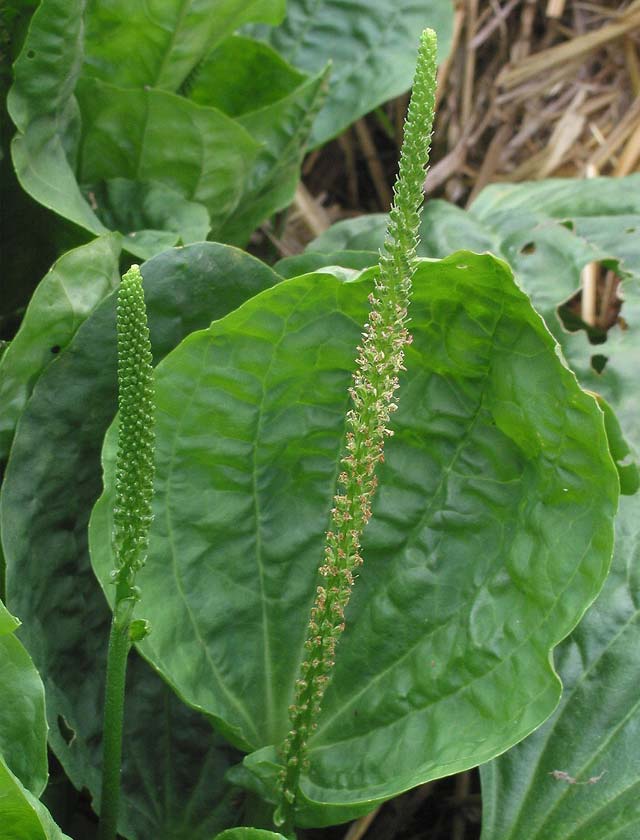
Common Plantain (Plantago major)

Common Name: Plantain
Scientific Name: Plantago species
Family: Plantaginaceae (the Plantain family)

Common Species:
  • Psyllium (Plantago afra)
  • Che Qian Zi (Plantago asiatica)
  • Buck’s-Horn Plantain (Plantago coronopus)
  • Ribwort/Buckhorn Plantain (Plantago lanceolata)
  • Common/Broadleaf/Greater Plantain (Plantago major)
  • Sea Plantain (Plantago maritima)
  • Hoary Plantain (Plantago media)
  • Blond Plantain (Plantago ovate)
  • Fleawort (Plantago psyllium)

Sea Plantain (Plantago maritima) is considered one of the best tasting Plantains
Description:
Plantain is considered a common lawn weed. However, it has been used for thousands of years as a medicinal plant (for inflammation, bleeding, and infections) as well as a potherb and salad green. It is also a great addition to the Forest Garden, as it attracts beneficial insects, is a dynamic mineral accumulator, is tolerant of drought, and is a great forage crop for animals.
History:
Native to Europe and Asia, and used for thousands of years as a medicinal (primarily) and food (secondarily) plant. It has spread easily, typically with accidental introduction of seeds, and found new homes around the world. It is seen as a lawn weed in most "modern" cultures, but is still used by traditional, or tradionally-minded, people as food and medicine.

Trivia:
  • Many of the Plantago species are used in the commercial preparation of dietary fiber supplements known as Psyllium.
  • Plantain, while originally from Europe, was introduced to North America with European settlers, hence the name “white man’s foot.”
The fibrous stands in Plantain can be removed before eating.
USING THIS PLANT
Primary Uses:
  • Edible Leaves – decent taste, but most species are fibrous unless strands removed first (young leaves are most tender), often blanched to make more tender. Most often used as flavor/nutrition addition to mixed salads (reportedly the best eating are Buck’s-Horn and Sea Plantain)
  • Edible Seeds – takes lots of time to harvest, but can be eaten raw or cooked or ground as flour addition. Considered a great fiber source.
  • Medicinal Species – long history as anti-bleeding and anti-swelling
Secondary Uses:
  • General insect (especially bees) nectar plant
  • Maritime Species
  • Drought-Tolerant Species
  • Wildlife food
  • Feed plant for domestic animals – chickens will eat the seeds (let them harvest themselves!) and greens sparingly
  • Dye Plant
  • Tea Plant – dried or fresh leaves

Yield: Not applicable/No good information available
Harvesting: Anytime there are green leaves on the plant. Seeds are harvested Summer-Autumn
Storage: Use leaves fresh or dry immediately. Seeds are used fresh or dried immediately.

Platain flowers attract numerous beneficial insects
Common Plantain (Plantago major)

DESIGNING WITH THIS PLANT
USDA Hardiness Zone: 2-15 (although some species are less cold tolerant)
Chill Requirement: Unlikely, but no reliable information available

Plant Type: Herbaceous perennial
Leaf Type: Deciduous
Forest Garden Use: Herbaceous Layer
Cultivars/Varieties: Many species available. Some have been improved as ornamentals.

Pollination: Self-Pollinating/Self-Fertile
Flowering: May-September

Life Span:
No good information, but likely irrelevant as Plantago species reseed on their own so easily... just ask any lawn-Nazi!

Ribwort/Buckhorn Plantain (Plantago lanceolata) has longer thinner leaves than Common Plantain (Plantago major)
PHYSICAL CHARACTERISTICS OF THIS PLANT
Size: 4-24 inches (10-60 centimeters) tall and wide – depending on the species
Roots: Many species have fibrous roots, but some (Plantago lanceolata) have a taproot
Growth Rate: Fast

Plantain seed heads harvested and ready for further processing... or feed like this to chickens!

GROWING CONDITIONS FOR THIS PLANT
Light: Prefers full sun
Shade: Does not tolerate much shade
Moisture: Medium to Wet soils
pH: can tolerate a wide range of soils

Special Considerations for Growing:
Plantago species are considered weeds because they can grow almost anywhere at anytime. This is a great problem to have, in my opinion; but neighbors with highly manicured lawns may not agree. Of course, I will never live that close to a neighbor again if I can help it!

Propagation: Typically by seed – direct sow in Spring. Can transplant “wild” specimens. Many locations already have their own populations; just encourage their growth.

Maintenance:
None

Concerns:
As with many "weed" species, Platain may cause an allergic reaction in some people (very few). Always try a new food in small amounts to see how you will react.


Another image of Common Plantain (Plantago major)

Thursday, September 27, 2012

Seedling Trees from Your State‏


Did you know most states in the U.S. have an official state nursery? These nurseries offer tree seedlings, perfectly suited for your state's climate, for significantly cheaper than you could buy them from a private nursery. Many of these trees are lumber trees, but there are a number of "wildlife" trees that produce fruits that are just fine for human consumption: apples, persimmons, elderberry, sumac, plums, walnuts, chestnuts, pawpaws, black cherry, and oaks, to name a few. These trees are not going to be improved varieties which you would find at grocery stores or farmers markets, but they will produce edible fruits and nuts. If you have a larger property which you would like to reforest with trees that have more use than just lumber, then take a look at your state's (or a neighboring state's) site.

I have placed links below to every state's nursery/seedling tree program that I could find. Some states do not have an official nursery anymore, mainly due to funding issues. Some states may have one, but I couldn't find it. Some state's information was rather confusing, so I just placed the link to the most current flyer/orderform (typically a PDF file); in this case, you may need to use the contact information on the flyer to obtain the most recent order form.

If you have information on a state for which I do not have a link, please let me know. If one of the links is dead, please let me know as well, as I would love to keep this up to date.


Listing of State Tree Seedling Programs
 

Wednesday, September 26, 2012

Milk Kefir

Kefir grains, a microscopic workforce ready for action.

“Why do we have to have things growing on the counters… all the time?”

This is a rather common question in my home as I am constantly fermenting food and drink. I have developed a passion for it. I have developed a passion for the flavor and nutritional benefits of fermented foods as well.
 
 
Fresh milk with kefir grains just added (on the left); mature kefir (on the right).
 
My latest project is kefir. Kefir is a specific type of fermented milk. For those that are turned off by the idea of “fermented milk”, just remember that cheese and yogurts are also cultured (i.e. fermented) milk products.

The key to producing kefir is the use of kefir grains. These “grains” are really a complex community of bacteria and yeast that live together in a mutually beneficial, community-built and maintained matrix of proteins, fats, and sugars. The grains resemble small florets of cauliflower. This group of organisms are sometimes called a SCOBY (Symbiotic Community Of Bacteria and Yeast). Kefir grains contain well over a dozen different species in varying proportions depending on the source and circumstances of growth.

Making milk kefir is simple. Fresh milk is added to a jar with a small amount of kefir grains. 6-48 hours later, depending on how sour you like it, the grains are strained out to be used for another batch, and the resulting Kefir is used as desired.

Kefir reminds me of a thin yogurt. If it is left to sit longer (about 48 hours), it develops a stronger, more sour, flavor that reminds me more of a stronger cheese… a bit like blue cheese or Roquefort. If only fermented for 6-12 hours, it is like a very mild yogurt.
 
Kefir-stuffed tomatoes over mixed salad greens... with a Hofbrauhaus beer on the side!

Traditionally, milk kefir is used as a drink. To be honest, I am not crazy about drinking it. It’s just a bit too much. But I do use it in a lot of my meals. Here are some examples:
  • Straight as a salad dressing
  • As a cooling dip (like blue cheese) for spicy grilled chicken (Thai and Indian) or wings
  • Mixed with herbs and spooned into tomato halves
  • Mixed with another cheese (I’ve tried Havarti, Gouda, and Cheddar) and used as an omelet filling
  • As a replacement for yogurt in any savory dish that you do not need the thicker consistency of yogurt (I’ve used it in soups and Indian dishes)

Milk kefir is easy to make. Easy to maintain. Easy to use. Has a great flavor. On top of that, it introduces plenty of beneficial microbes to you gastrointestinal tract. I highly encourage everyone to give it a try.