Showing posts with label Coppicing. Show all posts

Wednesday, May 23, 2012

Permaculture Plants: Lime, Linden, and Basswood

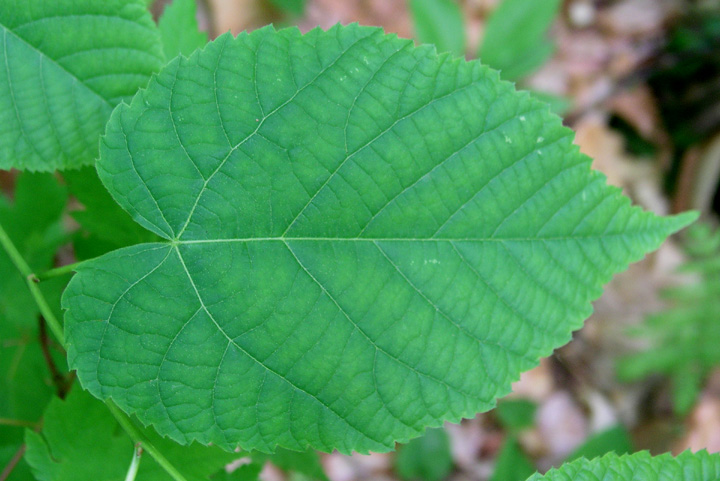
The American Basswood tree (Tilia americana)

Common Name: Lime Tree, Linden Tree, Basswood Tree
Scientific Name: Tilia species
Family: traditionally in Tiliaceae (the Tilia or Lime family), but more recently Tilia has been placed in Malvaceae (the Mallow family).

The leaves of Tilia species are not only edible, they are really good!

Description:
The Tilia species are common in temperate climates of the northern hemisphere. In the U.K., Tilia are called "Lime" (with no relation to the citrus tree or fruit). In North America, Tilia are called "Basswood" or "Linden". These large trees have edible leaves, flowers used for teas, and wood with a tremendous variety of uses.

History:
Species of Tilia are native to Europe, the U.K., Asia, and North America. They have been used by traditional cultures for food, medicine, wood, and fiber for thousands of years.

Tilia wood (in this case Linden, Tilia x europaea) is a common craft wood.

Trivia:
  • The name "Lime" likely comes from the Middle English word meaning "flexible".
  • The name "Linden" likely comes from the German adjective meaning "made from Lime wood".
  • The name "Basswood" comes from the term "bast", or the inner bark of trees. Bast fiber from Tilia species was once commonly used to make mats and ropes.
  • In Slavic mythology, the Linden is a sacred tree.

Tilia cordata, the Small-Leaved Lime, is considered the best tasting Tilia species.

Common Species:
  • Basswood (Tilia americana): Tolerates medium moisture soils; full sun to deep shade
  • Carolina Basswood (Tilia caroliniana)
  • Small-Leaved Lime (Tilia cordata)
  • White Basswood (Tilia heterophylla)
  • Large-Leaved Lime (Tilia platyphyllos)
  • Silver Lime (Tilia tomentosa)
  • Common Lime or Common Linden (Tilia x europaea): Tolerates dry to moist soils

USING THIS PLANT
Primary Uses:
  • Leaves - Fresh: young leaves and leaf buds are used as a base for salads, can be used for pesto and in sandwiches. The leaves are mild and slightly mucilaginous (in a good way).
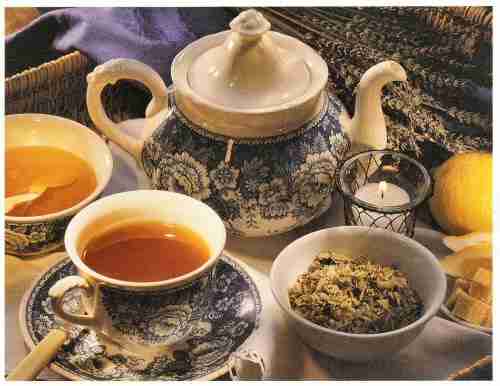
  • Flowers can be eaten raw and are used for tea - only use young flowers as the older ones have been reported to cause a reaction similar to narcotic toxicity. Frequent drinking of this tea has been associated with heart issues - no clear connection or reason for this.
  • Coppiced/Pollarded (for wood or for leaves): for large limbs, coppice every 10-25 years; for smaller diameter wood or for leaves, coppice first when treen is 6-8 years of age and then every 1-5 years afterwards. Coppicing keeps the young leaves at a height that is easy to reach. Pollarding still allows the leaves to be harvesting (with a step ladder) but keeps them out of the reach of deer.
  • Ornamental - commonly grown as an ornamental tree
Secondary Uses:
  • General insect (especially bees) nectar plant
  • Dynamic Accumulator (Phosphorus and Calcium) - leaves are used in mulch
  • Large limbs: Firewood, posts, mushroom logs
  • Small limbs: Poles
  • Small branches: Baskets, Musical Instruments, and other crafts
  • Fiber can be made into mats and ropes and even cloth (inner bark is soaked in water for a month, and then individual fibers can easily be separated).
  • Chocolate Substitute - made from ground up flowers and immature fruit (I haven't tried this yet), apparently tastes good, but doesn't store well
  • Sap reportedly can be made into syrup
  • Trees can be used to support vines
  • Windbreak
  
Harvesting: Leaves - anytime during the growing season, young leaves are far superior; Flowers - Only during the summer, pick when flowers are just opened
Storage: Best used soon after harvesting
Flowers of all Tilia species (this is Tilia cordata) attract beneficial insects.

DESIGNING WITH THIS PLANT
AHS Heat Zone: No reliable information available
Chill Requirement: No reliable information available

Plant Type: Large Tree
Leaf Type: Deciduous
Forest Garden Use: Canopy Tree for large Forest Gardens. If it is coppiced, it can act as a Sub-Canopy Tree for large Forest Gardens or as a Canopy Tree for small Forest Garden
Cultivars/Varieties: Many species available. 

Pollination: Self-Pollinating/Self-Fertile
Flowering: Summer
Life Span: There are some trees in England and Europe that are over 2,000 years old.

PHYSICAL CHARACTERISTICS OF THIS PLANT
Size: 75-100 feet (22-30 meters) tall and 40-75 feet (12-22 meters) wide depending on the species
Roots: Flat with some taproots, some species are suckering
Growth Rate: Medium - Fast
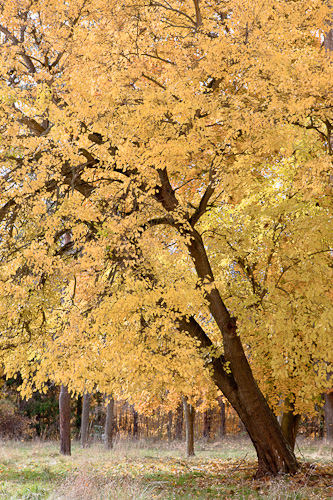
Tilia species are stunning in Autumn (Basswood, Tilia americana)

GROWING CONDITIONS FOR THIS PLANT
Light: Prefers full sun
Shade: Tolerates light to deep shade depending on the species (those in deep shade will grow slower)
Moisture: Tolerates dry to moist soils depending on the species
pH: most species prefer fairly neutral to alkaline soil (6.1 - 8.5)

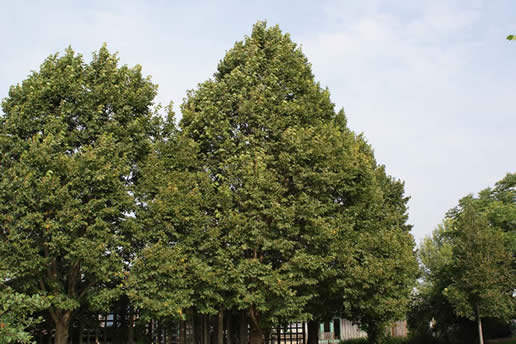
Tilia make great windbreaks (Basswood, Tilia americana)

Special Considerations for Growing:
  • Coppiced trees rarely flower, so consider keeping a few Tilia coppiced for leaf and wood production, and grow a few full-sized, non-coppiced trees at the edge of the Forest Garden.
  • Does not tolerates juglone (juglone is a natural growth inhibitor produced by Black Walnut and its relatives). Consider using other trees as a buffer between your walnuts and your Tilia species.
  • These are large trees, so plan well.

Propagation: Typically from seed. Requires a long cold stratification (can be almost 40 weeks). Some species form suckers - these can be transplanted with as much root as possible. Layering has also been accomplished but can take 1-3 years to take.
Maintenance: Almost none once established. Coppicing may be the only chore.
Concerns:
Flowers: only use young flowers as the older ones have been reported to cause a reaction similar to narcotic toxicity. Frequent drinking of this tea has been associated with heart issues - no clear connection or reason for this.

Friday, September 9, 2011

Rocket Mass Heater

A Rocket Mass Heater

I have been intrigued by Rocket Mass Heaters ever since I heard of them about a year ago.  So what exactly is a Rocket Mass Heater?  Well, it is a variation of a Rocket Stove (don't worry if you haven't heard of that either) combined with the concept of a Masonry Stove.

The concept is simple and brilliant.  Wood is burned in a uniquely shaped "combustion chamber" that burns wood very efficiently.  The heat produced from the burning wood heats up a large thermal mass (usually some form of bench).  By the time the exhaust exits the room, it is only about 90 degrees F (32 C).  The exhaust is mostly water and carbon dioxide. 

Let me show you an illustration of a Rocket Mass Heater for better understanding:
Illustration of a Rocket Mass Heater


What are the benefits of a Rocket Mass Heater?
  • Use a lot less wood for heating.  The amount depends on where you live, but you can expect about one fourth to one sixth of what a very efficient fireplace or woodburning stove uses to heat a room/home.
  • Almost no pollution.  The fire burns so hot and intense, that only water vapor and carbon dioxide is released.  And for you "Carbon Footprint" Nazi's out there, it is "carbon neutral".  Clippings from branches in the yard or from branches fallen out of trees or even from coppiced trees is all that is needed in most cases.  All that is left in the combustion chamber is a little bit of white ash.
  • Better at keeping and sustaining heat.  Almost 90% of the heat produced stays within the home instead of being lost out the chimney.  The thermal mass can keep radiating heat for 12-48 hrs after the fire is out. 
  • Needs less tending.  As the heat is radiating long after the fire is out, there is no need to tend the fire or watch for spitting embers.
What are the downsides to a Rocket Mass Heater?
  • You need to build it yourself.  There is no commercial version available now.
  • It is heavy!  The thermal mass being made mostly of clay/adobe is weighs a lot.  You can't just install these anywhere.
  • It uses clay/adobe.  For some, this is great.  For others, well, let's just say a Rocket Mass Heater doesn't blend will with a New World Colonial Design.  (I actually have no idea if that is a design style or not, but it sounds pretty good!)
  • They take a while to warm up.  A big thermal mass can take up to 4 hours to heat up (but then it will retain heat for a long longer as well).
  • Building codes don't really know what to make of this yet.  It is a relatively new concept (2004 as I can best tell from researching it).
  • You can get some "smoke back" when initially lighting the wood or if the Rocket Mass Heater is not designed well.

WARNING: Sloppy hippy alert.  As is often the case, it is the more eccentric individuals who are the first to attempt/try new innovative projects like a Rocket Mass Heater.  These individuals are usually hippies.  These hippies are usually very messy or sloppy individuals who leave piles of junk all over the place.  Unfortunately, it is hard for many people to see past this chaos and find the gem underneath.  In my opinion, a Rocket Mass Heater has an amazing potential for energy savings.  I think they need to be made a lot more attractive before they will be adopted on a more widespread scale, but what an amazing concept!

Here is a pretty good video that highlights a number of Rocket Mass Heaters (with the aforementioned sloppy hippies).  It was done by Paul Wheaton of Permies.com.


This is just an introduction to the concept of Rocket Mass Heaters.  I plan on providing more detailed information in the future. Stay tuned!

Saturday, June 11, 2011

Permaculture Projects: Coppicing

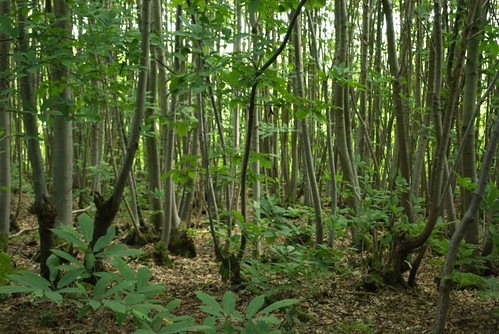
Coppiced Basswood/Linden Trees

I think there are two types of people in the world: those who know a decent amount about coppicing, and those who don't even know how to pronounce the word.  This post is for the latter group.

Stand of Coppiced Sweet Chestnut

Coppicing (pronounced: KAH-piss-ing) is an ancient practice of woodland management where trees are cut down while dormant and allowed to regrow from the stumps/roots for a number of years before cutting again.  The new growth of trees/forest from these cut stumps is collectively called "coppice".

Coppicing has been practiced for thousands of years throughout the world.  It is still practiced on a fairly regular basis in the U.K.  However, it is almost unheard of in North America.  This is likely due to the fact that when settlers first came to America, there was such a surplus of forest that the settlers didn't think it was necessary.

Coppicing allows sustainable harvest of woody plant species without the need for replanting.  Since the roots are well established, regrowth is MUCH faster than growing a new tree.  Most Temperate Climate hardwood trees can be coppiced.


The new individual growing stems are called poles, and they can grow from the stump (also called the stool) or from the root buds close to the stump.  A variation of coppicing called pollarding is where the tree is cut above the reach of livestock.  This allows the new growth to develop without being eaten by the animals.

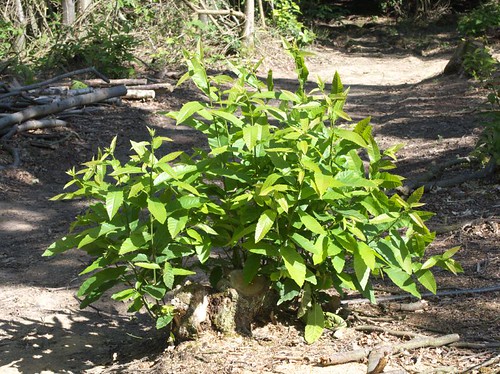
Recently coppiced Alder stool.

New growth of a stool.

The length of time between cuttings depends on what species you are coppicing and what the intended purpose of the cuttings will be, e.g. basket weaving vs fence posts.  The typical range can be anywhere from 5-30 years, but 100+ years is possible.  Coppicing can truly be a multigenerational project.

Wood for fuel is a common use for coppicing.

Baskets made from coppiced willow.

Fence made from coppiced hazel.

Uses for Coppicing:

  • Fuel, i.e. firewood
  • Charcoal
  • Mushroom medium
  • Crafts (furniture, baskets)
  • Tools
  • Fences
  • Other Structures 


Other benefits of Coppicing:

  • Lets more light to the understory.  Prompts the flowering of many woodland plants.
  • Creates more microclimates (varying degrees of light, shade, temperature, moisture, etc.).
  • Allows certain animals specific habitats that they desire (e.g. pheasants like dense hazel coppice).
  • Increase in sunlight allows more plant growth which provides more food for mammals, birds, and insects.
  • Coppicing actually increases the longevity of the tree.  One stand of basswood/linden trees in the U.K. is over a thousand years old... about four times the average age!

No idea how many times this Alder has been coppiced.

Trees that can be Coppiced in a Temperate Climate:

  • Maple/Sycamore (Acer species) - 7-25 yrs
  • Alder (Alnus glutinosa) - 12-40 yrs
  • Papaw (Asimina triloba) - fruit
  • Birch (Betula species) - 3-20 yrs
  • Hornbeam (Carpinus betulus) - 20-30 yrs
  • Hickory/Pecan (Carya species) - nut
  • Sweet Chestnut/Chinkapin (Castenea species) - 12-18 yrs; nut
  • Hackberry (Celtis species)
  • Hazel/Filbert (Corylus species) - 6-15 yrs; nut
  • Hawthorns/Mayhaw (Crataegus species) - fruit
  • Persimmons (Diospyrus species) - fruit
  • Eucalyptus (Eucalyptus species)
  • Beech (Fagus grandifolia) - nut
  • Ash (Fraxinus excelsior) - 7-25 yrs
  • Ginkgo (Ginkgo biloba) - nut/leaves
  • Honey Locust (Gleditsia triacanthos) - pods
  • Apples (Malus species) - fruit
  • Mulberries (Morus species) - fruit
  • Aspen (Populus tremula) - 6-25 yrs
  • Cherries/Plums (Prunus species) - fruit
  • European Pears (Pyrus species) - fruit
  • Oak (Quercus species) - 7-50 yrs; nut (acorns)
  • Black Locust (Robinia pseudoacacia)
  • Willow/Sallow (Salix species) - 6-25 yrs
  • Rowan/Service Tree (Sorbus species)
  • Mountain Ash (Sorbus species) - fruit
  • Basswood/Linden, called Lime in Britain (Tilia species) -  10-25 yrs; leaves
  • Fragrant Spring Tree (Toona sinensis) - leaves
  • Elm (Ulmus procera) - 7-25 yrs
  • NOTE: any tree that is a nut or fruit producer may take many years for new growth to produce again


Here are a few videos on Coppicing... all from the U.K.


A basic introduction to Coppicing.

Coppicing with a chainsaw.