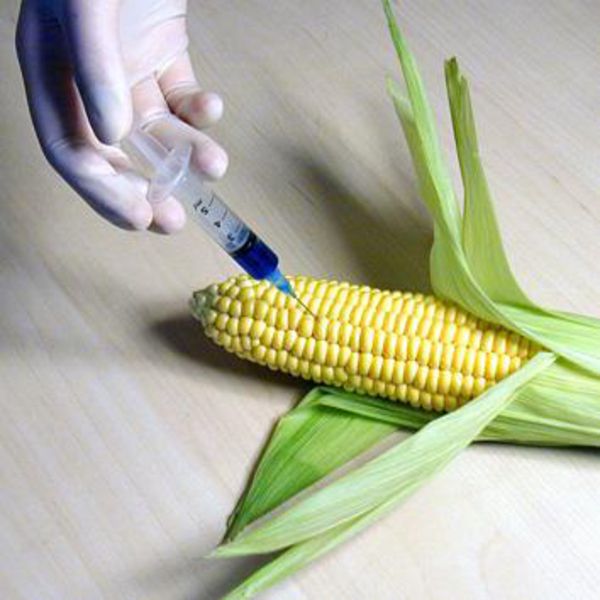
Following are three articles. The first is a report of genetically modified corn "escaping" into the "wild". The second article is a response to this event by one of my favorite food/agricultural authors, Michael Pollan.
To me, what is so disturbing is that these articles are over a decade old! Yet still very relevant today... actually more so. The loss of genetic diversity is just one of my big concerns and one that makes me so wary of Genetically Modified Organisms (GMO's).
The third article is from just a week ago. Very disturbing.
These articles may be a bit deep or scientific for some, but it is vital for us to understand what is going on with GMO's. Please take the time to read these articles, so you can make informed decisions about this issue.
Read my article on GMO's here.
"Genetic Modification Taints Corn in Mexico"
Carol Kaesuk Yoon,
New York Times
, October 2, 2001
Link to original article
In a finding that has taken researchers by surprise and alarmed environmentalists, the Mexican government has discovered that some of the country's native corn varieties have been contaminated with genetically engineered DNA.
The contaminated seeds were collected from a region considered to be the world's center of diversity for corn — exactly the kind of repository of genetic variation that environmentalists and many scientists had hoped to protect from contamination. The result was unexpected because genetically modified corn, the presumed source of the foreign genes, has not been approved for commercial planting in Mexico.
Scientists expressed concern that the foreign genes could act to reduce genetic diversity in the country's native corn varieties and in the wild progenitor of domesticated corn, known as teosinte. If any of the foreign genes are very advantageous, plants carrying those genes could begin to dominate the population.
In such cases genetic variation will be lost as the diversity of plants not carrying the foreign genes decreases or disappears. Whether that will happen or has happened remains unknown.
In addition to being one of the world's most important crops, corn is viewed with a near religious reverence in Mexico, with seeds of native varieties passed down from generation to generation. Until now, scientists said researchers had assumed that these varieties, some of which are grown only by subsistence farmers in remote areas, were pristine.
"These are the extremes, the places where you would really not expect to find contamination," said Dr. Ignacio Chapela, a microbial ecologist at the University of California at Berkeley, saying the results are an indication of widespread contamination. "The only reason they found it there is because that's the only place they've looked."
Scientists said the results also indicated that crop genes might be able to spread across geographic areas and varieties more quickly than researchers had guessed.
"It shows in today's modern world how rapidly genetic material can move from one place to another," said Dr. Norman C. Ellstrand, evolutionary biologist at University of California at Riverside. He said the real worry was that other foreign genes — like pharmaceutical-producing genes being developed in crops — could also find their way quickly and unnoticed into distant food sources.
Genetically engineered corn, known as Bt corn because it produces the insecticide known as Bt, has been in use by farmers in the United States since 1996.
Mexico's Ministry of the Environment and Natural Resources made the announcement on Sept. 18 that contaminated corn had been found in 15 different localities. The announcement credited Dr. Chapela with the initial discovery but described only the results from government-led research. Neither Dr. Chapela's team nor the Mexican teams' work has yet been published.
Scientists assume the native corn became contaminated through interbreeding with Bt corn, but how Bt corn may have come to be planted in Mexico remains a matter of speculation. While not approved for planting, biotech corn is legally imported into Mexico for use in food. Greenpeace, calling the contamination a form of genetic pollution, is calling on Mexico to ban all importation of genetically modified corn.
The Mexican government has not disclosed exactly what genes were found. Exequiel Ezcurra, the director of the National Institute of Ecology, which worked on the study, did not respond to requests for an interview. But Dr. Chapela, who is familiar with the Mexican work, said the researchers had identified the presence of DNA sequences from the cauliflower mosaic virus. This DNA is used nearly universally in genetically engineered plants and does not produce Bt insecticide.
As a result, it is still unclear whether any of the contaminated corn has the ability to produce the Bt insecticide.
Scientists may eventually be able to quantify the biological effects of the contamination, but some say the cultural cost in a country where corn is a symbol of the Mexican people may be harder to measure.
"The people are corn," said Dr. Chapela, who is Mexican, "and the corn is the people."
Genetic Pollution
Michael Pollan, The New York Times, December 9, 2001
The way we think about and deal with pollution has always been governed by the straightforward rules of chemistry. You clean the stuff up or let it fade with time. But what do you do about a form of pollution that behaves instead according to the rules of biology? Such a pollutant would have the ability to copy itself over and over again, so that its impact on the environment would increase with time rather than diminish. Now you're talking about a problem with, quite literally, a life of its own.
This year, the idea of genetic pollution -- the idea, that is, that the genes of genetically modified organisms might end up in places we didn't want them to go -- became a reality. In September the Mexican government announced that genes engineered into corn had somehow found their way into ancient maize varieties grown there -- this despite the fact that genetically modified corn seed has not been approved for sale in Mexico. The country where corn was probably first domesticated, Mexico is today the source of the crop's greatest genetic diversity. Now that diversity could well be threatened.
Companies like Monsanto have long acknowledged that their engineered genes ("transgenes") might on rare occasions "flow" by means of cross-pollination from one of their crops into neighboring plants. But because sex in nature takes place only between closely related species, and because most crop plants don't have close relatives in North America, the risk that new genetic traits would contaminate the genome of the world's important crops was, the companies claimed, remote. As long as genetically modified corn seed wasn't sold to Mexican farmers, or potato seed to Peruvians, these crucial "centers of diversity" could be protected.
So how did transgenes ever find their way into traditional Mexican corn varieties? It's a mystery, but the leading theory is that some campesinos in remote mountainous fields outside Oaxaca bought some genetically modified corn as food -- then planted the kernels as seed. No matter how it happened, Monsanto's genes have spread widely in the region.
Why does this matter? The presence of transgenes in what some experts call "the cradle of corn" represents a threat to the crop's biodiversity. Should the traits introduced into Mexican fields confer
an evolutionary advantage (for insect resistance, say) on certain plants, their offspring could crowd out older varieties, leading to the extinction of genes we may someday need. For whenever a food crop suffers a catastrophic failure -- as when blights destroyed the potato crop in Ireland in the 1840's -- breeders return to that crop's center of diversity to find genes for resistance. Next time around, those genes may be nowhere to be found, a casualty of genetic pollution.
Greenpeace has called on the Mexican government to halt imports of genetically modified corn, but the genie is already out of the bottle. Genes released into the environment can replicate themselves ad infinitum. Indeed, some studies suggest that transgenes are particularly "sticky" -- better at getting themselves around in nature than ordinary genes, possibly because of the viral and bacterial
vectors used to engineer them. So far that's just a hypothesis; we don't really know how transgenes will behave once they've found their way into a crop's center of diversity. What we do know, now, is that we're about to find out.
Bugs may be resistant to genetically modified corn
Rick Callahan, Associated Press
Link to the original article
One of the nation's most widely planted crops — a genetically engineered corn plant that makes its own insecticide — may be losing its effectiveness because a major pest appears to be developing resistance more quickly than scientists expected.
The U.S. food supply is not in any immediate danger because the problem remains isolated. But scientists fear potentially risky farming practices could be blunting the hybrid's sophisticated weaponry.
When it was introduced in 2003, so-called Bt corn seemed like the answer to farmers' dreams: It would allow growers to bring in bountiful harvests using fewer chemicals because the corn naturally produces a toxin that poisons western corn rootworms. The hybrid was such a swift success that it and similar varieties now account for 65 percent of all U.S. corn acres — grain that ends up in thousands of everyday foods such as cereal, sweeteners and cooking oil.
But over the last few summers, rootworms have feasted on the roots of Bt corn in parts of four Midwestern states, suggesting that some of the insects are becoming resistant to the crop's pest-fighting powers.
Scientists say the problem could be partly the result of farmers who've planted Bt corn year after year in the same fields.
Most farmers rotate corn with other crops in a practice long used to curb the spread of pests, but some have abandoned rotation because they need extra grain for livestock or because they have grain contracts with ethanol producers. Other farmers have eschewed the practice to cash in on high corn prices, which hit a record in June.
"Right now, quite frankly, it's very profitable to grow corn," said Michael Gray, a University of Illinois crop sciences professor who's tracking Bt corn damage in that state.
A scientist recently sounded an alarm throughout the biotech industry when he published findings concluding that rootworms in a handful of Bt cornfields in Iowa had evolved an ability to survive the corn's formidable defenses.
Similar crop damage has been seen in parts of Illinois, Minnesota and Nebraska, but researchers are still investigating whether rootworms capable of surviving the Bt toxin were the cause.
University of Minnesota entomologist Kenneth Ostlie said the severity of rootworm damage to Bt fields in Minnesota has eased since the problem surfaced in 2009. Yet reports of damage have become more widespread, and he fears resistance could be spreading undetected because the damage rootworms inflict often isn't apparent.
Without strong winds, wet soil or both, plants can be damaged at the roots but remain upright, concealing the problem. He said the damage he observed in Minnesota came to light only because storms in 2009 toppled corn plants with damaged roots.
"The analogy I often use with growers is that we're looking at an iceberg and all we see is the tip of the problem," Ostlie said. "And it's a little bit like looking at an iceberg through fog because the only time we know we have a problem is when we get the right weather conditions."
Seed maker Monsanto Co. created the Bt strain by splicing a gene from a common soil organism called Bacillus thuringiensis into the plant. The natural insecticide it makes is considered harmless to people and livestock.
Scientists always expected rootworms to develop some resistance to the toxin produced by that gene.
But the worrisome signs of possible resistance have emerged sooner than many expected.
The Environmental Protection Agency recently chided Monsanto, declaring in a Nov. 22 report that it wasn't doing enough to monitor suspected resistance among rootworm populations. The report urged a tougher approach, including expanding monitoring efforts to a total of seven states, including Colorado, South Dakota and Wisconsin. The agency also wanted to ensure farmers in areas of concern begin using insecticides and other methods to combat possible resistance.
Monsanto insists there's no conclusive proof that rootworms have become immune to the crop, but the company said it regards the situation seriously and has been taking steps that are "directly in line" with federal recommendations.
Some scientists fear it could already be too late to prevent the rise of resistance, in large part because of the way some farmers have been planting the crop.
They point to two factors: farmers who have abandoned crop rotation and others have neglected to plant non-Bt corn within Bt fields or in surrounding fields as a way to create a "refuge" for non-resistant rootworms in the hope they will mate with resistant rootworms and dilute their genes.
Experts worry that the actions of a few farmers could jeopardize an innovation that has significantly reduced pesticide use and saved growers billions of dollars in lost yields and chemical-control costs.
"This is a public good that should be protected for future generations and not squandered too quickly," said Gregory Jaffe, biotechnology director at the Center for Science and Public Policy.
Iowa State University entomologist Aaron Gassmann published research in July concluding that resistance had arisen among rootworms he collected in four Iowa fields. Those fields had been planted for three to six straight years with Bt corn — a practice that ensured any resistant rootworms could lay their eggs in an area that would offer plenty of food for the next generation.
For now, the rootworm resistance in Iowa appears isolated, but Gassmann said that could change if farmers don't quickly take action. For one, the rootworm larvae grow into adult beetles that can fly, meaning resistant beetles could easily spread to new areas.
"I think this provides an important early warning," Gassmann said.
Besides rotating crops, farmers can also fight resistance by switching between Bt corn varieties, which produce different toxins, or planting newer varieties with multiple toxins. They can also treat damaged fields with insecticides to kill any resistant rootworms — or employ a combination of all those approaches.
The EPA requires growers to devote 20 percent of their fields to non-Bt corn. After the crop was released in 2003, nine out of 10 farmers met that standard. Now it's only seven or eight, Jaffe said.
Seed companies are supposed to cut off farmers with a record of violating the planting rules, which are specified in seed-purchasing contracts. To improve compliance, companies are now introducing blends that have ordinary seed premixed with Bt seed.
Brian Schaumburg, who farms 1,400 acres near the north-central Illinois town of Chenoa, plants as much Bt corn as he can every spring.
But Schaumburg said he shifts his planting strategies every year — varying which Bt corn hybrids he plants and using pesticides when needed — to reduce the chances rootworm resistance might emerge in his fields.
Schaumburg said he always plants the required refuge fields and believes very few farmers defy the rule. Those who do put the valuable crop at risk, he said.
"If we don't do it right, we could lose these good tools," Schaumberg said.
If rootworms do become resistant to Bt corn, it "could become the most economically damaging example of insect resistance to a genetically modified crop in the U.S.," said Bruce Tabashnik, an entomologist at the University of Arizona. "It's a pest of great economic significance — a billion-dollar pest."