Showing posts with label Herbs. Show all posts

Monday, July 2, 2012

Permaculture Plant: Oregano

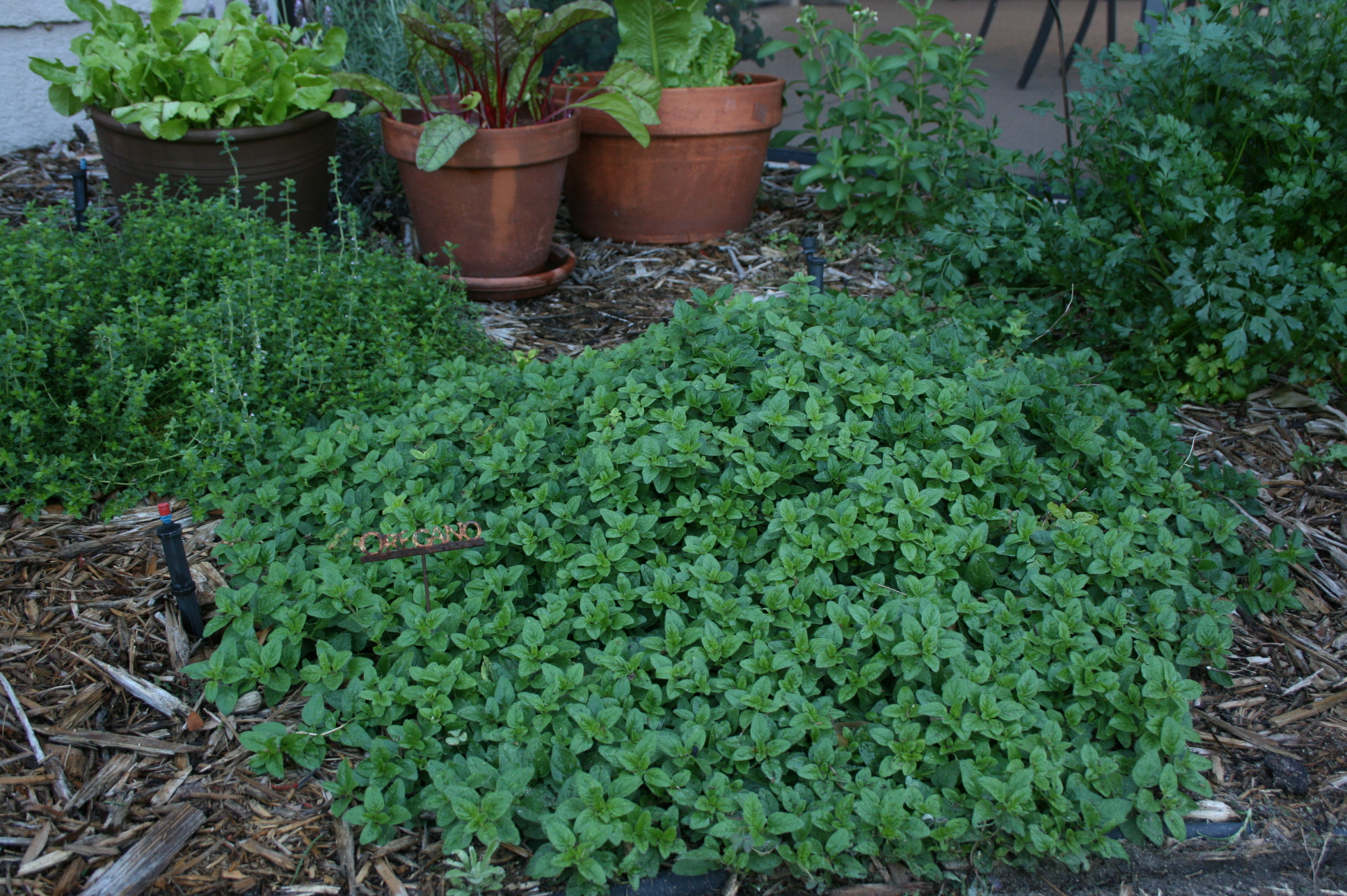
The well known Oregano is a great Forest Garden addition.

Common Name: Oregano
Scientific Name: Origanum vulgare
Family: Lamiaceae (the Mint family)
Subspecies:
  • Origanum vulgare gracile: Kyrgyzstan Oregano
  • Origanum vulgare hirtum: Greek Oregano
  • Origanum vulgare onites: Turkish Oregano
  • Origanum vulgare syriacum: Syrian Oregano

Great photo kids picking Oregano in the garden.

Description:
Oregano is a very common perennial herb whose deep green leaves are used primarily for cooking. It tolerates some shade and light foot traffic which makes it a nice groundcover plant. Its small pink flowers attract butterflies, bees, and other beneficial insects, and its strong aroma is believed to confuse pest insects' ability to find host plants. Everyone should grow a few plants of Oregano, and it is a great addition to any Forest Garden.

History:
Native to southwestern Asia and the Mediterranean area, Oregano has been used by humans a such a long time, it is hard to determine when it was first cultivated

Trivia:
  • In the U.S., Oregano is primarily thought of as an Italian herb; however, Oregano is used in Middle Eastern, Filipino, Spanish, Portuguese, and Latin American cuisines.
  • Oregano grown in colder climates tends to have less flavor... you may just need to use more!
  • Hippocrates used oregano as an antiseptic.
  • Cuban oregano (Plectranthus amboinicus), also in the Mint (Lamiaceae) Family, and Mexican oregano (Lippia graveolens) in the Verbena (Verbenaceae) Family are both commonly called "Oregeno" but are not true oregano.

Oregano flowers are pretty and they attract beneficial insects.

USING THIS PLANT
Primary Uses:
  • Cullinary herb - fresh or dried, raw or cooked... meats, poultry, fish, pasta, stews, salads, etc.
  • Infused with oils or vinegars

Secondary Uses:
  • General insect (especially bees) nectar and pollen plant
  • Groundcover (plant about 1 foot (30 cm) apart) - clump forming
  • Aromatic pest confusor
  • Lacewings prefer to lay eggs on this plant
  • Tea Plant (flowers or dried leaves)
  • Essential Oil used for aroma in soaps, perfumes, etc.
  • Medicinal Plant - long history of many uses

Harvesting: Throughout the growing season
Storage: Best if used fresh. Dried leaves can be used for sure, but the dried leaves lose a lot of flavor compared to the fresh leaves.

DESIGNING WITH THIS PLANT
Chill Requirement: No reliable information, but not likely

Plant Type: Small to Medium Herbaceous Perennial
Leaf Type: Deciduous
Forest Garden Use: Groundcover Layer, Herbaceous Layer 
Cultivars/Varieties: Many varieties available.

Pollination: Self-Pollinating/Self-Fertile
Flowering: Summer (July - September)

Life Span: Basically not relevant as the plant can reseed and can spread through rhizomes.
PHYSICAL CHARACTERISTICS OF THIS PLANT
Size: 1.5-2 feet (45-60 centimeters) tall and 1-4 foot (30-120 centimeters) wide
Roots: Shallow and flat, rhizomatous (runners) but Oregano does not spread much
Growth Rate: Fast
GROWING CONDITIONS FOR THIS PLANT
Light: Prefers full sun
Shade: Tolerates moderate shade
Moisture: Dry to Medium
pH: prefers fairly neutral to alkaline soil (6.1 - 8.0)

Special Considerations for Growing:
Can tolerate windy locations. Reportedly does not tolerate maritime conditions - I'll let you know later this season.

Propagation:  Typically by seed. Division of clumps in Spring. Cuttings in late Spring.
Maintenance: Basically none. It is possible for the plant to spread outside of its bounds while the central planting begins to die back a bit. If this occurs, consider taking clumps from the edges and replanting in the desired, cleared location.

Concerns: None


Monday, June 25, 2012

Permaculture Plants: Fennel

The classic garden Fennel with "bulb".

Common Name: Fennel
Scientific Name: Foeniculum vulgare
Family: Apiaceae (the Carrot or Parsley family) - formerly known as the Umbelliferae family

Description:
Fennel is a cold-hardy, perennial herbaceous plant with feathery, bluish-green leaves, hollow stems, and an anise (or black licorice) scent and flavor. It is a very common culinary herb with a long history of medicinal use. With edible leaves, flowers, pollen, seeds, root, and "bulb" (only present in the Florence cultivar), its ability to attract beneficial insects, its ability to grow in a wide range of soils, its drought resistance once established, and its beautiful appearance, Fennel deserves a place in all gardens, traditional garden and Forest Garden alike.
History:
Originally from the Mediterranean, Fennel is now found around the world, often near the ocean.

Trivia:
  • The chemical that gives Fennel its characteristic flavor is called anethole. It is found in fennel, anise, licorice, star-anise, and tarragon, and basil (especially thai basil).
  • Used as one of three herbs to give flavor to absinthe, along with wormwood and green anise.
  • It is commonly mislabeled, and I have see this, as Anise (Pimpinella anisum) which is a very different plant.


USING THIS PLANT
Primary Uses:
The primary use is as a cullinary herb to provide an anise (black licorice) flavor to foods. The flavor is strong when fresh or in large amounts, but even if you do not like the flavor of black licorice, a small bit as a base to a sauce imparts a deep, subtle flavor that most people enjoy.
  • Leaves - fresh or cooked. Pick young leaves at the base of the plant as older leaves become more tough.
  • Flowers - Bright yellow flowers can be eaten raw or cooked. Great addition to salads or desserts.
  • Pollen - can be collected by placing a paper bag over a mature flower head and shaking. Added sparingly to meat
  • Seeds - Green seed pods (fresh or cooked) or ripe seed (typically dried).
  • Stalk - when still a little green can be placed on coals to impart a smoky, anise flavor to meats; when dried the stalks can be used as straws since they are hollow - they will give a faint flavor to whatever liquid passes through.
  • Bulb - the "bulb" is really fattened leaf bases and can be used as a vegetable itself or mixed with other dishes
  • Root - apparently a bit like parsnip, which makes sense since they are both in the Carrot family

  • Tea - both leaves, flowers, and seeds
  • Medicinal - many historical uses, especially to aid in digestion

Secondary Uses:
  • General insect (especially bees) nectar plant.
  • Benificial parasatoid wasps and spiders prefer the foliage.
  • Lacewings prefer to lay eggs on Fennel over many other plants.

Yield: variable
Harvesting: Year round in mild climates, anytime during the growing season in colder climates, seeds in Autumn
Storage: Fresh parts can be stored for up to a week in a cool environment (bulbs longer than the leaves); Dried seeds and pollen can be stored in an airtight container for a long time
Fennel flowers give little bursts of flavor.
DESIGNING WITH THIS PLANT
USDA Hardiness Zone: 3-10 (a lot of variation depending on the souce)
AHS Heat Zone: No reliable information available
Plant Type: Large Herbaceous Perennial Plant
Leaf Type: Deciduous, but is cold-hardy, so it can be
Forest Garden Use: Herbaceous Layer 
Cultivars/Varieties: Many varieties available. The common "garden" fennel, Florence Fennel (F. vulgare var. azoricum) has been bred for large, bulb-like lower stems. The wild fennel is identical but for the bulbs.   
Pollination: Self-Pollinating/Self-Fertile
Flowering: Spring (May-June... depending on the USDA Zone where it is planted)
Life Span: Not really relevant as it reseeds so easily.
Fennel and Parsnip roots... yeah, almost identical in appearance, but not flavor.
Check out this blogger's account:

PHYSICAL CHARACTERISTICS OF THIS PLANT
Size: 3-5 feet (0.9-1.5 meters) tall and 1-3 feet (0.3-0.9 meters) wide
Roots: Tap root
Growth Rate: Medium to Fast
Fennel seed is commonly seed in stores, but is easy to harvest.

GROWING CONDITIONS FOR THIS PLANT
Light: Prefers full sun
Shade: Tolerates light shade
Moisture: Medium to Dry, can be fairly drought tolerant
pH: prefers fairly neutral soil (6.1 - 7.0)
Special Considerations for Growing:
  • Avoid growing Fennel near Dill as it can cross-pollinate. The offsping of this pairing will be of bland taste.
  • It is best to grow Fennel out a bit, by itself. It produces some growth inhibitors that are not kind to annual vegetables.
  • Fennel is not a good ground cover, but grows well through many ground covers.

Propagation: Usually by seed. Direct sowing is best. Can be divided in late Winter/early Spring.
Maintenance: Almost none.
Concerns: Can spread annoyingly well by seed. Just snip these little, wayward plants when they are young, and use in the kitchen.

Fennel pollen is easy to obtain and is a "new" trend in cooking.

Monday, January 9, 2012

Permaculture Plants: Mint

Everyone should be growing mint!  
Spearmint, Mentha spicata

Common Name: Mint
Scientific Name: Mentha species
Family: Lamiaceae (Mint family)

Apple Mint (aka Wooly Mint), Mentha suaveolens

Description:
Mint is a plant that needs almost no description.  It is a small, running, highly aromatic, perennial herb.  The leaves have been used for thousands of years in culinary and medicinal applications.  Very useful in forest gardens to cover large areas under trees, protecting soil, and providing food and shelter for beneficial insects.  I have always considered this a must-have plant, and usually have one or two clumps or pots growing somewhere.  I currently have one potted plant and one jar full of cuttings just taking root.

Spearmint, Mentha spicata (aka M. viridis) is one of the best known Mints.

History:
There are between 13 and 30 recognized species of mint and about as many hybrids; it all depends on who is citing what research.  It is hard to identify where these herbs originated as there are species on every continent.  I can only assume that this plant had its origins in Pangea before the continents separated!  Most cultures in places where mints grow have used mint in culinary and medicinal ways for thousands of years.  Many anthrobotanists (those who study plants in cultures and society) believe that it is almost impossible to find many species of mint that have not been influenced by the people living nearby... a co-evolution of plant and society.

Trivia:
  • "Mint" comes from the Greek word minthe.  Minthe, a nymph in Greek mythology, was transformed into a plant by Queen Persephone just before Minthe could be seduced by Hades (aka Pluto, the god of the underworld).  Unable, to undo the curse, Hades was at least able to give her a sweet scent.
  • Mint oil can be used as an insecticide.
  • Many of the common cooking herbs are in the "Mint Family", Lamiaceae, including rosemary, basil, sage, and oregano.
  • Peppermint, a hybrid, has been dated as far back as 10,000 years!
  • Pineapple Mint is just a variegated form of Apple Mint - meaning its leaves have white spots

Fresh mint, just before flowering, is the best mint to be used.

USING THIS PLANT
Primary Uses:
  • Fresh eating (salads, flavoring)
  • Cooking
  • Dried
  • Teas (fresh sprigs can be added to your teapot and steeped for 2-3 minutes)
  • Flavoring in beverages
  • Main flavoring component in some alcoholic drinks (Mojito, Mint Julep)
  • Jelly
  • Ice Cream

Secondary Uses:
  • General insect nectar plant, especially bees (i.e. attracts beneficial insects)
  • Aromatic pest confuser
  • Weed suppressing ground cover (Apple Mint and Horse Mint are ideal; other species should be interplanted with other ground cover plants to create enough density to be weed suppressing)
  • Dynamic accumulator of K (potassium) and Mg (Magnesium)
  • Medicinal properties (multiple traditional and modern uses)
  • Lacewings prefer laying eggs on Mentha over other plants

 Corsican Mint, Mentha requienii, looks and behaves quite different than its relatives.

Selected Species:
  • Mentha aquatica - Water Mint (Zone 4-10):  Tolerates very wet, marshy soil
  • Mentha arvensis - Field or Wild Mint (Zone 3-8):
  • Mentha longifolia - Horse Mint (Zone 4-10):  Great ground cover. Can tolerate light foot traffic.
  • Mentha pulegium - Pennyroyal (Zone: Traditionally used in teas and foods, but the concentrated essential oil is highly toxic.  It has been used as an abortifacient, sometimes with tragic results.
  • Mentha requienii - Corsican Mint (Zone 6-10): small, slow growing, very shade tolerant, can handle foot traffic well
  • Mentha spicata - Spearmint (Zone 4-10)
  • Mentha suaveolens - Apple Mint (Zone 6): Great ground cover. Can tolerate light foot traffic.  Sometimes known as wooly mint due to its hairy/downy leaves.

Peppermint (Mentha x piperita) - Franz Kohler, 1897

Selected Hybrids:
  • Mentha x piperita - Peppermint or Chocolate Mint (Zone 3-10): Cross between Water Mint and Spearmint.  One of the best known and widespread mint plants.
  • Mentha x villosa - Bowle's Mint or Cuban/Mojito Mint (Zone 6):  High shade tolerance.  Not a good individual ground cover.


Harvesting: Spring - Autumn, essential oils in the leaves are at their peak just before flowering.  This would be the ideal time for harvesting to dry leaves


Storage:  Fresh leaves do not last long.  I often will keep a bunch sitting in a glass of water in the kitchen window for up to a week.  Leaves or sprigs can stay in the refrigerator, wrapped in a damp paper towel in a plastic bag, for 3-4 days.

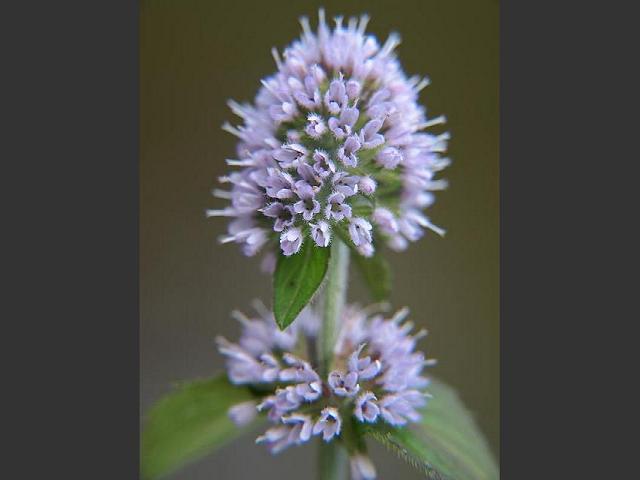
Mints have tiny flowers, like this Water Mint, Mentha aquatica, but vary from purple to white.

DESIGNING WITH THIS PLANT
USDA Hardiness Zone: Zone 3-10 depending on the species (see species list above)

Plant Type: Small to Medium Herb
Leaf Type: Deciduous (may be Evergreen in more mild climates)
Forest Garden Use: Herbaceous Layer, Ground Cover
Cultivars/Varieties: Many species and varieties available.

Flowering: July - September

Life Span: Indefinite as it spreads

Peppermint, Mentha x piperita, a must grow of the Mint plants

PHYSICAL CHARACTERISTICS OF THIS PLANT
Size: 6 inches to 2 feet (15-60 centimeters) tall and indefinitely wide, depending on the species
Roots: Rhizomes (underground stems that send out creeping roots, shoots, and above ground stems)
Growth Rate: Fast

Horse Mint, Mentha longifolia, is a great ground cover.

GROWING CONDITIONS FOR THIS PLANT
Light: Prefers full sun to light shade (depending on the species)
Shade: Tolerates medium to full shade (again depending on the species, but many Mentha species can thrive in the shade)
Moisture: Medium to wet soils
pH: tolerates a wide range of soil (5.5 - 7.5)

Special Considerations for Growing:
Plant at a spacing of 10-14 inches (25-35 centimeters) to create a complete and efficient weed-suppressing ground cover

Propagation:  From seed, but can be more difficult to germinate.  Roots easily grow from stem or root cuttings placed in water.  Once adequate roots form, the cutting can be potted.  I have found cuttings to be the easiest method by far.

Maintenance:
Minimal.

Concerns:
Expansive - may need to trim runners

The Mojito may be one of my favorite summer drinks - just make it with lots of mint!

Mojito Recipe
  • 2 ounces White Rum
  • 2 ounces Club Soda or Sparkling Water
  • Juice from 1 lime
  • 12-15 Mint Leaves - traditionally Spearmint is used
  • 1 Tablespoon sugar

Process
  • Place the mint leaves into a tall glass.  The traditional Mojito glass is the "Collins" glass.
  • Squeeze lime juice over the leaves.
  • Add the sugar.
  • Smash the sugar into the leaves with a muddler (or back of a wooden spoon).
  • Add ice.
  • Add rum and stir.
  • Top with Club Soda.
  • Enjoy!


Tuesday, May 10, 2011

Permaculture Projects: Herb Spiral

The Herb Spiral


An herb spiral is a classic, quintessential Permaculture project.  It puts all your most common kitchen herbs in one, easy to reach location.  It ensures ideal growing conditions (with correct design) for these plants.  Imagine the top 20-30 herbs you would like to grow in your garden.  Each plant will need 8-12 inches of growing space minimum.  That is a good 20-25 feet of garden length to place along a path.

Now imagine rolling that path into a spiral.  Next lets mound up the center of the spiral.  We now have a path spiraling from the top center, around the mound, back to the ground.  We've only used up about a 5-6 foot circle of space.  We can reach all the herbs easily (the ones in the center are raised up making it easier to reach).

We can plant our herbs needing the most sun on the "sun side" (that is going to be the southern side if you are in the northern hemisphere) of the mound.  Plants that need more shade can be placed on the "shade side" (north side in the northern hemisphere) of the mound.  Water will drain quickly from the top of the mound and the soil will stay moister for longer towards the bottom of the mound, so we can place our more moisture loving herbs towards the bottom.

An irrigation tube/hose can be run up through the middle of the herb spiral to make watering easier.  A small sprinkler top can be attached as well.

In the end, we have a large variety of plants in a smaller place which means weed suppression, pest confusion (pests can't find the one plant they are looking for), and variety for us.  It means watering and harvesting are easier for us.  It means each plant is given its own ideal microclimate to grow and be happy.  This is classic Permaculture!

Here are a few design diagrams for those who like diagrams:
Bill Mollison's Herb Spiral

An amazingly detailed and organized Permaculturist's Herb Spiral!

Another example of an Herb Spiral


And for those who want a video... here you go!