Showing posts with label Dynamic Accumulators. Show all posts

Sunday, March 10, 2013

A Mini Guild: Beans, Cucumbers, Bougainvillea, Stinging Nettle


Seedlings of Purple Podded Pole Bean (left) and Japanese Climbing Cucumber (right)

My boys (age 4 years and almost 5 years old) wanted to help me in the garden this weekend.  I decided to try a small experiment. I have a spot that gets a few hours of morning sun, and that is it. It is not an ideal location for typical garden vegetables, but I only have a couple of seedlings to lose if it doesn't work.

There was a mixed variety of plants growing under a rather old Bougainvillea: some perennial flowering bulbs that the landlord (or their gardener) planted years ago, a low-growing mat of wispy little-leaved plants, a few shoots of ferns, and a single, small Stinging Nettle. I cleared a spot, and my boys and I planted the seedlings. I left the bulbs and Stinging Nettle. I shredded the other unknown plant and used it as a mulch for the seedlings.

My thought is that if there is enough light there for these plants to survive, then we just created a mini-Permaculture Guild. The bean is a legume and is a nitrogen-fixing plant... it will provide nitrogen (not a lot, but some) for the fast growing cucumber. The cucumber and bean are both climbing plants. They can be trained to grow up the tall Bougainvillea, which will be putting out beautiful blooms later in the Summer close to when the cucumber and beans will be ready to harvest. The flowering bulbs are pretty and will provide a bit of ground cover until the seedlings are taller. The Stinging Nettle is small, but by cutting out the competing ground cover around it, I have given it room to grow. As it does, it will become a ground cover of its own with edible leaves. When the Stinging Nettle gets a bit too big, which they usually do in places you don't specifically want them, I will cut it back and use its leaves... young leaves to eat and old leaves as mulch. Since Stinging Nettle is a Dynamic Accumulator, its mulch is rich in nutrients, specifically potassium, calcium, sulfur, copper, iron, and sodium. 

Seedlings (left), Bougainvillea (back), Stinging Nettle (lower right)

This small patch of soil is now home to a small Permaculture Guild. Our yard is full of very pretty, but not very useful plants. However, this spot with a big, old Bougainvillea with its understory of flowering bulbs, when neglected for a few years so that a few "weeds" spring up, and with the addition of a few annual vegetables, now becomes a very productive spot that requires minimal maintenance. 

This is a tiny glimpse of home-scale Permaculture!

Thursday, December 6, 2012

Permaculture Plants: Rhubarb


Rhubarb, one of the few well known perennial vegetables.

Common Name: Rhubarb
Scientific Name: Rheum species
Family: Polygonaceae (the Knotweed, Smartweed, Buckwheat family)

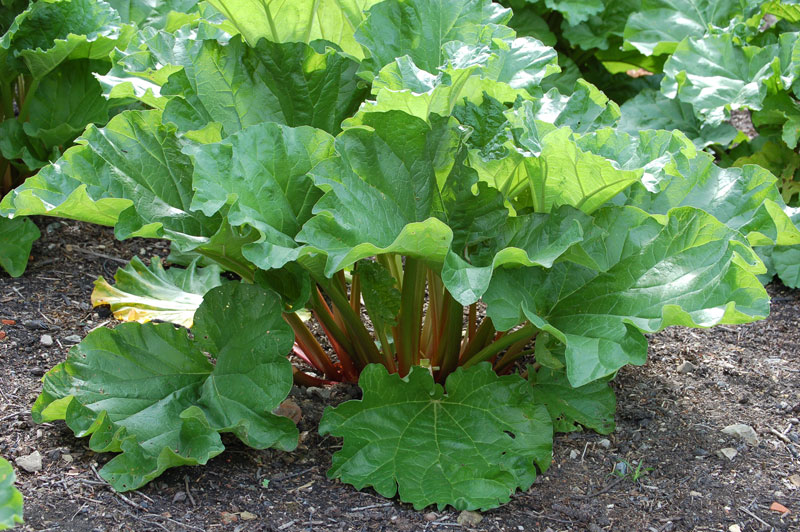
The large leaves are a great biomass accumulator

Common Species:

  • Himalayan Rhubarb (Rheum australe)
  • Sikkim Rhubarb (Rheum nobile)
  • Turkey or Chinese Rhubarb (Rheum palmatum)
  • Da Huang (Rheum palmatum tanguticum)
  • False Rhubarb (Rheum rhaponticum)
  • Common Rhubarb (Rheum rhabarbarum)
  • Garden Rhubarb (Rheum x cultorum or Rheum x hybridum)


Remember, only the stalks (aka petioles) are edible

Description:
Rhubarb, along with Asparagus, is one of the more well known perennial vegetables. The large green leaves and red stalks were once a very common site in the home garden. Nowadays, there are probably more people who have heard of this vegetable than have eaten it, although the sour leaf stalks are still commonly used in pies (typically mixed with berries and lots of sugar) or in jams (also with lots of sugar). Few people in the U.S. have eaten Rhubarb as a vegetable as they do in Asia, and even fewer people have eaten the immature flower buds like cauliflower.

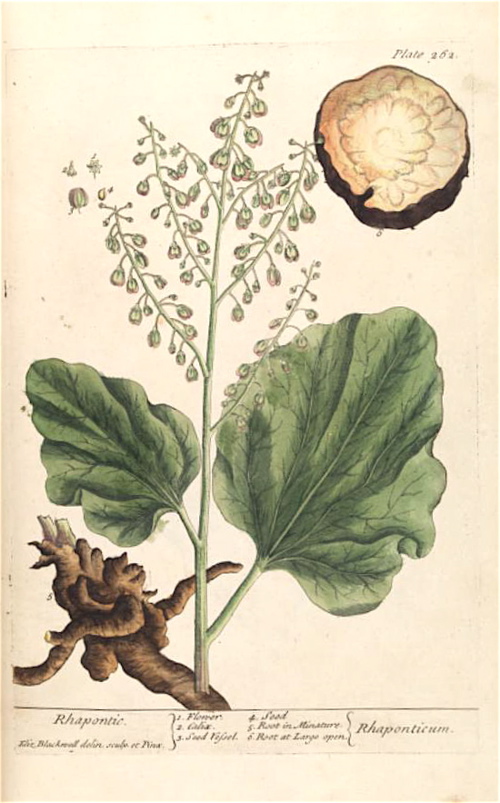
Rheum rhaponticum

History:
Almost all of the nearly 60 species of Rhubarb are used for food, medicine, or both. Originally from Asia, and grown for thousands of years, Rhubarb has been distributed around the world.

Trivia:

  • Most commonly found Rhubarb have red stems, but there are a number of varieties (and other Rheum species) that have green or pink stems.
  • Rheum palmatum is a large plant that can reach 6-10 feet tall and reportedly has a gooseberry-flavored stalk
  • Rheum australe is reported to have an apple-flavored stalk.


Definitely not your grandmother's strawberry-rhubarb pie!

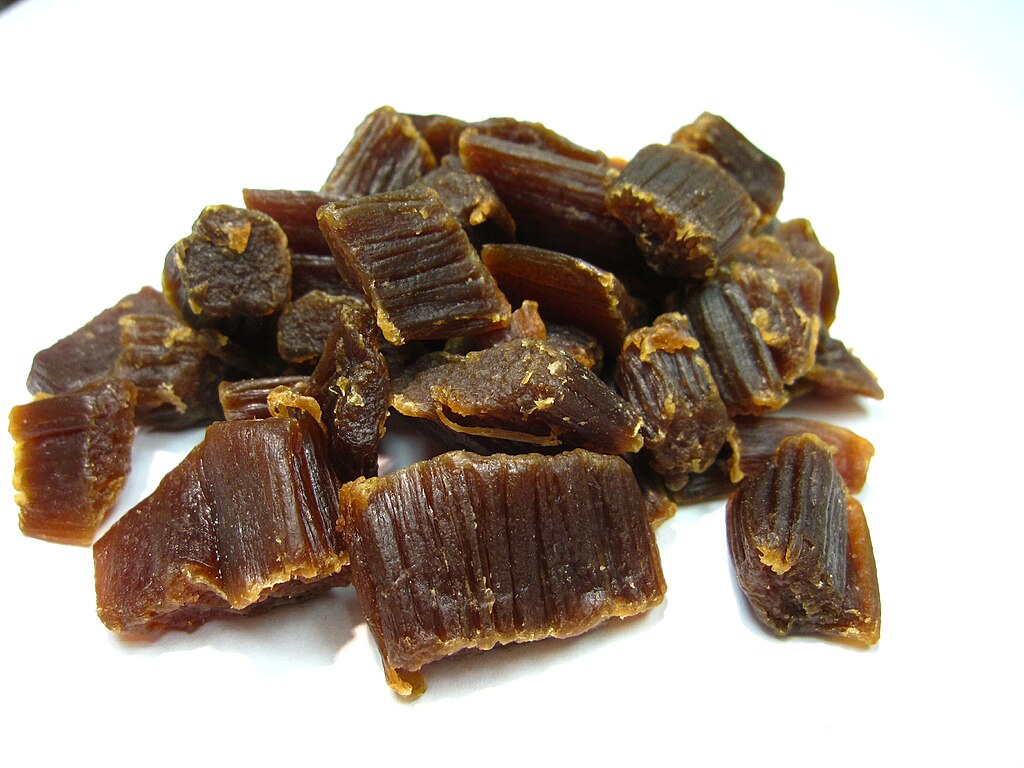
Dried Rhubarb - after it has been soaked in apple juice

USING THIS PLANT
Primary Uses:

  • Edible Stalks – very tart. Typically cooked, but some eat them raw. In the United States, Rhubarb is cooked like a tart fruit in pies and jams, with the addition of a lot of sweetener (sugar, honey, etc.), while in Asia, Rhubarb is eaten as a vegetable similar to celery and can be used in soups and stews. Rhubarb stalks have been candied as well.
  • Edible Flower Buds – cooked; similar in texture to cauliflower, but very tart.
  • NOTE: due to the high amounts of oxalic acid in this plant, Rhubarb should be eaten in moderation. So what does this mean in real life? Don’t eat Rhubarb with every meal for a week. Oxalic acid inhibits the body from absorbing calcium. Over time, this can be harmful. However, considering its tartness, excessive consumption is unlikely.


Secondary Uses:

  • Pioneer Plant Species
  • Groundcover – plant larger species (Rheum palmatum) at 4 feet (1.2 meters); plant other species at 2.5 feet (0.8 meters)
  • Dynamic Accumulator
  • Biomass – on the small scale, but the leaves are not eaten, so use them for compost
  • Insecticide Plant – simmering leaves in hot water yields an insecticide solution (I can find no recipes or application instructions)
  • Dye Plant – some species leaves, stalks, and roots can be used to make yellow to red dyes.


Yield: Depends on the species, variety, growing conditions, and harvesting techniques.

Harvesting: Spring – Early Summer.  Cut or twist off the leafstalk. Make sure to avoid the roots and the leaves. By mid to late Summer, the oxalic acid content has climbed, and even the stalks should be avoided or at least eaten in very limited quantity. Many people, mainly commercial growers, will harvest all the stems at once. This likely puts undue stress on the plant and encourages it to go to seed. Instead, remove no more than about a third of the stalks at one time and only mature stalks; harvest the next batch of now mature stalks a few weeks later. This method will also extend the harvesting season. It is time to stop harvesting once the stalks get thin.

Storage: Eat, cook, or process right away. Fully mature stalks will keep in a cool dry place (like a refrigerator) for a few days. Stalks can be frozen as well; pre-cutting and pre-measuring will make using them easier.

Rhubarb can be used as a ground cover since those large leaves shade out weeds

DESIGNING WITH THIS PLANT
USDA Hardiness Zone: 
Himalayan Rhubarb (Rheum australe): 5-8
Sikkim Rhubarb (Rheum nobile): 7-9
Turkey or Chinese Rhubarb (Rheum palmatum): 4-7
False Rhubarb (Rheum rhaponticum): 3
Common Rhubarb (Rheum rhabarbarum): 3-8
Garden Rhubarb (Rheum x cultorum or Rheum x hybridum): 1-9

AHS Heat Zone:  Garden Rhubarb (Rheum x cultorum or Rheum x hybridum): 8-5

Chill Requirement: No reliable information available.

Plant Type: Herbaceous Perennial
Leaf Type: Deciduous
Forest Garden Use: Herbaceous Layer
Cultivars/Varieties: Many species and many, many varieties available. 

Pollination: Self-Pollinating/Self-Fertile. Pollinated by wind.
Flowering: Summer

Life Span:
Years to Begin Bearing: Rubarb will put out stems right away, but they should not be harvested the first year. A few can be harvest the second year.
Years to Maximum Bearing: 3-4 years is when you can start harvesting in earnest
Years of Useful Life: 10-15 years if not divided. If divided, the plant will live indefinitely. 


Not many know that Rhubarb's flower buds can be eaten like cauliflower

If not eaten, the flower buds will bloom in shades of white, pink, or red

PHYSICAL CHARACTERISTICS OF THIS PLANT
Size: 3-5 feet (0.9-1.5 meters) tall and wide for R. x cultorum, other species are larger.
Roots: Fibrous and Deep (Rheum nobile has a root that can get to 7 feet (2 meters) long)
Growth Rate: Fast

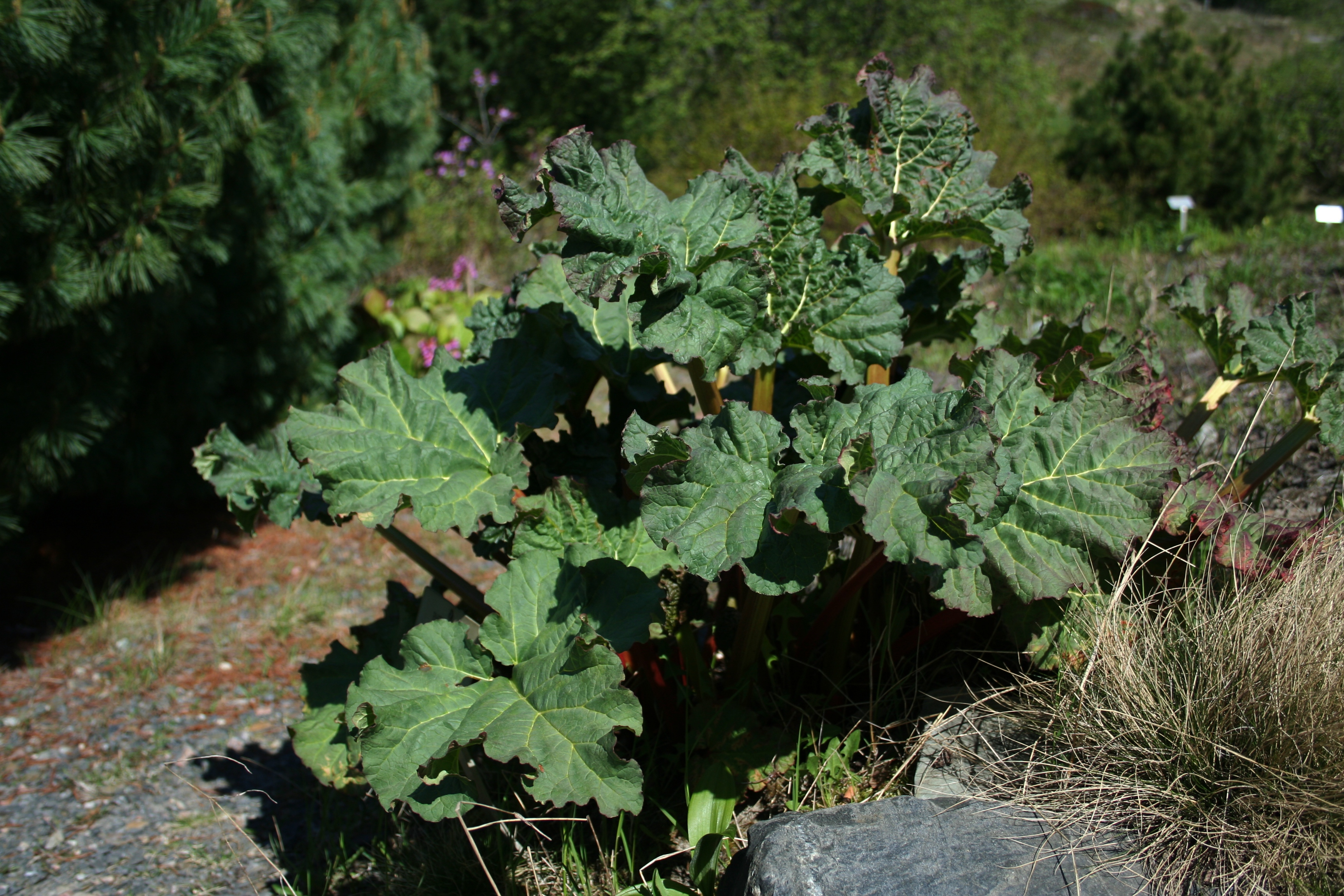
The almost otherworldly Sikkim Rhubarb, Rheum nobile

The apple-flavored Himalayan Rhubarb, Rheum australe

The large Turkish Rhubarb, Rheum palmatum, has a gooseberry flavor

GROWING CONDITIONS FOR THIS PLANT
Light: Prefers full sun
Shade: Tolerates light shade
Moisture: Medium
pH: most species prefer fairly neutral soil (6.1 - 7.0)

Special Considerations for Growing:

  • Being hardy to Zone 1, Rhubarb is one of the most cold hardy perennial vegetables available.
  • If you live in areas warmer than Zone 7, consider growing Rhubarb as a Winter annual or consider growing a more heat tolerant species (Rheum palmatum, Rheum nobile).
  • The garden varieties are great for gardens and good soil, but consider some of the other species if you are planning on using Rhubarb as a pioneer species or planting in soil that is less than ideal.


Propagation: 
Usually by division in Spring. Can be planted from seeds, but seeds do not always produce plants similar to their parents (not true to type) – seeds do not require cold stratification.

Maintenance:

  • Almost none. Very resistant to pests and disease.
  • Crowns should be divided while dormant (either late Autumn or early Spring) every 4-5 years.
  • Consider composting the leaves and stalks that dry up at the end of the season


Concerns:
Poisonous – Leaves and roots are toxic. There is a high amount of oxalic acid in the leaves, but it is likely the presence of an unknown glycoside that is the cause of its toxicity, not the oxalic acid.


Monday, January 9, 2012

Dynamic Accumulators for Temperate Climates

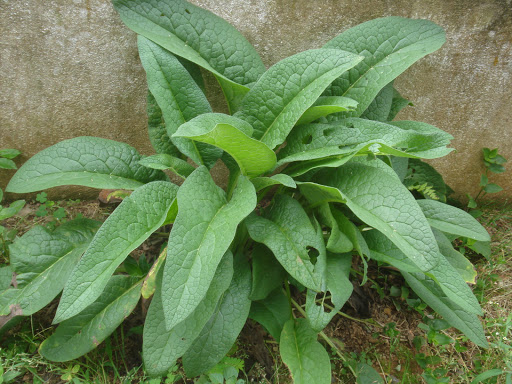
Symphytum officinale, Common Comfrey, is one of the best dynamic accumulators.

This is a term that I first came across in Dave Jacke’s book, Edible Forest Gardens.  In brief, it is the idea that certain plants (often deep-rooted ones) will draw up nutrients from the lower layers of the soil, and these nutrients will be deposited in the plants’ leaves.  When the leaves fall in autumn and winter and are broken down, those stored nutrients are then incorporated into the upper layers of the soil where other plants will benefit from their deposition.

This is a natural method of increasing soil fertility.  It is likely one of the ways that forest ecosystems continue to thrive and remain stable with minimal external inputs.

This is also a great Permaculture tool.  By observing nature, we can mimic nature, and we can have great results with minimal effort.  As I always say, Permaculture is about design!

We can sustainably and naturally increase our land's soil fertility by using dynamic accumulators.  It can be done with almost no work, other than planting or sowing seed, and allowing nature to do what it naturally does on its own.

We can expedite the process a bit, and increase our work a bit, by cutting back fast growing plants to encourage more frequent plant growth during the growing season.  For instance, chopping a bunch of mature leaves off fast growing Comfrey will provide high nutrient green mulch.  We can drop them where they fall or redistribute them to other locations that are low in nutrients.

There are a number of other ways to incorporate dynamic accumulators.  I'll be addressing these in an upcoming article.

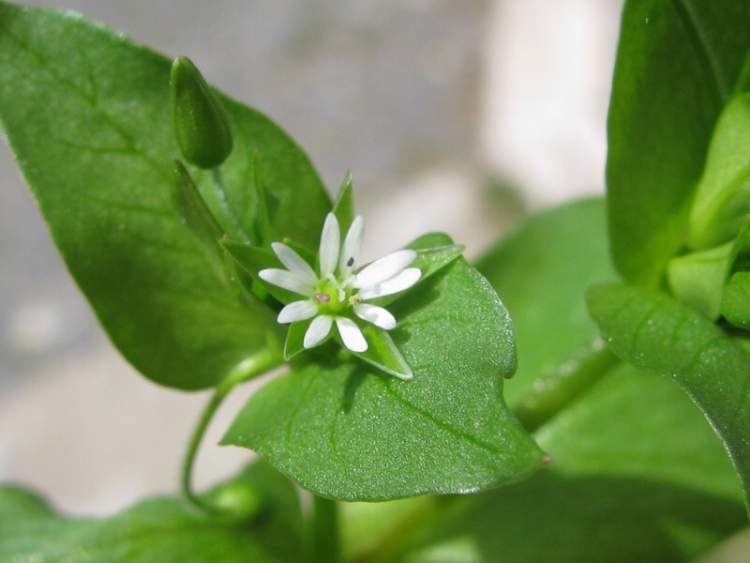
The tiny flowers of Stellaria media, Common Chickweed, a dynamic accumulator that has a lot of Permaculture benefits... poultry food (hence the name), ground cover, and dynamic accumulator!

The science of dynamic accumulators is an area of botany with very little research to date.  We know it is true, but unfortunately not a lot of time has been spent studying the concept of dynamic mineral accumulation, so we only have research on a few plants.  Hopefully with time, we will be able to add substantially to this data.

Here is a list of well studied dynamic accumulators that can be used in a Temperate Climate.   The nutrients that they provide are abbreviated in bold:
  1. Sugar Maple,  Acer saccarum K, Ca
  2. Maples,  Acer spp.  K
  3. Yarrow,  Achillea millefolium  K, P, Cu
  4. Chives,  Allium schoenoprasum  K, Ca
  5. Black Birch,  Betula lenta  K, P, Ca
  6. Birches,  Betula spp.  P
  7. Shagbark Hickory,  Carya ovate  K, P, Ca
  8. Hickory, Pecans,  Carya spp.  K, Ca
  9. German Chamomile,  Chamaemelum nobile  K, P, Ca
  10. Chicory,  Cichorium intybus  K, Ca
  11. Flowering Dogwood,  Cornus florida  K, P, Ca
  12. Horesetails,  Equisetum spp.  Ca, Co, Fe, Mg
  13. Beeches,  Fagus spp.  K
  14. European Beech,  Fagus sylvatica  K, Ca
  15. Strawberry,  Fragria spp.  Fe
  16. Wintergreen,  Gaultheria procumbens  Mg
  17. Licorices,  Glycyrrhiza spp.  P, N
  18. Black Walnut,  Juglans nigra  K, P, Ca
  19. Walnuts,  Juglans spp.  K, P
  20. Lupines,  Lupinus spp.  P, N
  21. Apples,  Malus spp.  K
  22. Alfalfa,  Medicago sativa  Fe, N
  23. Lemon Balm,  Melissa officinalis  P
  24. Peppermint,  Mentha piperita  K, Mg
  25. Watercress,  Nasturtium officinale  K, P, Ca, S, Fe, Mg, Na
  26. Silverweed,  Potentilla arserina  K, Ca, Cu
  27. White Oak,  Quercus alba  P
  28. Black Locust,  Robinia pseudoacacia  K, Ca, N
  29. Sorrels, Docks,  Rumex spp.  K, P, Ca, Fe, Na
  30. Salad Burnet,  Sanguisorba minor  Fe
  31. Savory,  Satureja spp.  P
  32. Chickweed,  Stellaria media  K, P
  33. Comfreys,  Symphytum spp.  K, P, Ca, Cu, Fe, Mg
  34. Dandelion,  Taraxacum officinale  K, P, Ca, Cu, Fe
  35. Basswood,  Tilia Americana  P, Ca, Mg
  36. Linden (Lime in the UK),  Tilia spp.  P, Ca
  37. Clovers,  Trifolium spp.  P, N
  38. Stinging Nettle,  Urtica dioica  K, Ca, S, Cu, Fe, Na
  39. Vetches,  Vicia spp.  K, P, N
  40. Violets,  Viola spp.  P


Abbreviation Key
Ca = Calcium
Co = Cobalt
Cu = Copper
Fe = Iron
K = Potassium
Mg = Magnesium
N = Nitrogen (in this case, these plants are nitrogen fixers)
Na = Sodium
P = Phosphorus
S = Sulfur