Showing posts with label Foods. Show all posts
Monday, April 1, 2013
Portugal, please say "No!" to the McBifana.
I recently spent a few days in Lisbon, Portugal. I was walking one morning, and I came across this advertisement at a bus stop. I was very disappointed.
A bifana is a traditional Portuguese snack or light meal. It consists of a thinly sliced beef or pork steak placed between a sliced roll. By contrast, a McBifana is the exact opposite of a traditional food. It is a large, international, billion-dollar, food corporation that is coming in and trying to replace a food that is best made locally... by locals with local ingredients.
In reality, I support the free market, so I am not suggesting Portugal ban McDonalds. However, what I would love to see is the Portuguese avoid this food so McDonalds has to take it off their menu. Some things should not be in the realm of fast-food. Okay, pretty much nothing should be in the realm of fast-food if you actually care about quality food and health, but bastardizing a bifana is going a bit too far.
For a bit more information on a similar concept, I wrote a brief article on the Slow Food Movement that you can read here.
Tuesday, February 26, 2013
Book Review: The Brewmaster's Table
I am not a food snob; I am a foodie. I am not a beer snob; I am a beer connoisseur. Food and beer snobs will turn down food that doesn't meet their preconceived ideas of quality, which is often only what they read in an expensive magazine. A foodie will eat just about anything once, and the same is true of a beer connoisseur. However, we foodies and beer connoisseurs still truly appreciate quality food and drink. We just don't care if it made the cover of Food and Wine.
It is with this mindset that I review this book. The Brewmaster's Table by Garrett Oliver (the brewmaster of the Brooklyn Brewery), is an absolute must read for anyone who appreciates good food and beer. It provides a great history and explanation of all the world's major styles of beer, which to be honest, has been done before in many other books. But what makes this book unique, and why I use this book as a reference quite frequently, is that Garret Oliver provides recommendations for pairing food with each of the styles of beer he describes. He dives into the reasoning behind food and beer pairing so that we can understand why the beer goes so well with a particular food or style of food.
Any book that makes me want to go out and experiment with whatever the author is writing about is a success. This book has inspired me to experiment well over a dozen times already, and I think a lot more experimenting is in store.
One specific subject that this books addresses, and an area I have struggled with for some time, is what beverage to serve with Indian and other Asian meals. Wine is a poor fit, although I have had some success with champagne. I try to avoid soft drinks in all circumstances. Water works well, but is boring. Beer is what is left over, but as it turns out, stands out as a clear front runner. No drink, other than certain styles of beer, come anywhere close to matching the flavor profiles or offering a distinct but complimentary contrast of flavors to these foods. For these precious recommendations alone the book was worthwhile.
Fortunately, the book offers way more than just that. As it turns out, almost every food and style of cooking has an almost perfect pairing (or two or three) with a style of beer (or two or three). I am a wine drinker as well, and I really enjoy wine, but when it comes to matching food with drink, wine has nothing on beer. Sure, a classic American-Italian dinner has a great pairing in almost any table red wine. A juicy ribeye pairs great with a Syrah or Cab. But you can also drink beer with these meals as well. But what about everything else? What about a barbeque with hamburgers and hotdogs and spicy ribs? What about fish and chips. What about all the other foods people eat that just don't really work with wine? This book has the answer. Don't believe me? Read this book. Experiment for yourself, and you will see.
This book is yet another highly recommended read.
Thursday, February 7, 2013
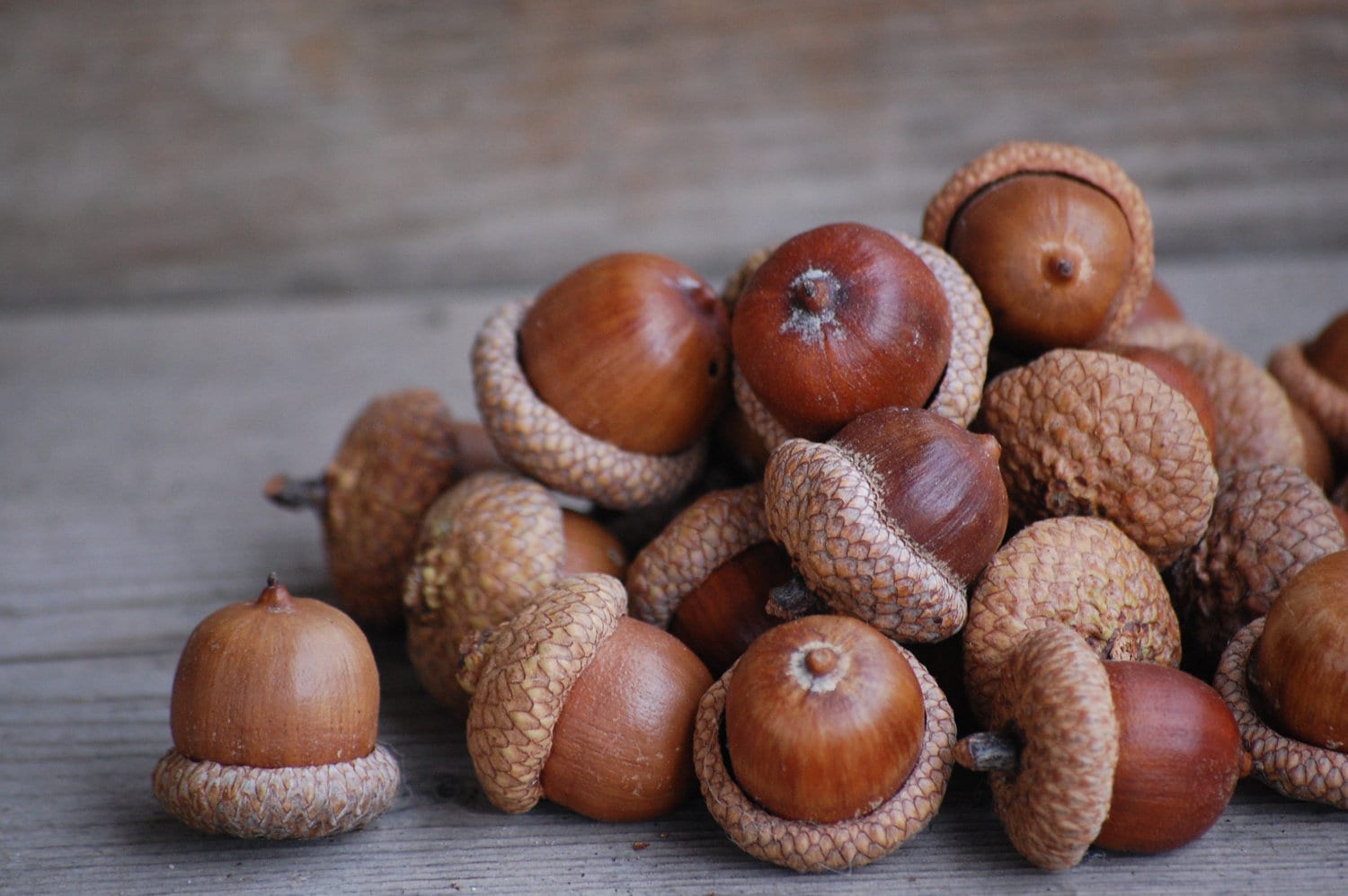
How to Eat Acorns
Acorns can be great food
Red Oak (Quercus rubra)
I will answer some of these questions myself, but I am going to provide a lot of links to really good articles on the subject. There are others who have a lot more experience that have written a lot on the subject. So instead of re-inventing the wheel, I will just give links to some reallygood articles.
Every tree is different. Every location produces different flavors and nuances (this is the Terrior of Food). One White Oak may produce acorns that are bitter and need to be processed, while another White Oak a quarter mile (0.4 km) away may be "sweet" enough to be eaten raw. Local growing
conditions and varieties play a large role. So experiment and see what is out there!
With that said, here is a list of the best tasting acorns:
- White Oak (Quercus alba)
- Boz-Pimal Oak (Quercus aucheri)
- Swamp White Oak (Quercus bicolor)
- Emory or Black or Bellota Oak (Quercus emoryi)
- Pin Oak (Quercus palustris)
- Holly Oak (Quercus ilex)
- Holm Oak (Quercus ilex ballota)
- Chestnut Oak (Quercus prinus)
- Blue Oak (Quercus douglasii)
- Burr Oak (Quercus macrocarpa)
- Cork Oak (Quercus suber)
- English or Pedunculate Oak (Quercus robur)
If you read these articles, you will see that there are a number of ways to process the acorns. The big decision is hot vs. cold water leaching of tannins. If you want to use acorn flour for cooking anything that requires the flour to stick together (i.e. breads) then you need to use the cold water method or mix the acorn flour with another flour, like wheat. This was Hank Shaw's mistake when trying to make an acorn flour flatbread.
Three articles on acorns written by Hank Shaw author of Hunt, Gather, Cook
- Collecting and Processing Acorns to produce Acorn Flour: http://honest-food.net/2010/01/14/acorn-pasta-and-the-mechanics-of-eating-acorns/
- Acorn Coffee and Piandina (Italian torilla): http://honest-food.net/2009/12/26/acorns-and-the-foragers-dilemma/
- Acorn Cake and Traditional Uses of Acorns: http://honest-food.net/2010/01/03/acorn-cake-and-acorns-around-the-world/
A fantastic, detailed article on using acorns by Green Deane, of the Eat the Weeds website:
A great overview of harvesting, processing, and cooking with acorns from Jackie Clay, a well known homesteader and writer for Backwoods Home Magazine:
Wednesday, January 30, 2013
Book Review: Charcuterie
I received this book from one of my siblings at Christmas. In short, I love it! I recently wrote an article about why I enjoy learning and practicing food preservation (read that article here). I have already tried a few recipes from this book. My favorit so far was the pork confit from my own rendered lard... it was the most tender pork I have ever tasted. My 18-month old daughter almost ate as much as I did! I find it more than interesting that a baby can instictually know quality food. I think it is great.
If you are a foodie and a cook and a person who enjoys meat. You will likely love this book as much as I did. I highly recommend it.
I love this review posted on Amazon:
Starred Review. Without the faintest hint of apology, Ruhlman and Polcyn present an arsenal of recipes that take hours, and sometimes days, to prepare; are loaded with fat; and, if ill-prepared, can lead to botulism. The result is one of the most intriguing and important cookbooks published this year. Ruhlman (The Soul of a Chef) is a food poet, and the pig is his muse. On witnessing a plate of cold cuts in Italy, he is awed by "the way the sunlight hit the fat of the dried meats, the way it glistened, the beauty of the meat." He relates and refines the work of Polcyn, a chef-instructor at a college in Livonia, Mich., who butchers a whole hog "every couple weeks for his students." Together, they make holy the art of stuffing a sausage, the brining of a corned beef and the poaching of a salted meat in its own fat. An extensive chapter on pâtés and terrines is entitled "The Cinderella Meat Loaf" and runs the gamut from exotic Venison Terrine with Dried Cherries to hearty English Pork Pie with a crust made from both lard and butter. And while there's no shortage of lyricism, science plays an equally important role. Everyone knows salt is a preservative, for example, but here we learn exactly how it does its job. And a section on safety issues weighs the dangers of nitrites and explains the difference between good white mold and the dangerous, green, fuzzy stuff.
Here are some other reviews of this fine book:
Charcuterie is an important and definitive work which deserves to stand proudly and forever in every serious cook's kitchen. -- Anthony Bourdain, author of Kitchen Confidential
Charcuterie provides an open window on the delicious possibilities available to the home cook and professional chef alike. -- Paul Bertolli, author of Cooking By Hand
Michael Ruhlman and Brian Polcyn have opened the door for home cooks everywhere to experience the thrill of making charcuterie. -- Mario Batali, chef/owner of Babbo Restaurant, New York
Never has the art of charcuterie been handled this thoroughly for the home cook. -- Lynne Rossetto Kasper, host of American Public Media's national radio series The Splendid Table®
The best techniques to cure, smoke and preserve meat in the tradition of the best charcutiers out there. -- Eric Ripert, chef/co-owner of Le Bernardin Restaurant, New York
Monday, January 28, 2013
Why Learn to Preserve Food?
Portuguese-style Cured Iberian Ham - delicious!
For quite some time, I have been intruiged with the idea of food preservation, specfically historic food preservation. Humans have preserved food for thousands of years to make it through lean months, most often for the Winter. It is only in the last generation or two, and really only in "modern" cultures, where we have lost this vital knowledge. The reason? Electric refrigeration. The modern refrigerator and freezer are amazing pieces of technology, and I will have and use them as long as I have electricity. However, I think it is important not to lose the knowledge and skills to preserve food. I have a few reasons for this. (I'll be dramatic and outline my reasons in reverse order of importance):
Fifth - We may not always have electricity.
Therefore, we may not always have refrigerators and freezers. Don't worry. I do not think we are going to have some apocolyptic event or some Mad Max-type world, but I do think we have already reached Peak Oil on a global scale. How much time before we start feeling global oil depletion is still up for debate. Alternate energy sources are still not nearly as readily available as electricity from a city or county municipality. There may be a period of time when petroleum-based electricity is waning and alternative-energy-based electricity is phasing in where we may have gaps in service or the price of electricity is just not worth running high electritical use appliances (i.e. refrigerators, freezers, dryers, air conditioners, etc.). The probability for this may be pretty low, but since it is possible, I would like to be a bit better prepared. Reading about food preservation is one thing, actually doing it is another.
Preserved Lemons... so easy to do!
Fourth - Preserving our own food saves money.
Let's look at blackberries. When you are buying blackberries out of season for your local area, they are very expensive. If you buy berries in the Winter, they are imported from overseas, and are going to cost a lot more... and not taste nearly as good. However, if you buy the blackberries during your local blackberry season, then the cost will be much lower, the taste will be much better, and you can preserve them yourself in a variety of ways... as jams, jellies, preserves, or even frozen. Even with what I just said about electricity and freezers, a freezer is a great tool. If you buy and freeze blackberries during the peak of your local season, you will save significant money. Now some will argue that buying already frozen blackberries from the store can be cheaper than doing it all yourself. Sometimes this may be true, but most often it is not. If you grow your own blackberries, the cost goes down even more. And if you pick wild blackberries and preserve them, then the cost is next to nothing other than time. Spending time outside in nature, preferably with friends and/or family, walking and harvesting wild foods... this is not wasted time, and it is probably a better activity than what many now do on their weekends.
Third - It is fun!
I love to cook, and I really enjoy preserving foods. Fortunately I know I am not alone. There are so many different aspects that make it enjoyable. If you have an interest in cooking, baking, gardening, foraging, history, anthropology, homesteading, preparedness, or health, then you can find some aspect of food preservation which will be enjoyable.
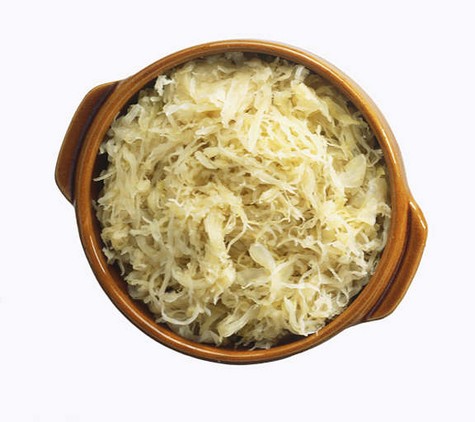
My red cabbage sauerkraut... simple and delicious.
Second - It is healthier.
If you have recently looked at the label of almost any food in a grocery store, especially one that does not require refrigeration, then you know that these foods are full of chemicals we would never add to foods prepared in our own kitchens. In Michael Pollan's book, In Defense of Food, he states a few general rules on buying food. One of these rules states that if you cannot pronounce an ingredient on the label, then you probably shouldn't eat it that food. I whole-heartedly agree. When we preserve our own foods, we know exactly what is it in and why. We can choose to add, or not add, ingredients based on our own tastes and health opinions.
First - Flavor! Flavor! Flavor!
This is my number one reason. Homemade preserved foods can taste far superior to what you can buy in the supermarket. We have the ability to use the best ingredients instead of the leftovers. We have the ability to use homegrown ingredients. We can preserve meats that were organically raised or grass fed or both. We can take the time to "do it right" or make things traditionally, which often take a bit more time and is why mass-produced items don't taste the same. With the widespread use of refrigerators and freezers, we don't need to produce preserved meats or fermented vegetables or even preserved fruits, but we still do. Why? Because we like the taste. When we produce it ourselves, the flavors are better. When we take the time, we can taste it, and we will savor every bite.
Thursday, December 20, 2012
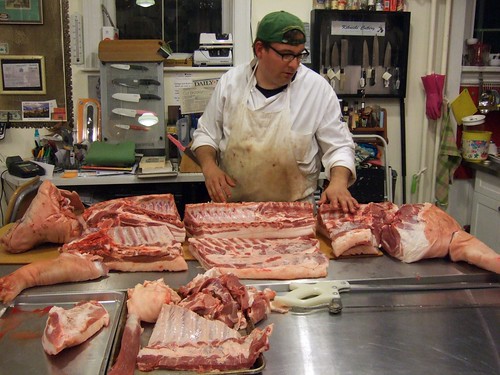
Butchering a Pig... another quick video
Click on the following link for the video: http://twentytwowords.com/2012/12/04/the-fascinating-separation-of-a-pig-into-ham-ribs-bacon-and-more/
During the holiday season, I will be doing quite a bit of traveling. I am also going to slow down and spend time with my family. I'll be posting a few things here and there. They will likely be interesting or fun photos or easy to watch videos, but I will not be writing in-depth or time-consuming research articles for a few weeks. So relax and enjoy the holidays. Have a Merry Christmas and a Happy New Year!
Tuesday, October 30, 2012
Garam Masala... the Gateway to Indian Cuisine
My spice blend for Garam Masala
I cook a lot of Indian food. When I say a lot, I mean both in frequency and in quantity. It is not unusual for me to make an Indian meal or Indian inspired dish up to once a week. That may not be a lot for an Indian family, but for a white guy from Florida, I'm pretty sure that counts as a lot. This past weekend I cooked up a few dishes for a get-together at my house. We ended up with just under 20 adults dining with us. I have cooked for 40+ on more than one occasion, but that was a few years ago. While 20-40 hungry diners may seem pretty laughable for a working chef, it still feels like a lot to me... especially while I am cooking! But I love it, and I love Indian food. As does my wife, which is why I try to cook it as frequently as I do.
Indian Food? I don't like...
I hear from many people who say that they do not like Indian food. One common complaint is that it is too hot (i.e. spicy). Well, traditional Indian food may have a lot of heat in it, but it can easily be made very mild as well. I do think there is a depth of flavor lost when the heat is removed, but the food is still delicious. If at a restaurant, just tell the waitstaff that you cannot handle any heat at all, and they will can easily accomodate you and your weak tongue.
The other common complaint is, "I don't like curry." My rebuttal to this could be a 30 minute discourse, literally, on curry and what it is and is not. I will be much briefer today. "Curry" is really a Western-civilization corruption of the South Indian and Sri Lankan (Tamil) word, "Kari", which just means "sauce". The sauce is typically served over rice, and the sauce typically has vegetables, meat, or fish in it. Now there are curries from India, but there are also curries from Bangladesh, Nepal, Pakistan, Afghanistan, Thailand, Vietnam, Indonesia, Burma, Malaysia, the Philippines, and even the Caribbean, to name a few. To say you don't like curry is to say you don't like a well-flavored sauce with meats or vegetables.
Another variation of this complaint is, "I don't like curry powder." This is more narrowed down, but still does not rule out Indian food by any means. Curry Powder is not something you would buy in India. Well, to be fair, you probably could nowdays, but not in the nineteeth century when it was invented by British folks who wanted to export the taste of India to Britain. The original Curry Powder spice mixes were significantly more varied then they are today, and each producer had their own recipe. Some of these spice mixes originally contained dried, ground leaves from the curry tree (Murraya koenigii). However, over time, the curry tree leaves were not used anymore. The modern standard ingredients of Curry Powder now sold in supermarkets in the Western world is a dried, ground mixture of Tumeric, Corriander, Cumin, Fenugreek, and Red Pepper. Mild and hot Curry Powder just have respectively less or more Red Pepper. Most people who do not like Curry Powder either do not like Tumeric or do not like Fenugreek, and these spices are not used in a whole lot of Indian dishes. I have met at least one person (Shane, if you actually read this far into this article, sorry to point you out!) who doesn't like either Corriander or Cumin (I am not sure which one yet); however, he still eats the food anyway. So, if you have someone who doesn't like Curry Powder, try to figure out which spice it is they do not like, and avoid that one. This is easily done considering the varitey of recipes out there.
Bottom line: If you do not like Indian food, then I venture to say that you have not had enough experience with it. There is so much variety that you cannot really make that large of a generalization.
Garam Masala
This past weekend, I made a standard Chicken Tikka Masala, a Beef Korma, a Chicken Biryani (from a great recipe courtesy of the mother of my good friend, Christo, native to southern India), and Aloo Gobi. Fortunately, as usual and rather on purpose, I made way too much, and everything but the biryani freezes very well. This is perfect after a busy day when I just don't have the energy to cook. Steam some rice and heat up a some frozen Korma... delicious!
One of the common ingredients in these dishes was Garam Masala. I have been meaning to share my Garam Masala recipe for years as it is so simple to make. It is nothing terribly unique, but it is what I use, and people enjoy eating my Indian food.
So what is Garam Masala? Why would you want to know anything about it? And why do I call it the "Gateway to Indian Cuisine"?
Garam Masala is a blend of ground spices used in traditional Indian cuisine. There are as many variations of Garam Masala as there are people who make it, and there are hundreds of thousands of people who make Garam Masala at home every week. It is similar to saying "barbecue sauce" or "salad dressing" in the United States. There are so many regional variations and personal preferences that the variety is almost endless. However, there are some basic common themes to this spice mix that makes approaching it much more manageable. Here is my recipe as a start:
Garam Masala
- 1 Cinnamon Stick (about 2-3 inches)
- 2 Dried Bay Leaves (Indian Bay Leaf, Cinnamonmum tejpata, if possible, quite different from the more common Bay Leaf from the Bay Laurel tree, Laurus nobilis)
- 12 Cardamom Pods (remove and use the seeds from the pods; compost the pod casing)
- 1 teaspoon Black Peppercorns
- 1 teaspoon Cloves
- 2 teaspoons Coriander Seeds
- 2 teaspoons Cumin Seeds
Other ingredients that may be used in Garam Masala
- Peppercorns (white, green, or black like mine)
- Red Pepper
- Garlic (dried)
- Ginger (dried)
- Mustard Seed
- Tumeric
- Fennel
- Sesame Seeds
- Anise
Garam Masala is used in some dishes as the main or base spice layer and in other dishes as a minor flavor enhancer where other spices are more predominant, but it is very commonly used in many recipes. Once a person tries to make Garam Masala, they will realize how easy it is to make. The rest of almost every Indian recipe will be simple after that. After a person gets past the intimidation of making their own Indian spice mix, a whole new culinary world will be opened. If you have never tried to make an Indian dish, I hope this article will give you the courage to try.
Friday, October 12, 2012
Vote for the Dinner Party - article by Michael Pollan
Michael Pollan
Is this the year that the food movement finally enters politics?
One of the more interesting things we will learn on Nov. 6 is whether or not there is a “food movement” in America worthy of the name — that is, an organized force in our politics capable of demanding change in the food system. People like me throw the term around loosely, partly because we sense the gathering of such a force, and partly (to be honest) to help wish it into being by sheer dint of repetition. Clearly there is growing sentiment in favor of reforming American agriculture and interest in questions about where our food comes from and how it was produced. And certainly we can see an alternative food economy rising around us: local and organic agriculture is growing far faster than the food market as a whole. But a market and a sentiment are not quite the same thing as a political movement — something capable of frightening politicians and propelling its concerns onto the national agenda.
California’s Proposition 37, which would require that genetically modified (G.M.) foods carry a label...
Wednesday, September 26, 2012
Milk Kefir
Kefir grains,
a microscopic workforce ready for action.
“Why do we have to have things growing on the counters… all the time?”
This is a rather common question in my home as I am constantly fermenting food and drink. I have developed a passion for it. I have developed a passion for the flavor and nutritional benefits of fermented foods as well.
Fresh milk with kefir grains just added (on the left); mature kefir (on the right).
My latest project is kefir. Kefir is a specific type of fermented milk. For those that are turned off by the idea of “fermented milk”, just remember that cheese and yogurts are also cultured (i.e. fermented) milk products.
The key to producing kefir is the use of kefir grains. These “grains” are really a complex community of bacteria and yeast that live together in a mutually beneficial, community-built and maintained matrix of proteins, fats, and sugars. The grains resemble small florets of cauliflower. This group of organisms are sometimes called a SCOBY (Symbiotic Community Of Bacteria and Yeast). Kefir grains contain well over a dozen different species in varying proportions depending on the source and circumstances of growth.
Making milk kefir is simple. Fresh milk is added to a jar with a small amount of kefir grains. 6-48 hours later, depending on how sour you like it, the grains are strained out to be used for another batch, and the resulting Kefir is used as desired.
Kefir reminds me of a thin yogurt. If it is left to sit longer (about 48 hours), it develops a stronger, more sour, flavor that reminds me more of a stronger cheese… a bit like blue cheese or Roquefort. If only fermented for 6-12 hours, it is like a very mild yogurt.
Kefir-stuffed tomatoes over mixed salad greens... with a Hofbrauhaus beer on the side!
Traditionally, milk kefir is used as a drink. To be honest, I am not crazy about drinking it. It’s just a bit too much. But I do use it in a lot of my meals. Here are some examples:
- Straight as a salad dressing
- As a cooling dip (like blue cheese) for spicy grilled chicken (Thai and Indian) or wings
- Mixed with herbs and spooned into tomato halves
- Mixed with another cheese (I’ve tried Havarti, Gouda, and Cheddar) and used as an omelet filling
- As a replacement for yogurt in any savory dish that you do not need the thicker consistency of yogurt (I’ve used it in soups and Indian dishes)
Milk kefir is easy to make. Easy to maintain. Easy to use. Has a great flavor. On top of that, it introduces plenty of beneficial microbes to you gastrointestinal tract. I highly encourage everyone to give it a try.
Thursday, August 30, 2012
Dehydrating Figs
My dried Figs... delicious!
I recently wrote about how our fig tree that is just pumping out the figs. I can fill up a plastic grocery bag with ripe figs every two or three days. That means a lot of figs. I have already shared my recipe for Pineapple, Port, & Fig Sauce. Today, I'll just share some photos of the dehydration process.
We have an Excaliber dehydrator, and I highly recommend it. This dehydrator is simple to use, easy to clean, comes in many sizes, and the company has great service and warranties, but it is not incredibly cheap. If you are not ready to buy a dehydrator, you can use your oven or even use your car (see this article on dehydrating in your car).
My biggest advice for food preservation, is to just get in there and try it. For more information on dehydrating, I recommend Dehydrate 2 Store, and as a great resource for dehydration tips and tools. She does use and promote the Excaliber, but she provides a goldmind of free information.
I started out with lots of figs and quickly washed then is some fresh water.
The figs were quartered and laid on the drying trays, dried for about 24 hrs, and that was it.
Wednesday, August 29, 2012
My New Sauerkraut
My new sauerkraut
I wish my good computer was working so I could color correct this photo. This kraut almost glows in the dark it is so bright pink, and the taste is fantastic!
I recently wrote about my first attempt at making sauerkraut. That sauerkraut was good, but the kraut I made next was really, really good. It was made with one head of green cabbage, one head of red cabbage, one apple, one tablespoon of caraway seeds, and about three tablespoons of salt. I let it ferment for about 5 days at room temperature, it gave a moderate amount of bubbling, and turned a brilliant, bright pink. The taste is amazing. Perfectly sour. Tart but not overpowering. Subtle sweetness and with a hint of caraway. I love it. If you like sauerkraut, then give this one a try.
Friday, August 3, 2012
GMO Labeling... California is in the Lead!
No major bash on California, but they rarely take the lead on anything with which I agree; however, I think they are on the right track with their attempt to get GMO (genetically modified foods) labeled. As the California Right to Know website states: More than 40 countries with over 40% of the world’s population already label genetically engineered foods, including the entire European Union. Even China labels genetically engineered foods. What do they know that we don't?
In reality, I don't think it is something that they know, because almost everyone desires to be informed about the food they are eating. The truth is that in the U.S., we have a political system that is too greatly influenced by Big Ag... that is, the large, multi-million/billion agricultural corporations. Passing this would likely set the stage for nationwide labeling laws. Then we could finally make informed decisions.
I'm pretty sure I have never said this, but, Go California!
To read more about GMO's, read my previous article on the topic:
Thursday, July 19, 2012
How Then Should We Eat? ...some brief thoughts
As a primary care physician, and as a person who is now fifty pounds lighter than before I started medical school, I am frequently asked about health and food and diets. This is such a confusing topic for so many people. Unfortunately, I blame the medical establishment for much of this. I believe in their desire to do good, they have not only given blatantly conflicting information over the years, but they have also gotten so far in the weeds, so to speak, that they have lost touch with basic human history. They have lost touch with the traditions that were developed over thousands of years of trial and error, traditions that have shown time and again to be more healthy for the human body than whatever the current pop-science article tells the media outlets, and in turn tells us, and in turn causes more confusion when, a few years later, another article is written that tells us to do the exact opposite of what that first article told us! No wonder we are confused.
In addition, in the United States, the world melting pot of cultures, where little of those cultures remain intact, Americans are searching for their own traditional diet. Sadly, this relatively new traditional diet is almost nothing like what any traditional culture ate. This disconnect to real food is another major stumbling block for Americans.
So what are we to do? What do I tell my patients? My personal view is one that is grounded on a lot of medical, scientific, historical, and anthropologic reading. Maybe one day I will get around to writing all my thoughts on the topic. Today, I'll share one book, one theme, and one brochure...
I have previously endorsed Michael Pollan's In Defense of Food. This is a fantastic book written by a non-medical author, and it provides some simple but effective "food rules".
Probably the strongest recommendation is for the Paleo Diet... the concept, not necessarily one specific book (you can find thousands of websites on this topic, and I highly recommend spending some time reading about this). The Paleo Diet is really a concept that encourages us to eat a more "hunter-gatherer" diet. This is how humans were designed to eat before the advent of modern civilization and modern agriculture... and not coincidentally, modern chronic diseases. There are a dozen or more books on the topic, and they all share the same theme, some are more "strict" than others, but there are literally thousands of websites on the Paleo Diet, so no money needs to be spent learning all about it.
Finally, I will sharemy most recent find and recommendation, the Healthy 4 Life Booklet, from the Weston A. Price Foundation. If we (the "modern world") all ate how this booklet recommends, I think we would be significantly healthier than we are today. The link is at the end of this article.
Now before you dive into reading any of these things, I should give my disclaimer. While I don't agree 100% with everything that is in my reading recommendations, I agree with almost all of it (to be honest, I don't know if I would ever agree 100% with anything on which I have an opinion!). Also, some of these recommendations have ideas that seem to contradict each other... why is this and how do I reconcile it? Well, the Paleo Diet shows us that avoiding grains and starches can be healthy for us, and I agree. The other readings tell that there are healthy ways to eat these foods. I agree with this as well. My reconciliation is to minimize the consumption of grains and starches, definitely avoiding them as a primary component in my diet, and looking at ways traditional cultures ate them (fermentation and sprouting are two methods).
So, I hope this helps a few people who are struggling with making "healthy" food choices in this world of dietary confusion.
Here is the link to the Healthy 4 Life Booklet
Also, I'll add some information about the Weston A. Price Foundation...
FROM THE WESTON A. PRICE FOUNDATION MISSION STATEMENT:
The Weston A. Price Foundation is a nonprofit, tax-exempt charity founded in 1999 to disseminate the research of nutrition pioneer Dr. Weston Price, whose studies of isolated nonindustrialized peoples established the parameters of human health and determined the optimum characteristics of human diets. Dr. Price's research demonstrated that humans achieve perfect physical form and perfect health generation after generation only when they consume nutrient-dense whole foods and the vital fat-soluble activators found exclusively in animal fats.
The Foundation is dedicated to restoring nutrient-dense foods to the human diet through education, research and activism. It supports a number of movements that contribute to this objective including accurate nutrition instruction, organic and biodynamic farming, pasture-feeding of livestock, community-supported farms, honest and informative labeling, prepared parenting and nurturing therapies.
FROM THE HEALTHY 4 LIFE PRESS RELEASE:
As an alternative to the USDA lowfat, high-carbohydrate dietary guidelines, the Weston A. Price Foundation proposes Healthy 4 Life, a dietary plan in the form of a colorful booklet and poster featuring four food groups: animal foods; grains, legumes and nuts; vegetables and fruits; and healthy fats.
Rather than prescribe one-size-fits-all levels of macronutrients—fats, carbohydrates and proteins—the Healthy 4 Life plan recommends nutrient-dense versions of animal and plant foods, with particular emphasis on healthy traditional fats like butter, lard, egg yolks and coconut oil. The plan does not specify specific amounts of fats or carbohydrates because the need for these macronutrients varies with the individual. Those who engage in high levels of physical activity can incorporate more carbohydrates in the diet without gaining weight; those needing to lose weight or control blood glucose levels require more healthy fats in the diet as fats provide satiety and help keep blood sugar within a normal range.
The proposed 2010 USDA Dietary Guidelines perpetuate the mistakes of previous guidelines in demonizing saturated fats and animal foods rich in saturated fatty acids such as egg yolks, butter, whole milk, cheese, fatty meats like bacon and animal fats for cooking. The current obesity epidemic emerged as vegetable oils and refined carbohydrates replaced these healthy, nutrient-dense traditional fats. Animal fats supply many essential nutrients that are difficult to obtain from other sources.
Tuesday, March 13, 2012
Which foods are most important to buy organic?
"I really don't want to eat food with chemicals all over (and in) them, but organic food is so expensive. Do I have to eat only organic food to be healthy?"
This is a common thought process for those of us concerned about the quality of our food. In my opinion we should do all we can to avoid any and all foods that have chemicals applied to them during any stage of a plant's lifecycle. We can get tied down with semantics on the definition of chemicals, but I am going to use the term in the common vernacular... roughly meaning manmade chemicals used to enhance growth or production or applied to kill animal or plant pests. With any definition, we have little reliable, trustworthy data on the safety of chemicals in modern agriculture, and in many cases the data we do have shows these chemicals are definitely or potentially harmful to humans.
For me, in an ideal world, all my food would be produced naturally with no chemicals whatsoever. But we live in the real world, and it is tough, and usually expesive, to eat a "chemical free" diet all the time. This leads people to feel overwhelmed and obsessed trying to find "healthy" foods. They will often severely limit the variety in their diet due to lack of "chemical free" food products and sources, or they will spend increasingly more and more money to purchase these items from many far away locations. Unfortunately, many of these people eventually give up and choose to consciously ignore these concerns, because it is just easier to live life and eat food without these worries.
But is there a middle ground?
The answer is yes! Obviously, I think AgriTrue will be a valuable tool to find producers that raise food in a way that is important to us. I hope that one day we will be able to eat totally "chemical free" in a simple, local way for a reasonable price tag. But that is not the purpose of this article.
The growing concerns about chemical pesticide exposure in our food is exactly why the Environmental Working Group (EWG) developed its annual list of "clean" and "dirty" foods. From EWG's website:
The mission of the Environmental Working Group (EWG) is to use the power of public information to protect public health and the environment. EWG is a 501(c)(3) non-profit organization, founded in 1993 by Ken Cook and Richard Wiles. In 2002, we founded the EWG Action Fund, a 501(c)(4) organization that advocates on Capitol Hill for health-protective and subsidy-shifting policies. EWG specializes in providing useful resources to consumers while simultaneously pushing for national policy change.
Their Shopper's Guide to Pesticide in Produce will help you determine which fruits and vegetables have the most pesticide residues and are the most important to buy organic. You can lower your pesticide intake substantially by avoiding the 12 most contaminated fruits and vegetables and eating the least contaminated produce. Here is their list:
The Dirty Dozen
- Apples
- Celery
- Strawberries
- Peaches
- Spinach
- Nectarines (imported)
- Grapes (imported)
- Sweet Bell Peppers
- Potatoes
- Blueberries (domestic)
- Lettuce
- Kale/Collard Greens
The Clean Fifteen
- Onions
- Sweet Corn
- Pineapples
- Avocado
- Asparagus
- Sweet Peas
- Mangoes
- Eggplant
- Cantaloupe (domestic)
- Kiwi
- Cabbage
- Watermelon
- Sweet Potatoes
- Grapefruit
- Mushrooms
Tuesday, March 6, 2012
Cauliflower Leaves are Edible!
I recently posted this photo of a head of cauliflower from my garden right before I harvested it. This plant has continued to grow very well. It's not uncommon for the plant to push up one or a few smaller heads after the main head has been harvested, so I have let it stay in the garden. However, the other day I was out in the garden and I was amazed at how large the leaves of that cauliflower had grown. You can see in this photo...
My cauliflower leaves are huge!
I started thinking, "What a waste of a plant to harvest just the flower buds!" Then I remembered Permaculture Principle Six: Produce No Waste. I thought the leaves will be a great addition to the compost pile... but then I wondered, "Can you eat them?"
A quick Google search later and I found out that, sure enough, cauliflower leaves are indeed edible! Apparently they can be used like any other green from the garden (collards, kale, beets, turnip, etc.). So I took one leaf... one really large leaf as you can see in the photo above... it was just over 3 feet (1 meter) long! I cut out the thick center rib and only used half for an omelet.
Ingredients: one half leaf cauliflower, one slice of bacon, 2 eggs, black pepper.
One rough chopped half cauliflower leaf sauteed with one slice bacon, rough chopped.
Two whisked eggs and black pepper added when greens were cooked through in 3-4 minutes.
The finished bacon and cauliflower leaf omelet!
So the big question... how did it taste? Really good! It tasted like a firmer (in a good way) cooked green like collards. Similar to kale without that faint earthy taste kale often has. I have since made a half cauliflower leaf, half brussels sprout dish that was fantastic as well... and my sometimes picky wife really enjoyed it as well. I am truly surprised that this is not a more common food... and I am thrilled that I have so much of it still left in my garden!
Wednesday, February 29, 2012
Fruit Leather
Fruit Leathers are a traditional method of preserving a fruit harvest.
"Would you be willing to do a post on fruit leather? I've never heard of it before."
If you've ever eaten a "Fruit Roll-Up", as many kids in the U.S. have, then you are familiar with the idea of a Fruit Leather... even if you've never heard the name. Although making your own is significantly healthier than the store bought, mass-produced variety; plus it's a lot of fun, and kids (and grown-up kids) love them!
If you look online there are literally hundreds of recipes for making Fruit Leather, but they all involve the same process...
Thicker Fruit Leathers take longer to dehydrate.
Instructions for Making Fruit Leather
- Obtain the freshest, ripest fruit possible.
- Clean the fruit if needed.
- Cut up the fruit if needed. Discard bruised or damaged areas.
- Optional Step - Add a color stabilizer. The most natural is lemon or lime juice, but some people make a liquid dip from a mixture of water and ascorbic acid crystals (easily purchased at large grocery stores). Fruit chunks are allowed to soak for about 5 minutes. This step is used for apples, apricots, pears, and peaches.
- Puree the fruit in a blender - may need to add a small amount of water so the fruit blends well and the puree pours well. The texture should be close to applesauce.
- Optional Step - Strain the puree. This gives a smoother texture, but also removes some of the fiber and nutrients from the puree.
- Optional Step - Add a sweetener. I think honey is the healthiest, plus it gives a good texture. Plain table sugar can be used, but it can give the Fruit Leather a granular (almost crunchy) texture. Concentrated fruit juice can also be used - this can be store bought or homemade by heating fresh fruit juice over low heat for a long time until a large portion of the water evaporates, and you are left with a very sweet, thick sauce.
- Pour the puree onto a flat surface for drying. This is where things can vary tremendously. See Drying Methods below. The thickness of the poured puree should be about 1/4 inch (0.6 cm) thick. Try to keep the puree about an inch (2.5 cm) from the edge as it will spread as it dries.
- Remove the dried Fruit Leather, cut to size if needed, roll up or store flat in a clean, dry location (a paper bag works well, but fruit leathers can be frozen.
- Fruit Leathers will store for three weeks at room temperature, three months in a refrigerator, or up to a year if frozen.
Drying Methods for Fruit Leather
- NOTE - drying times can vary significantly on the method used, the consistency of the puree and the types of fruits used. It is recommended that you begin checking your Fruit Leather after the first 2-3 hours of drying.
- Dehydrator - this is the easiest method. The puree is poured onto plastic sheets provided with the dehydrator. If your dehydrator does not have the plastic sheets, then a layer of plastic wrap will work fine.
- Oven - this method works just as well, but may take a little experimentation to get it just right. Place plastic wrap on a cookie sheet. Pour the puree on the plastic wrap covering the cookie sheet. If you wet the cookie sheet a little, the plastic will stay in place on the cookie sheet better. Place the oven on its lowest setting, and crack the oven door open - this is very important as it lets the moist air escape. Ideal temperature is 100 F (37 C). Most ovens cannot be set that low, so just set the oven to the lowest setting, and watch the drying fruit - higher temps will dry faster.
- At 150 F (65 C) it will take about 8-10 hours.
A beautiful raspberry Fruit Leather
Monday, February 13, 2012
Basics of Lactic Acid Fermentation
Sauerkraut is just the tip of the iceberg when it comes to lactic acid fermented foods.
What is Lactic Acid Fermentation, and why would we want to know anything about it?
Here's a scientific definition:
Lactic Acid Fermentation is a biological process by which sugars such as glucose, fructose, and sucrose are converted into cellular energy, and the metabolic byproduct Lactate is formed.
So, that's a bit of a mouthful, and not very useful for the non-scientists among us.
How about this definition:
Lactic Acid Fermentation is a process used to store foods (mostly vegetables) long term without using heat, cold, or preservatives, yet retains the nutritional value and original freshness of the food.
Okay, that is better.
Pickles made the original way... far superior in flavor in my opinion.
So what are Lactic Acid Fermented Foods?
Ever had Sauerkraut? Kimchi? Old-fashioned Pickles? Olives? Yogurt? Sourdough bread?
These are all examples of common foods produced through Lactic Acid Fermentation.
How about Magou? Kefir? Laban Zeer? Nham? Balao Balao? Gundruk? Sinki?
Yeah, I've never tried these foods either, but I hope to one day.
Here is a traditional Nepalese meal made with Grundruk... lactic acid fermented leafy greens.
Why should we care about Lactic Acid Fermentation? I have a few reasons:
- It is relatively easy. Seriously. Fresh, clean vegetables. Salt. Maybe some water. And a little time.
- It is pretty cheap. All you needs are the fresh foods and maybe a little salt and/or water. Food prices are rapidly increasing (see my article on the Rising Cost of Food), and the more food we can grow AND preserve will be money saved.
- It preserves our food. When we have a bumper crop of vegetables from the garden, here is just another way to extend the shelf-life of that food. Much better than letting it go bad and (hopefully) just ending up in the compost pile.
- It tastes good! This is a big priority to me. I'm not going to waste my time on something that doesn't taste good. I've only had a few foods that were make with traditional lactic acid fermentation. Most "modern day" foods that were once preserved through lactic acid fermentation are now made other ways (like vinegar preservation) or are killed by heating before storing (hot water canning). But the flavor of fresh yogurt, real sauerkraut, real pickles! It is worth it, trust me.
- It is healthy. More and more research is showing that these fermented foods may, in some cases, be healthier than the fresh food. Mineral content stays the same, but some vitamins increase. The bioavailability of the nutrients in the fermented foods can also increase... meaning, the nutrients found in these foods are more readily absorbed by our bodies after fermentation. Not to mention that the bacteria that ferment these foods end up in our gastrointestinal tract and improve our digestive processes, which also leads to improved absorption of foods, which leads to better health. Now to be fair, these foods may be fairly salty. Lactic Acid Fermented foods should be a part of a well-rounded diet, not the primary component.
- It uses very little energy and resources. No heat from stoves. No electricity for refrigerators or freezers. Minimal water. Just the vegetables we grow and maybe some salt. That's it.
- It provides yet another way for us to be a bit more self-sufficient. Even if food security is not on your radar, as it is mine, having the freedom of just a little more self-reliance is powerfully reassuring.
So, there you have it. That was my quick definition of Lactic Acid Fermentation and my reasons why I am a big fan of learning more about it. I plan on posting some articles on my adventures making these foods in the near future. Stay tuned.
Wednesday, January 4, 2012
The Variety of Preserved Fruits and Vegetables
A well stocked pantry should include some of our own preserves!
My sister Katie sent me a book on preserving for Christmas. It is a great book, and I will review it soon. I have dabbled a bit with preserving in the past. When I lived in Kentucky, I made some Black Cherry Jelly, Crabapple Jelly, and Blackberry Jam. They were all great. However, it has been some time since I made any preserves to, well, preserve.
In the last few years, I have often made a quick jam or jelly when I have just a few pieces of fruit from the market. I'll make a tiny batch, maybe just enough for one sitting, on my stove and store it in a small glass cup covered in plastic wrap in the refrigerator. Now after reading this book on preserving, I am excited about doing some more larger scale production again soon.
As I read, I noticed that there are a lot of terms used in preserving fruits. Vegetables are often preserved in similar ways or even mixed with the fruits as well depending on the preparation. Whatever the ingredient, there are specific terms and definitions for what is made. I thought it would be interesting to actually figure out what they all were.
Following is a list of the most common types of preserves along with a quick definition of each.
Jam
Made with whole fruit (or vegetables), crushed or chopped, and sugar. Typically made with just one fruit, but some say it may be made with two fruits, and any more would be called a Conserve. Consistency should be thick but spreadable and do not hold the shape of the jar (contrast to jelly).
Conserve
There are two definitions:
First - Made like jams, but are mixed with two or more fruits (or vegetables). Often dried fruits (often raisins) and nuts are added. Nuts are typically added at the last five minutes of cooking. Consistency should be as Jam.
Second - A fruit jam made of fruit stewed in sugar. Often the whole or roughly chopped fruit is layered with sugar and left for a day before cooking. Usually the fruit(s) are processed with as little water as possible to set.
Jelly
Made by cooking fruit (or vegetable) juice with jelly and sugar. Ideally, the juice should be processed in a way to maintain clarity (clear or translucent) in the final jelly. Consistency should be thick enough to hold its shape on a spoon, but be soft enough to be spreadable.
Marmalade
Made similar to jelly, but with the addition of small fruit pieces and/or peel evenly suspended throughout the jelly. Consistency should be as Jam.
Preserve
While all of these items listed on this page are "Preserves", some separately define a "Preserve".
Made similar to jam, but with whole fruit (or vegetables), that are not crushed or chopped, and sugar. Consistency should be as Jam.
Fruit Spread
A jam or preserve with no added sugar.
Fruit Butter
Made by cooking fruit or fruit pulp with sugar. Often spices are added. The fruit butter is cooked low and slow until the butter is thick and spreadable. Consistency should be thick enough to round up on a spoon.
Examples: Apple Butter
Relish
Made by cooking chopped fruits and/or vegetables in a sauce that often contains vinegar, sometimes with sugar as well. The goal is a condiment that has discernible pieces of fruit and/or vegetable (i.e. not smooth like a sauce) with a strong flavor that will compliment or contrast the food with which it is being served.
Chutney
An Indian relish combining vegetables and/or fruit and herbs, with classic "Indian" spices. Often cooked for long periods of time. Sometimes with a smoother consistency.
Examples: Mango Chutney, Mint Chutney, Coriander Chutney, Tamarind Chutney, Red Chili Chutney
Chow-Chow
A Southern American pickled relish made from a variety of vegetables. Cabbage is often an ingredient and may be the origin of the name (chou is French for cabbage), although green tomatoes are also very common. A very similar product made with more spices is the British piccalilli.
Confit
Pronounced "con-FEE", comes from the French confire, to preserve. Typically made from meats, often poultry (Duck Confit is world famous) and pork, cooked and left in their own fat until the fat sets. This old world style of preserving allows meats to be stored in a cool place for months with no refrigeration. A less common variation is to make sweet confit with a fruit base and honey or sugar syrup preserving agent. A savory confit calls for vegetables, like tomatoes and/or garlic with an oil, often olive oil, preserving agent.
Monday, January 2, 2012
Questions and Answers by Michael Pollan
Michael Pollan is my favorite non-farmer food author. He has written a few of my favorite food/agricultural books (In Defense of Food: An Eater's Manifesto
Michael Pollan Answers Readers’ Questions
By Michael Pollan The New York Times Magazine, October 6, 2011
Link to the original article can be found here.
These questions for Mr. Pollan were submitted by New York Times readers. The first 10 questions below were the most popular among those we received. They were answered by Mr. Pollan on Oct. 6, 2011, after the Food Issue was originally published.
Our family is on a budget and can’t afford to eat all organic. Where should we direct our money to get the most benefit? Organic produce? Meats? Dairy?
This was the most popular question by far, and it’s a good one: some organic products offer the consumer more value than others, so if you’re on a budget, it’s important to buy organic strategically.
Here are a few quick rules of thumb:
If you have young kids, it’s worth paying the organic premium on whatever they eat or drink the most of organically. So if they drink lots of apple juice — which they shouldn’t, by the way — or milk, then spring for it there.
On produce, some items, when grown conventionally, have more pesticide residue than others, so when buying these, it pays to buy organic. According to the Environmental Working Group, the “dirty dozen” most pesticide-laden fruits and vegetables are: apples, celery, strawberries, peaches, spinach, imported nectarines, imported grapes, sweet bell peppers, potatoes, blueberries, lettuce and kale/collars.
The “clean 15″ are onions, sweet corn, pineapples, avocado, asparagus, sweet peas, mangoes, eggplant, cantaloupe, kiwi, cabbage, watermelon, sweet potatoes, grapefruit and mushrooms. So if you’ve only got a little money to devote to organic, buy the organic apples and skip the organic onions. But do keep in mind that it’s important to eat fruits and vegetables regardless of how they’re grown.
In meat, organic is very expensive, and doesn’t necessary ensure that the animals didn’t live on feedlot. I look for grass fed for beef instead, milk and butter, too.
If you could rewrite the farm bill from scratch, with no political constraints of any sort, what would it look like?
I don’t have the space, and you don’t have the time, to sketch out a complete alternative-reality farm bill. But as a guiding principle, I would say it needs to be aligned with our public health and environmental goals. That is, every provision in it — from crop subsidies to meat inspection — needs to be “scored” for its impact on public health and nutrition.
I went into more detail on the farm bill in a 2008 piece for The Times, “Farmer in Chief.”
What are the pros and cons of a vegan diet?
There’s research to suggest that vegetarians and vegans are generally healthier than the rest of us; however “flexitarians” — carnivores who eat meat once or twice a week — are just as healthy. I know vegans who thrive on the diet, but also many who have trouble keeping it going: it takes a lot of work and care, much more than vegetarianism, which I would count as a con. You really have to organize your life around your eating. It’s also possible now to be a “junk-food vegan,” eating all sorts of processed vegan foods and mock meats. I guess if your goal in life is to keep from eating animals, this option makes sense, but from a health standpoint processed food is processed food. But I admire anyone who has gone to the trouble of thinking through the full implications of their eating choices, and then acted on that knowledge.
How much soy is too much? Can I eat tofu and drink soymilk every day? What are the true pros and cons of soy? I cannot seem to find unbiased information.
The honest and complete answer is that we don’t know — the jury is still out on soy. I do know we’re eating soy in forms it was never eaten before — highly processed and novel. The F.D.A. has declined to list an additive like soy isoflavones as “GRAS” (“Generally regarded as safe”). It’s worth noting that Americans are now eating more soy than Asians, and we eat it in novel new forms. Asians eat it only after it has been processed in traditional ways — fermented, or curdled in the form of tofu. These products have been eaten for centuries, which is reassuring. Now soy protein isolate, soy isoflavones and soy lecithin are found in myriad processed foods. If you see any of these in your snack foods, I would+ lay off. Soy can act like estrogens in the body, which may or may not be a good thing. There’s a section on soy in my book, “In Defense of Food.”
I’m torn between artificial sweeteners and regular sugar. I know that both aren’t good for your health, but if I just can’t live without some form of sweetener in my morning coffee, which would you pick? In other words, which one is better for you health-wise?
Sugar is probably the biggest culprit in obesity and diabetes, but I wouldn’t make a capital case of a teaspoon of sugar in coffee. In soda, there’s research suggesting that switching to artificial sweeteners does not lead to weight loss, so whether they’re safe or not, they may not do what they purport to.
Should I buy local foods or stick to organic?
It depends on what you value most. If keeping pesticides out of your food is your highest value, then buy organic. If you care most about freshness and quality or keeping local farms in business and circulating money in your community, buy local. But very often you can do both. Some local farmers are organic in everything but name, so before you decide to pass them up, ask them not “Are you organic” — to which the answer must be no if they haven’t been certified — but rather, how do you deal with fertility and pests? That starts a more nuanced conversation that may convince you to buy their produce.
What is the single best food we all should be eating every day? Cutting to the nitty-gritty, here.
Single best? Probably whole grains — they offer a lot that’s missing from the industrial diet, from fiber to important antioxidants and healthy fats. People who eat lots of whole grains are generally healthier and live longer than those who don’t. But if I could add to the list of important foods missing from the standard American diet, I would add leafy greens and fermented foods with live cultures.
“In Defense of Food” focused on debunking nutritionism and the lipid theory. What about our carb consumption? A lot of research I’ve seen lately indicates they’re the real culprits in our diets.
Current trends in nutritional research implicate refined carbohydrates and, to a large extent, exonerate most fats. The increase in sugar consumption alone can account for the obesity and diabetes epidemic, and scientists have come a long way in understanding the mechanisms by which calories from refined carbs — fructose especially — have a disproportionate effect on weight and insulin resistance — see the work of Robert Lustig and Gary Taubes for more.
You must be on the road a lot. Where do you eat when you are on the road?
It’s a challenge, no doubt about it. Airports are the worst. If I absolutely must have a meal in an airport, I’ll look for a Mexican place and get a rice-and-bean burrito. “No airport meat” is a rule with me. But I find that today, nearly every city in America has at least one restaurant that focuses on the best local ingredients, and the Internet makes it much easier to find that place.
What is the “real deal” on egg consumption? Good or bad?
Eggs are great and always were. The nutrition researchers have rehabilitated them in recent years — they used to think that cholesterol in eggs raised cholesterol in the blood, but this turns out not to be the case for most people. So enjoy, but look for at least “cage-free,” (most other laying hens are raised in crowded cages) and ideally “pastured” eggs, which come from chickens that have actually been out on grass. This makes for happier, healthier hens and tastier, more nutritious eggs.
How can you tell if a food is genetically engineered?
You can’t, unless you’re willing to move to Europe or Japan, where the government requires that it be labeled. Ours doesn’t, so there’s no way to tell. This is despite the fact that 80 to 90 percent of Americans tell pollsters they want it labeled, and Barack Obama, as a candidate, once promised to make it happen. But the industry is afraid you won’t buy genetically modified foods if they’re labeled — and they’re probably right. Why would you? So far at least, genetically modified food offers the consumer no tangible benefit. In America, the only way to be certain you’re not buying genetically engineered food is to buy organic; the U.S.D.A. rules for organic prohibit it.
What will our food system be like in 100 years?
My best guess is that the food system will look very different in 100 years, for the simple reason that the present one is — in the precise sense of the word — unsustainable. It depends on fossil fuels that we can’t depend on and exacts a steeper price in human and environmental health than we can afford. So it will change, whether we want it to or not. We certainly won’t be eating nine ounces of meat per person per day, as Americans do now — there won’t be enough feed grain, worldwide, to continue that feast, and presumably we will have faced up to meat-eating’s disastrous toll on the environment. If we haven’t, we’ll have much bigger problems on our plate than what to have for dinner.
How do we take Into account cultural differences when telling people what they ‘should’ be eating?
I have yet to hear of a traditional diet — from any culture, anywhere in the world — that is not substantially healthier than the “standard American diet.” The more we honor cultural differences in eating, the healthier we will be.
What do you think of in vitro meat?
I think I’ll pass, but probably won’t have to. Cloning meat, or making it in an incubator, is an interesting thought experiment for animal rights philosophers and journalists, but I doubt we’ll actually see it on menus any time soon. Meat has a lot more to it than muscle cells — not to put you off your feed, but you also have to get the fat and sinews, the connective tissue and the blood right to make it organoleptically acceptable. To date, our food scientists have not demonstrated they have the technical or aesthetic skills to simulate real foods with notable success. I will be surprised if they come up with synthetic meat that is as close to the real thing as margarine is to butter. Think about baby formula: we’ve been working on that one for a century and a half, and for reasons we don’t totally understand, it still doesn’t do all that genuine mother’s milk does. We flatter ourselves by thinking we can outdo or even approximate nature’s foods. Though come to think of it, it might be possible to simulate a chicken nugget, which is already once removed from the real thing.
Is frozen produce as nutritious as fresh?
Frozen vegetables and fruits are a terrific and economical option when fresh is unavailable or too expensive. The nutritional quality is just as good — and sometimes even better, because the produce is often picked and frozen at its peak of quality. The only rap is that freezing collapses the cell walls of certain fruits and vegetables, at some cost to their crunch. But this has no bearing on nutrition. Do look for frozen foods with a single ingredient — no fake herb-butter sauce!
Why Is the expiration date on organic milk sometimes a couple of months away while regular milk has a sell-by date normally within a week or 10 days?
Much of the organic milk in your market is “ultrapasteurized” rather than simply “pasteurized” — that is, it has been heated to a higher temperature in order to extend its shelf life. This is a holdover from when organic milk sat longer on grocery shelves. Some nutritionists believe that ultrapasteurization damages the quality of milk; many cheese makers won’t use it. In some busier markets, you can find organic milk that has not been ultrapasteurized.
What must government do to make a healthful food as affordable as its evil counterpart?
This is the $64,000 question. There are certainly steps the government can take to make healthful food somewhat less expensive: underwrite farmers’ transition to organic and other kinds of sustainable agriculture; support the renaissance in local meat production by making it easier to build and run small slaughterhouses; use crop subsidies to reward farmers for diversifying their fields and growing real food rather than “commodity crops” like corn and soy; enforce federal antitrust laws to break up the big meatpackers and seed companies.
But these measures will never make high-quality food as cheap as industrial food, some of which will only get more expensive if we take the steps needed to civilize feedlots, clean up water and protect farmworkers from exploitation. Faux populists in the food industry battle such measures on the grounds they want to keep food prices low for the poor. But the institution of slavery kept crop prices low, too — at a cost we ultimately decided was too great for a democratic society to pay. (Come to think of it, slavery still exists in parts of the food system, according to reports out of Florida.) Cheap food has become a pillar of our low-wage economy, one reason Americans have managed to stay afloat as their wages have declined since the 1970s. In the end, if we want healthful and conscientiously produced food for everyone, we’re simply going to have to pay people enough so that they can afford to buy it.
How in the world do I cook fish?
Less is more: the big trick to cooking fish is to undercook it. The center of a fillet should still be slightly translucent when you take it off the heat. (Remember, it will continue to cook for a few minutes.)
Could you address the controversy regarding small-farm, raw-milk cheese producers?
Raw milk is delicious and nutritious — and more risky to drink than pasteurized milk. It also makes much more interesting cheeses, because some of the bacteria and enzymes destroyed during pasteurization contribute striking flavors. But producing raw milk safely takes a lot more care, and in recent years there have been several cases of people, especially children, getting sick after consuming raw milk.
There is a strong libertarian streak among many in the food movement, who demand the right to eat whatever they want, without interference from the government. They have a point — how is it that cigarettes are legal in this country while, in most states, raw milk can’t be sold in stores? On the other hand, doesn’t the government have a compelling interest in protecting children from a product about which they can’t make an informed decision?
You do have to wonder about the Food and Drug Administration’s priorities. Why is the government putting its resources into shutting down raw-milk producers, a teeny-tiny “industry,” when there are many more serious threats to food safety on factory farms? (In fact the overwhelming majority of illnesses tied to milk and cheese come from pasteurized products.) While Amish dairymen are being raided by the F.D.A., Jack DeCoster, the notorious Iowa egg producer whose filthy, salmonella-infected eggs were linked to an outbreak that sickened more than 1,500 people last year, received a mild warning letter from the F.D.A. What is going on here? Sounds like political theater to me.
How do generic brands in supermarkets work? Are they worse than name brands?
There are generics, and then there are generics. Some generic products may be the exact same as the branded product they resemble — they’re made by the same manufacturer and simply sold under a different, usually more boring, store label. These are a great deal — you save by not paying for the marketing and advertising behind the big brand. But there are also many more generic products that are reformulated or made with cheaper ingredients. So how can you tell what kind of generic you’re getting? Compare the ingredient and nutrition label: if they’re identical, then the products are almost certainly identical, too.
When I purchase vegetables and meat labled ‘organic,’ why are they so much more expensive than similar items without the ‘organic,’ label?
There are several reasons organic food costs more than conventional food. First, the demand for it exceeds the supply, and presumably, as more farmers transition to organic, the price will fall, though it will never match conventional prices. For one thing, organic farmers receive virtually no subsidies from the government. (European governments significantly subsidize the transition to organic; ours doesn’t.)
But even on a level playing field, farming organically would probably remain more expensive. Farming without chemicals is inherently more labor-intensive, especially when it comes to weeding. In animal agriculture, raising animals less intensively is always going to cost more.
Think about it this way: The “high” price of organic food comes a lot closer to the true price of producing that food — a price we seldom pay at the checkout. It’s important to remember that when you buy conventional food, many costs have been shifted — to the taxpayer in the form of crop subsidies, to the farmworker in the form of health problems and to the environment in the form of water and air pollution.
O.K., apart from a clearer conscience, what does the premium paid for organic food get you as a consumer? Organic food has little or no pesticide residues, and especially for parents of young children, this is a big deal. There is also a body of evidence that produce grown in organic soils often has higher levels of various nutrients. (But whether these are enough to justify the higher price is questionable.) Probably for the same reason, organic produce often tastes better than conventional (though a cross-country truck ride can obviate this edge).
So it’s possible to make a case to the consumer for the superiority of organic food — but the stronger case is to the citizen. Farming without synthetic pesticides is better for the soil, for the water and for the air — which is to say, for the commons. It is also better for the people who grow and harvest our food, who would much rather not breathe pesticides. Producing meat without antibiotics will also help stave off antibiotic-resistance. If you care about these things, then the premium paid for organic food is money well spent.
What do you think of gluten-free diets?
They are very important if you have celiac disease or can’t tolerate gluten. But it’s hard to believe that the number of people suffering from these conditions has grown as fast as this product category. Gluten has become the bad nutrient of the moment, the evil twin of Omega 3 fatty acids. Could it really be that bread, a staple of Western civilization for 6,000 years, is suddenly making millions of us sick? I’m dubious.
What healthful breakfasts can you recommend?
Can’t go wrong with oatmeal. I like the steel cut that I soak in water overnight. (The soak speeds cooking and makes more nutrients available.) In the summer, I like fresh fruit with yogurt. But my favorite breakfast is two eggs from chickens raised on pasture, served on whole-grain toast.
Are there real opportunities for consumers to make an impact on factory farming, unsustainable agriculture and animal cruelty?
Absolutely. As the market for humanely raised meat grew in recent years, the industry responded. The egg industry recently committed to an effort to phase out tightly confining cages for laying hens; some pork producers are phasing out gestation crates; McDonald’s has taken steps to ensure that the meat it buys is slaughtered more humanely; Chipotle now buys only humanely raised pork. There is no question that agribusiness responds to the “votes” of consumers on these issues. The food industry is terrified of you. And PETA!
How would our food landscape change if the government no longer subsidized corn? Is there a better alternative — subsidizing fruits or vegetables?
I’m afraid it would change less than you might think. Though crop subsidies certainly helped to make corn (and its boon companion, soy) the mainstay of our food system, eliminating those subsidies might not by itself be enough to topple king corn. Decades of crop breeding, advances in farm machinery and the building of a rural infrastructure all devoted to these crops means a Midwestern farmer can produce a bumper crop of corn with just a couple months of work while at the same time holding down another job. Growing anything else would mean a lot more time and work in the fields, and at this point that farmer probably depends on the other source of income.
As for subsidizing vegetables, that, too, is trickier than it seems. Subsidies tend to result in surpluses, which in the case of grain is fine: you can store surplus corn or soy in a silo for years. Try doing that with broccoli. In the case of “specialty crops” — the U.S.D.A.’s term for crops you can actually eat — we would be better off subsidizing demand rather than supply: giving vouchers to the poor to buy fresh produce, say, or incentives to retailers to lower prices in the produce section.
I’m of Asian descent, and I don’t understand why everyone seems to be saying that white rice Is bad for you, when Asians have been eating it for thousands of years. Do I really have to give up rice to lose weight and prevent diabetes?
In general you’re better off eating brown rice than white, which (unless it has been fortified with vitamins) is pretty much pure starch. But a little white rice isn’t going to kill you or give you diabetes. Especially if you eat it with lots of vegetables and some fats, which will compensate for the lack of nutrients and slow your body’s absorption of all that glucose. That said, the Harvard School of Public Health estimates (how, I don’t know) that changing from white to brown rice will reduce your risk of diabetes by 16 percent.
Yes, it’s true that people have been eating white rice for centuries. But the rice has changed, and so have we. Millers today do a much more thorough job of “polishing” rice than they once did — that is, whitening it by removing the nutritious bran and germ from the grain. (The same is true of “white flour” as well — it’s a whole lot whiter now than it used to be and therefore less nutritious. Nice going!) As for the eaters of old-timey white rice, chances are they were working in the fields, and so burning those extra carbs that sedentary people store as fat.
If you don’t like brown rice, consider “converted rice.” This is rice that has been parboiled before it’s milled, which forces some of the nutrients — though not the fiber — out of the bran and into the kernel.
As a result, converted rice is more nutritious than ordinary white rice and its sugars are absorbed more slowly by the body. Uncle Ben was onto something.
Are There Any Foods You Won’t Eat?
Feedlot meat. And tomatoes that have been in the refrigerator.
Link to the original article can be found here.
Subscribe to:
Posts (Atom)