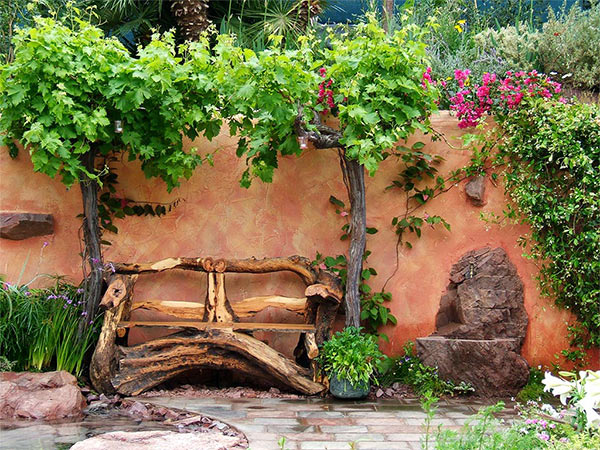
Love this photo of the Wood's Edge.
The classic ecological definition of
Edge is the juxtaposition of contrasting environments. The
Edge Effect is the the impact the edge has on the ecology of these two environments and the edge environment itself. As Edge Effect increases, biodiversity increases.
What does all this mean? Basically, it means that
everything happens at the edge.
In more layman's terms, the edge is the boundary of two different habitats. This can be Field/Forest, or Lake/Shoreline, or Undisturbed Land/Farmland. Pretty much, any place that two habitats meet, an edge exists. It is here that biodiversity booms. There is always more life and more variety of species at the edge of two habitats than there is in each individual habitat. This is true in the natural world and the human world as well. Just look at this map:
Population Density of the World in 1990
You will notice that the vast majority of the world's population lives at the edge of water and land. This isn't random. It is because there is more biodiversity in species of food (plant and animal) in the areas at the edge. It provides more resources as well as transportation opportunities.
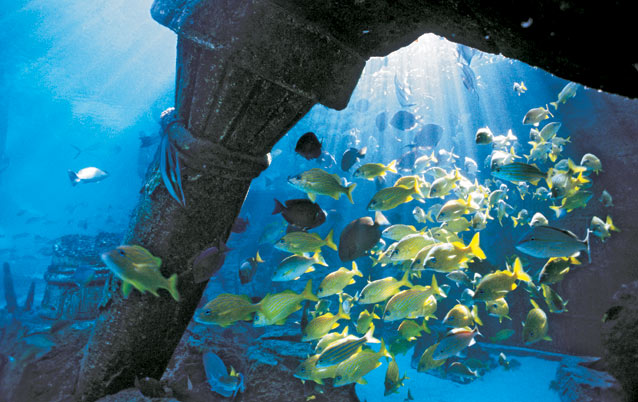
The same is true with natural habitat edges. Have you ever tried to enter a forest where the edge has not been cleared away. It is overgrown with brambles and shrubs and vines. There are insects and birds all over the place. But once you get into the forest, everything opens up again... the biodiversity drops. If you like to fish or hunt, you should already know this. Fish hang out at the edge of banks, at the edge of drop offs, at the edge of underwater obstruction, at the shadow edge of a dock. Deer hang out at the edge of the fields.
Fish at the edge of an underwater structure.
In designing a
Permaculture System, you need to keep in mind the importance of edge. Increasing your edge in a Forest Garden, especially when also mimicking the biodiversity of plants typically found at the edge, will increase the beneficial insects, the birds which prey on damaging insects, it will not allow diseases to take hold and wipe out a garden, it will provide more vigorous growth in your plants, and it will likely produce better tasting fruits and vegetables.
This garden is full of edges.
Existing Edges
There are likely a number of edges that already exist where you live; you just need to realize they are there.
- Wall/Yard
- House/Yard
- Sidewalk/Yard
- Fence/Yard
- Driveway/Yard
- Planting Bed/Yard
- Planting Bed/Fence
- Planting Bed/Wall
- Planting Bed/House
- Pond/Yard
Ways to Increase Edge
Keyholes
Keyhole Garden Bed
The Keyhole is a classic way to increase edge in a garden bed. Simple to design. Not only does it provide more edge, it provides easier access to the plants to tend them as needed.
Make straight lines wavy.
A circle
A wavy circle has much more edge than the circle above.
This will allow more water-loving plants to be grown, more water edge for frogs to enjoy, etc.
This winding path is probably 6-7 times longer than a straight path would be.
That means it provides 6-7 times as much edge than a straight path. It also helps prevent erosion, collects more rainfall, and turns the trip up the hillside into a leisurely walk instead of a climb.
Other Edges to Consider
There are many other types of edge to consider. Here are just a few off the top of my head:
- Shady Spot/Sunny Spot: Either permanent or partial shade vs full sun
- Low pH soil (acid)/Neutral soil: Occurs at the edge of pine trees for instance
- Planting Bed/Large Rock: The large rock with its heat retention and moisture collection capabilities creates its own microclimate and therefore another habitat edge
Increasing edge is a simple concept with huge benefits. Consider the importance of edge when designing your Permaculture System.